
Coins vs Bars vs Jewellery vs Digital: Which Gold Is Best for Investment in India?


Introduction: Coins vs Bars vs Jewellery vs Digital – which gold fits your goal?
Gold is a trusted wealth protector in India. But which gold is best for investment? The format you choose directly affects costs, purity, resale value, and convenience.
Why this guide
-
We compare four formats head-to-head: Jewellery, Coins, Bars, and Digital Gold.
-
Quick answer: For pure investing, bars/coins/digital typically beat jewellery on costs and resale. For wearing, gifting, and tradition, jewellery wins.
-
Where OroPocket fits: We’re a mobile-first way to invest in 24K digital gold from just ₹1, with free Bitcoin rewards on every purchase. Perfect for small, frequent, goal-based investing with instant UPI liquidity.
Comparison at a glance (TL;DR)
|
Format |
Purity |
Typical costs/premium bands |
Liquidity |
Storage |
Best for |
|---|---|---|---|---|---|
|
Jewellery |
Usually 22K (91.6%); some 24K designs exist |
Making charges 8–25%+; wastage/melting deductions on resale |
Moderate; resale often at discount vs live rate |
Locker/home; theft risk and cost |
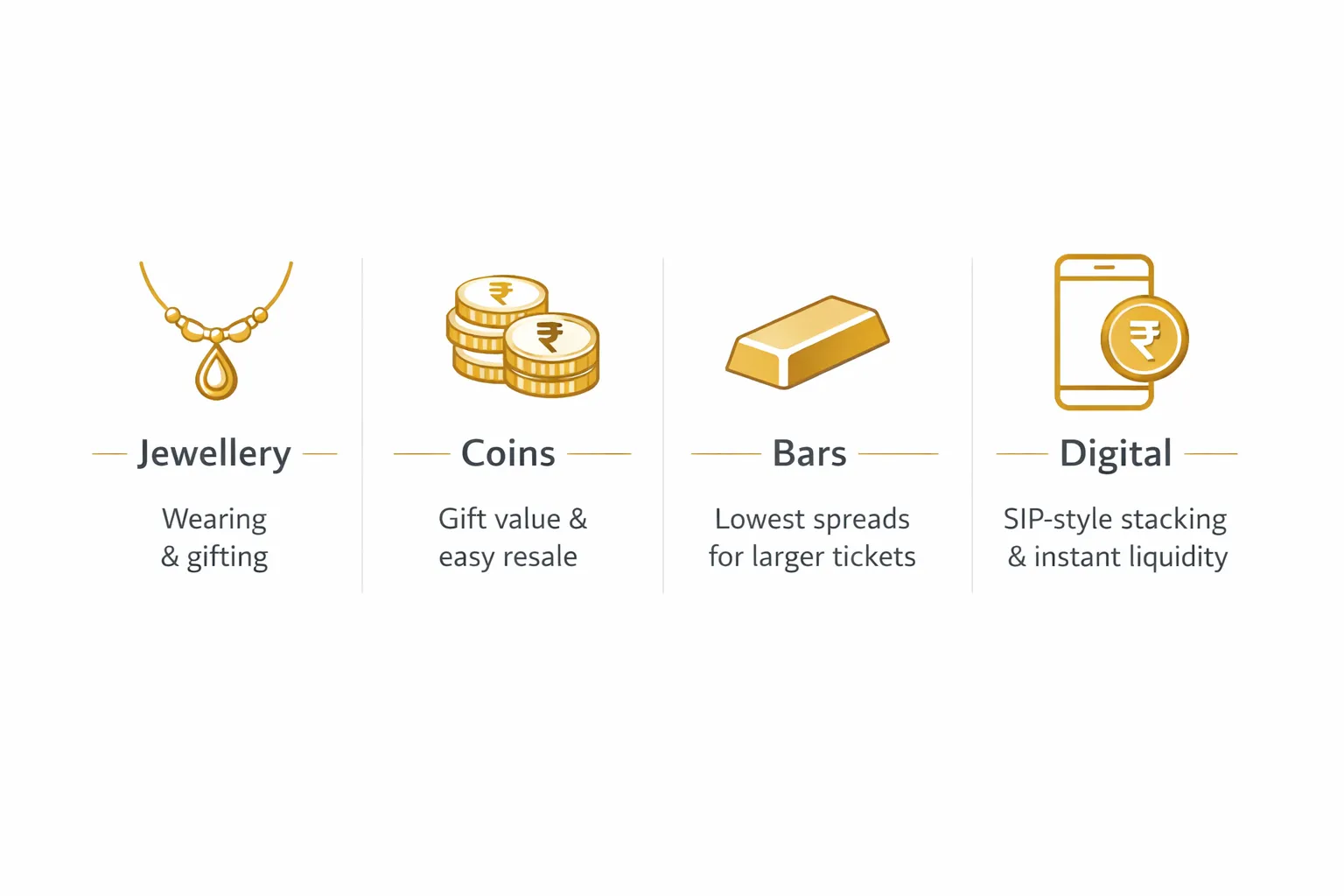
Wearing, gifting, tradition |
|
Coins |
Typically 24K (999/999.9) with mint certification |
Premium ~1–5% over spot; minimal making charges |
High at reputed buyers/platforms |
Compact; easier than jewellery |
Smaller ticket investing, gifting, emergency liquidity |
|
Bars |
Typically 24K (999/999.9) with serial/assay |
Premium ~0.5–2% over spot (lower for higher weights) |
High with bullion dealers; KYC/purity checks apply |
Requires safe locker; low bulk cost |
Pure investment, long-term hedge, larger amounts |
|
Digital Gold |
24K (999/999.9) backed by vaulted bullion |
Buy–sell spread ~1–3%; platform/storage terms apply; 3% GST at buy |
Very high; instant buy/sell via app at live price |
No personal storage; insured vaults |
Micro-investing, SIP-style stacking, instant liquidity and tracking |
What you’ll learn
-
Exact cost stacks: making charges, spreads, GST, and storage
-
Purity and verification: BIS hallmarking, 24K vs 22K realities
-
Liquidity and resale deductions; how counterparty risk differs
-
Taxes that apply – and which type of gold investment is best for different goals
How to evaluate any gold format (framework)
Use this simple, apples-to-apples framework to decide which type of gold investment is best for you – whether you’re eyeing jewellery, coins, bars, or digital gold.
1) Total cost of ownership
-
Upfront premiums
-
Jewellery: 8–25%+ making charges, plus wastage; 5% GST on making charges; 3% GST on gold value.
-
Coins: ~1–5% premium over spot; minimal minting premium; 3% GST on gold value.
-
Bars: ~0.5–2% premium (lower for higher weights); 3% GST on gold value.
-
Digital Gold: Buy–sell spread typically ~1–3%; 3% GST on purchase; delivery/minting charges if you take physical delivery.
-
-
Recurring costs
-
Physical (home/locker): Bank locker fees ~₹2,000–₹15,000/year; optional home insurance riders.
-
Digital: Vaulting is usually free for an initial period; thereafter ~0.5–1% p.a. custody fees may apply depending on the platform; no theft risk to you.
-
Pro tip: For pure investing, lower premiums (bars), competitive spreads (digital), and minimal recurring costs are key to maximizing long-term returns.
2) Purity and verification
-
24K (999/999.9) vs 22K (916)
-
24K (coins/bars/digital) usually fetches prices closer to spot and avoids melting loss at resale.
-
22K jewellery is great for wear but can face deductions on resale due to alloy content and workmanship.
-
-
Proofs that matter
-
Jewellery: BIS hallmark with HUID, invoice, and karat/purity stamp.
-
Coins/Bars: Assay card, serial number, refinery/mint certification (ideally LBMA-accredited).
-
Digital Gold: Vaulting confirmation, trustee/custodian arrangements, third-party audits, regular reconciliation.
-
Pro tip: Always keep invoices/certificates. Verification lowers resale friction and narrows haircuts.
3) Liquidity and resale
-
Where you can sell and the typical haircut
-
Jewellery: Local jeweller buyback; often 5–15% deduction for making/melting/testing; negotiation is common.
-
Coins/Bars: Bullion dealers or reputed stores; tighter spreads (~1–3% for coins; lower for larger bars).
-
Digital Gold: Instant platform sell-back at live price; spread disclosed upfront; proceeds can settle to your bank/UPI quickly.
-
-
Pricing dynamics
-
Real-time pricing (digital/bullion quotes) reduces haggling and uncertainty.
-
Negotiated pricing (many jewellers) can mean slower exits and wider variance.
-
Pro tip: If fast, transparent exits matter, choose formats with live pricing and standardized buyback policies.
4) Storage and security
-
Physical storage
-
Home: Convenient but higher theft risk and potential underinsurance.
-
Bank locker: Safer than home, but has recurring fees and limited access hours; insurance may require a separate policy.
-
-
Digital custody
-
Insured, professional vaults with custodian/trustee oversight; no personal storage hassle; documentation and audits reduce operational risk.
-
Pro tip: For larger holdings, weigh the ongoing locker cost and risk vs. the convenience and insurance of vaulted digital gold.
5) Counterparty/regulatory risk
-
Physical risks
-
Theft, loss, and assay disputes on resale (especially for non-hallmarked jewellery).
-
-
Digital risks
-
Platform and custody risk; mitigate by choosing providers with insured vaults, authorized bullion partners, clear T&Cs, and independent audits.
-
-
Practical mitigants
-
Stick to BIS-hallmarked jewellery with HUID.
-
Prefer LBMA-linked mints/refineries for coins/bars.
-
For digital, choose RBI-compliant, fully insured, transparently audited platforms.
-
Pro tip: Documentation is your shield – certificates, invoices, and clear platform disclosures protect your resale value.
6) Taxes
-
GST on purchase
-
Physical and Digital Gold: 3% GST on the gold value; jewellery also attracts 5% GST on making charges.
-
-
Capital gains
-
Physical/Digital Gold: If held <3 years, gains taxed as per your income slab (STCG). If held ≥3 years, taxed at 20% with indexation (LTCG).
-
-
For context vs SGB/ETF
-
SGB: 2.5% interest is taxable; capital gains on redemption at maturity are exempt (secondary market sales may attract capital gains tax).
-
ETFs/EGRs: Exchange-traded, market-linked instruments; expense ratios and evolving tax rules apply – check the latest regime before investing.
-
Bottom line: If you’re optimizing for returns, focus on all-in costs (premiums + GST + storage), purity and proof, and your exit path. This framework helps answer which gold is best for investment for your goal – wearability and tradition (jewellery) vs low-cost, high-purity investing (coins/bars/digital).
The cost math: spreads, making charges, GST and storage
|
Format |
Typical purity |
Making/minting premium |
Buy–sell spread |
GST on purchase |
Storage costs (typical) |
|---|---|---|---|---|---|
|
Jewellery |
Mostly 22K (916); some 24K designs |
8–25% making charges (+ possible wastage) |
Resale haircut often 5–15% vs live rate |
3% on gold value + 5% on making charges |
Bank locker ~₹2,000–₹15,000/year; home storage risk |
|
Coins |
24K (999/999.9) with certification |
~1–5% minting premium |
~1–3% |
3% |
Compact; optional locker cost similar to above |
|
Bars |
24K (999/999.9) with assay/serial |
~0.5–2% (lower at higher weights) |
~0.5–2% |
3% |
Locker recommended for larger values; ~₹2,000–₹15,000/year |
|
Digital Gold |
24K (999/999.9) vaulted |
None unless taking delivery (minting/delivery fees apply on conversion) |
~2–5% platform spread |
3% at buy |
Free vaulting period on many platforms; post-free ~0.5–1% p.a. custody |
“Jewellery making charges in India typically range from 8% to 25% of the gold’s value – and these charges aren’t recovered on resale, reducing returns.” – Source
Purity and verification: getting what you paid for
Hallmarking and HUID (jewellery)
-
BIS hallmarking with HUID is your official purity assurance. Check for: BIS logo, purity mark (e.g., 22K916/24K999), Assaying & Hallmarking Centre mark, jeweller ID, and the unique HUID on the piece and invoice.
-
22K vs 24K jewellery: 22K (916) is stronger and better for daily wear; 24K is purer but softer and less suited for intricate, wearable designs – better treated as an investment metal.
Coins/Bars
-
Aim for 24K 999/999.9 fineness from LBMA-accredited refiners/mints.
-
Prefer serialized packaging with tamper-proof assay cards and clear refinery certification for easy verification and smoother resale.
Digital Gold
-
Should be backed 1:1 by 24K physical gold held in insured, professional vaults.
-
Look for transparent custody structures (independent trustee/custodian), periodic third-party audits, and an option to redeem to physical (coins/bars) with disclosed minting/delivery fees.
Practical checks before buying
-
Insist on a proper invoice with purity, weight, and taxes clearly mentioned.
-
Understand buyback clauses and any deductions (melting/testing for jewellery; spreads for coins/bars/digital).
-
Ensure purity verification options: BIS HUID lookup for jewellery, assay/serial verification for coins/bars, and vaulting/audit confirmations for digital.
“BIS hallmarking with HUID is India’s official framework to assure and verify the purity of gold jewellery; the HUID can be checked by consumers for authenticity.” – Source
Liquidity and resale: how fast and at what haircut?
Jewellery
-
Resale realities: Most buyers pay only for melt value after purity testing. Design and making charges aren’t paid back, so haircuts feel steep. Policies vary widely by jeweller and city; negotiation is common and can delay exits.
Coins
-
Generally well-accepted by reputable jewellers and bullion dealers, especially with original bill and sealed assay card. Spreads are tighter than jewellery, and verification is faster.
Bars
-
Strongest liquidity at authorised bullion dealers. Larger bars usually get the best per-gram pricing but may have a smaller buyer pool; however, spreads tend to be tight with proper assay and serial numbers.
Digital Gold
-
Instant sell-back on the platform at live market-linked prices. Settlement can be T+0 to instant into wallet/bank depending on provider. If you prefer, you can also request delivery (fees apply).
What moves your resale
-
Documentation (invoice, HUID/assay), purity confidence, live pricing access, market timing, and disclosed spreads/fees.
“Typical buy–sell spreads in India: jewellery 5–15% at resale, coins 1–3%, bars 0.5–2%, digital platforms 2–5% (provider-dependent).” – Source
Safety, storage and counterparty risk
Physical (home/locker)
-
Theft/fire risk: Home storage is convenient but vulnerable; many home insurance policies require explicit disclosure and limits for jewellery. Fireproof safes help but aren’t foolproof.
-
Bank lockers: Lower theft risk but involve annual rent, KYC, and limited access hours. Note: locker contents are typically not automatically insured; you may need a separate all-risk policy.
-
Family access planning: Keep a secure record of locker details, nominees, and keys. Establish clear access instructions for dependents to avoid issues in emergencies.
Coins/Bars
-
Keep sealed packaging intact: Tamper-proof assay cards and serialised packaging make verification easier and protect resale value.
-
Store bills/assay cards: Retain invoices, refinery certificates, and photos. These documents reduce disputes during buyback.
-
Insure for declared value: Update your policy when you add/remove items. Use an inventory log with weights, karats, and photos stored in a secure, encrypted location.
Digital Gold
-
Platform vs custody: Your operational exposure is to the platform, but the metal is typically held in insured, professional vaults with a custodian/trustee structure. Prefer providers that segregate client assets from company assets.
-
Audits and reconciliations: Look for regular third-party audits, daily reconciliation of holdings, and transparent statements that reflect exact grams owned.
-
T&Cs checklist: Confirm who the custodian is, storage insurance coverage, free-storage duration, custody fee post free period, redemption options/fees, and dispute resolution mechanisms.
Practical safeguards
-
For physical:
-
Maintain an itemised inventory (photos, karat, weight, purchase date/value).
-
Use discreet storage and avoid predictable patterns (e.g., festival-time withdrawals).
-
Take adequate insurance cover (all-risk/jewellery floater) and keep proof of purchase.
-
-
For digital:
-
Enable 2FA, use strong PIN/biometrics, and keep your device OS updated.
-
Complete and verify KYC; keep bank/UPI details current for smooth withdrawals.
-
Prefer reputed custodians, insured vaults, independent audits, and clearly disclosed redemption and storage fee timelines.
-
Taxes and regulation: what Indian investors must know
GST
-
3% GST applies on the purchase of gold across retail formats (jewellery, coins, bars, digital).
-
Jewellery also attracts 5% GST on making charges.
Capital gains
-
STCG: If sold within 3 years, gains are taxed as per your income slab.
-
LTCG: For holdings over 3 years, recent rules provide a 12.5% rate without indexation, with an option for resident individuals/HUFs to choose 20% with indexation if it leads to lower tax outgo. Calculate both and choose the lower liability.
“From 23 July 2024, LTCG on gold is taxed at 12.5% without indexation; resident individuals/HUFs can instead apply 20% with indexation if it results in a lower tax liability.” – Source
Regulation snapshot
-
Jewellery: Governed by BIS hallmarking (with HUID) and general consumer protection laws.
-
Coins/Bars: Follow standard trade norms; buy from authorised dealers with assay/serial documentation.
-
Digital Gold: Not under SEBI/RBI. Review custody setup, insurance, audits, and redemption/storage terms. If direct regulation is a priority, consider SEBI-regulated Gold ETFs or RBI/government-issued SGBs.
Alternatives for context
-
SGBs: 8-year tenor, 2.5% interest (taxable), and no capital gains tax on redemption at maturity for individuals.
-
Gold ETFs: Exchange-traded exposure with an expense ratio; units bought on the market do not attract GST at purchase.
Use-case mapping: best format for your goal
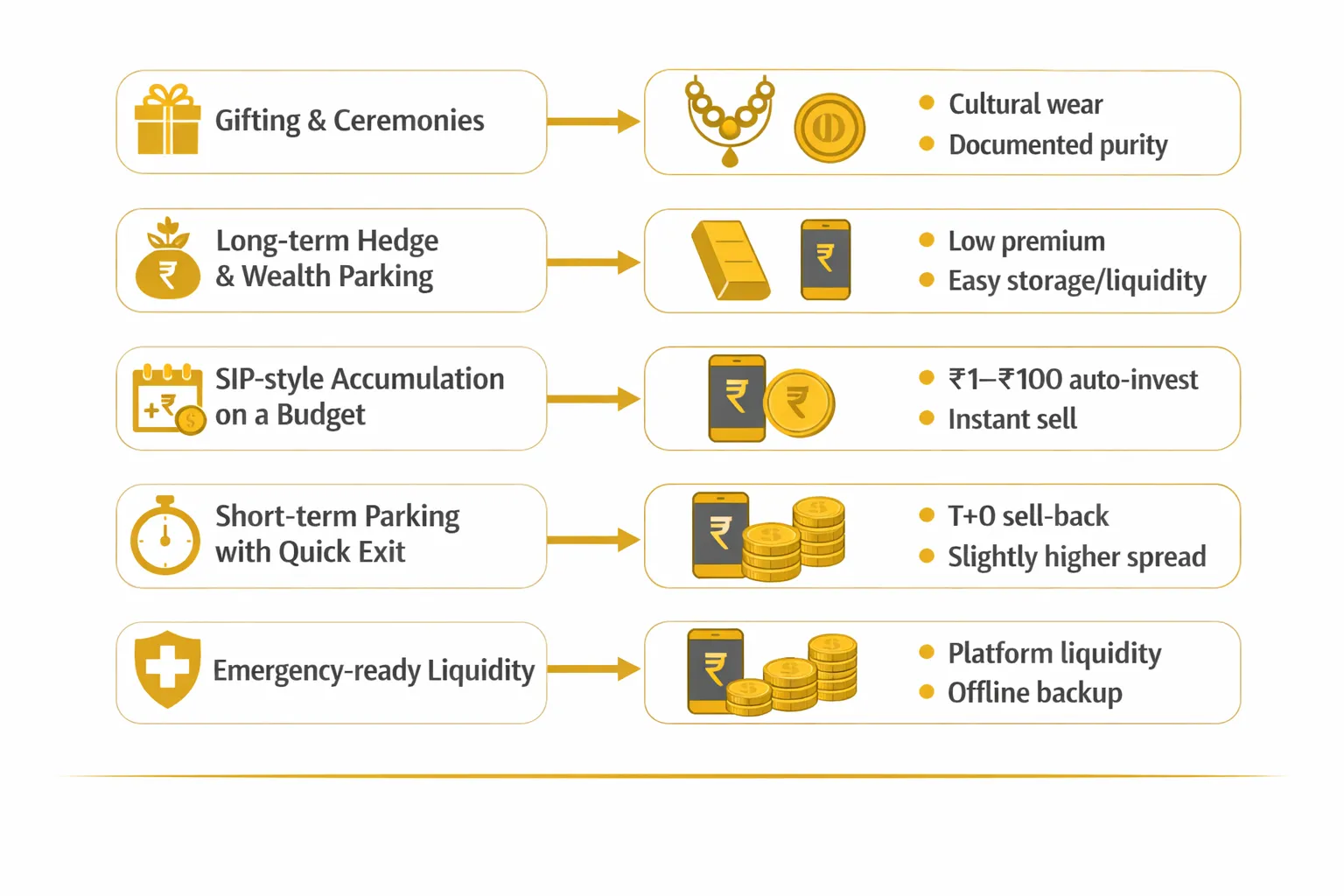
Gifting and ceremonies
-
Jewellery or coins; choose 22K/18K for daily wear and durability, or a 24K coin for gifting value and purity. Keep invoices, hallmark/HUID details, and insure valuable items.
Long-term hedge and wealth parking
-
Bars (larger weights) or digital gold to minimize premiums and friction. Prefer LBMA-accredited mints and well-known custodians with insured vaults.
SIP-style accumulation on a budget
-
Digital gold with ₹1–₹100 minimums and auto-invest features. Track progress, earn rewards, and retain instant liquidity for emergencies.
Short-term parking with quick exit
-
Digital gold for live pricing and T+0 sell-back. If you prefer physical, coins are a close second – expect slightly higher spreads than bars.
Emergency-ready liquidity
-
Digital for near-instant sell; keep a small float in 24K coins as a physical backup for offline needs.
Format-by-format playbook (how to buy right and sell smart)
Jewellery (when you must buy it)
-
Best for: Wear/gifting; not optimal for returns.
-
Buy right: Insist on BIS HUID hallmark on the piece and invoice, a written making charge percentage, and a clear buyback policy.
-
Sell smart: Carry the original bill; get 2–3 resale quotes; expect deductions for melting/wastage and purity testing.

Gold Coins
-
Best for: Gifting + flexible investment.
-
Buy right: Choose 24K 999/999.9 coins with sealed assay card from a reputed, accredited mint; confirm buyback terms and applicable spreads.
-
Sell smart: Keep seals intact, preserve invoice, and compare live spreads at 2–3 dealers for better exit pricing.
Gold Bars
-
Best for: Pure investment in larger tickets; tight spreads and lowest per-gram premiums at higher weights.
-
Buy right: Opt for serial-numbered bars with assay cards from accredited refiners; inspect tamper-proof packaging; verify dealer reputation.
-
Sell smart: Approach established bullion dealers; plan liquidity for very large bars (fewer retail buyers); carry all documentation.

Digital Gold (with OroPocket context)
-
Best for: Micro-investing and instant liquidity; easy tracking and goal-based stacking.
-
Buy right: Prefer platforms with insured vaults, independent audits, and transparent buy–sell spreads and storage timelines.
-
Extra with OroPocket: Start from ₹1 via UPI, earn free Bitcoin on each gold/silver purchase, maintain daily streaks for bonuses, and gift/send gold easily in-app.
-
Sell smart: Know your free-storage period and post-free custody fee; use live price windows for fast, transparent exits or redeem to physical if needed.
Final verdict: Which gold is best for investment in India?
If returns and efficiency are the priority
-
Pick Bars (larger denominations) for the lowest per-gram spreads if you want physical exposure.
-
Pick Digital Gold for seamless, low-ticket accumulation with instant liquidity and transparent pricing.
If gifting/tradition matters more than ROI
-
Jewellery or Coins. Prefer 24K coins for value retention and 22K/18K jewellery for wear and sentiment.
Our take for most young investors
-
Build your core in Digital Gold for SIP-style stacking, daily tracking, and instant sell. Add a few 24K Coins for festive gifting, and consider a single investment-grade Bar when your corpus grows to lower long-term costs.
-
OroPocket makes starting effortless: ₹1 entry, UPI in 30 seconds, insured 24K gold, and free Bitcoin rewards on every purchase – so you get gold’s stability plus a modern rewards layer.
Next steps
-
Define your goal (gift, hedge, SIP, emergency), pick the format above, and set a monthly plan.
-
Ready to start in 30 seconds? Download the OroPocket app at https://oropocket.com/app
“Minimum ticket sizes today: many coins/bars start at 1 gram; Digital Gold minimums often range from ₹1–₹100, platform-dependent.” – Source