What is the demand for gold in 2026?

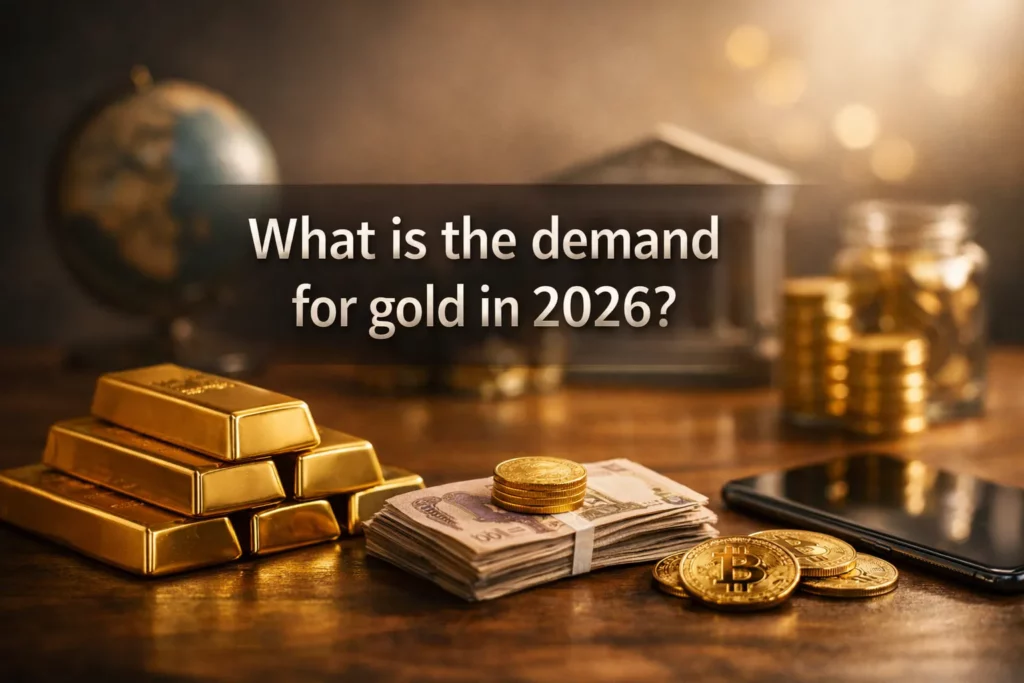
What is the demand for gold in 2026? (And why it’s getting smarter, not smaller)
Gold demand in 2026 isn’t just about “more people buying jewellery.” It’s a two-speed market:
-
Investment demand is rising (ETFs, bars/coins, digital gold, central bank buying).
-
Jewellery demand is getting price-sensitive (people still buy, but they buy smaller, slower, and smarter – often by exchanging old gold).
If you’re an Indian retail saver – student, salaried, small business owner – this matters because gold in 2026 is behaving like a core financial asset, not just a festival purchase. And the easiest winners won’t be the people who “time the dip”… it’ll be the people who build the habit.
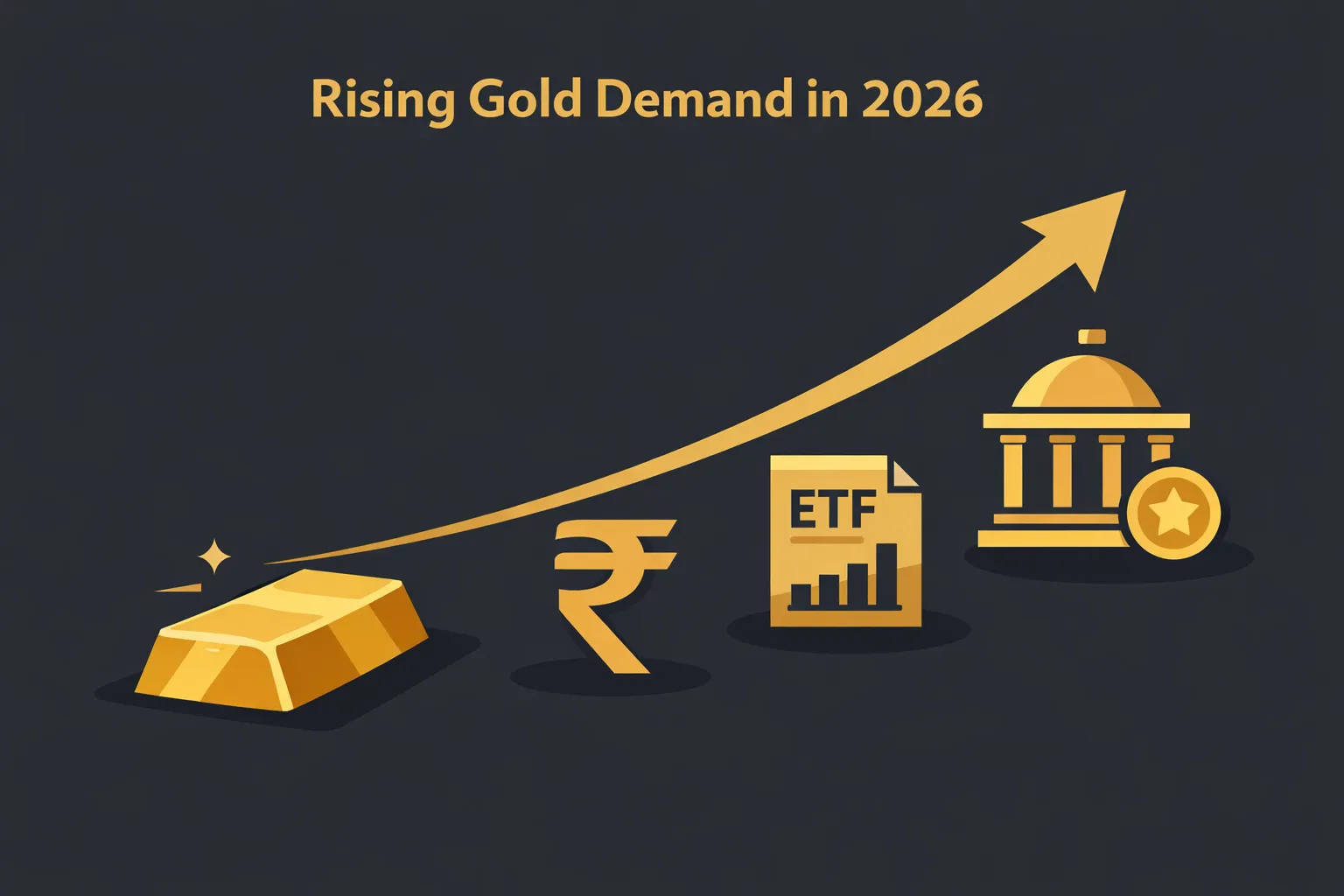
The 2026 gold-demand story in one line
In 2026, demand is being pulled by three powerful buyers:
-
Central banks (reserve diversification)
-
Investors (ETFs + bars/coins + futures positioning)
-
Retail India (digital gold + gradual jewellery buying + exchange of old gold)
The result: gold isn’t depending on one single driver. It has multiple engines – which is exactly why it has stayed strong even during volatility.
What’s actually driving gold demand in 2026?
1) Price psychology: strength attracts buyers (and dips trigger buying)
In 2026, many buyers aren’t waiting for a “perfect price.” They believe gold is in a structural uptrend – so price strength creates confidence, and short pullbacks create action.
That’s why micro-investing models are winning: you don’t need to commit a big lump sum.
If you want to understand the mechanics behind daily changes, spreads, and why your “local rate” differs from spot, read: spot price vs local gold rate explained.
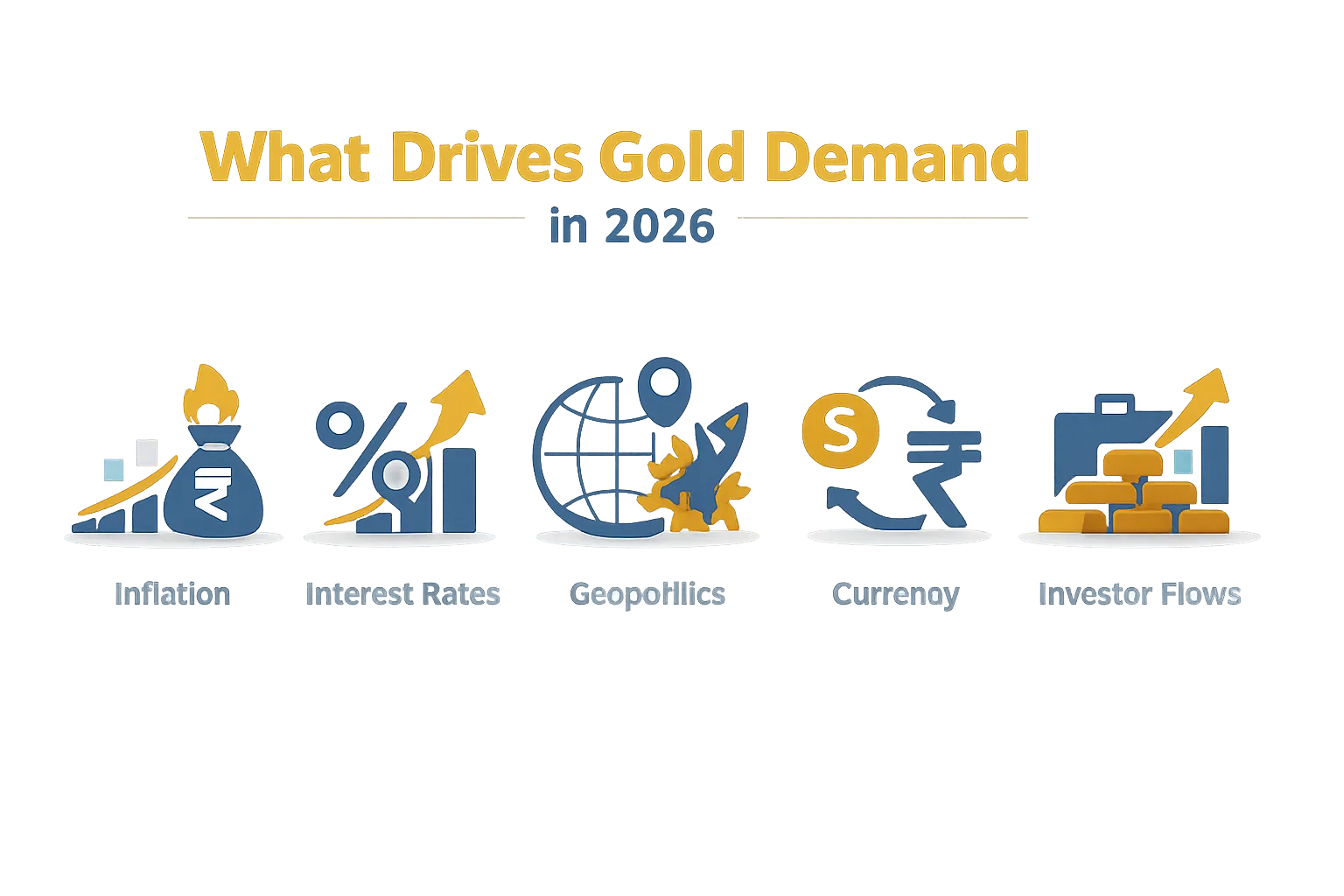
2) Macro drivers: inflation, rates, currency, geopolitics
Gold demand typically rises when:
-
inflation stays sticky
-
interest rates fall or are expected to fall
-
the INR weakens (imported gold becomes costlier)
-
global risk rises (wars, trade tensions, recession fears)
Gold in 2026 is doing double-duty:
-
safe-haven
-
currency debasement hedge
-
portfolio diversifier
The biggest proof: investors are buying gold like never before
A major 2026 shift is that gold isn’t only bought in physical form. Investors are buying it through ETFs and digital rails – fast, liquid, and app-first.
“Indian gold ETFs recorded record inflows of INR240bn (US$2.5bn) in January 2026.” – World Gold Council
That’s not “festival buying.” That’s portfolio allocation.
Central banks: the quiet demand engine that doesn’t trend on social media
Even after multiple years of heavy official-sector buying, central banks remain a major pillar. The logic is simple: many countries want less dependence on USD assets and more diversification into gold.
And when central banks buy, they typically buy for reserves – not for short-term profit. That’s “sticky demand.”
What top forecasts imply about 2026 gold demand (without hype)
Strong demand expectations show up in price forecasts too:
“J.P. Morgan Global Research forecasts that gold prices will average $5,055 per ounce in the fourth quarter of 2026.” – J.P. Morgan
No forecast is guaranteed. But when a major research desk stays bullish, it usually reflects continued institutional + official demand, not just retail excitement.
India in 2026: jewellery demand slows in volume, but buying doesn’t disappear
A pattern we’re seeing in India:
-
volumes can soften when prices jump
-
but value stays strong because gold is more expensive
-
people shift to:
-
lighter jewellery
-
staggered buying
-
exchange (old gold → new gold)
-
coins/bars for investment purposes
-
So the “demand” story isn’t only “up or down.” It’s changing form.
The content gap most blogs miss: access is the real driver now
Most competitor posts talk about inflation, Fed rates, weddings. True – but incomplete.
The biggest unlock in 2026 is access:
-
UPI makes buying frictionless
-
digital gold makes it bite-sized
-
investor products (ETFs, apps) make it portfolio-friendly
When buying becomes easy, demand becomes consistent. And consistent demand is what builds wealth.
This is also why many Indians are asking not just “Will gold go up?” but “How do I invest without overpaying or getting stuck?” Start here: how to invest in gold with little money (from ₹1).
What this means for you: stop timing gold, start building a gold habit
If gold demand in 2026 is increasingly driven by steady accumulation, your strategy should match it:
A simple retail playbook
|
Goal |
Best behaviour in 2026 |
Why it works |
|---|---|---|
|
Beat inflation |
Buy small amounts regularly |
Reduces timing risk |
|
Build discipline |
Automate or streak-based habit |
Consistency wins |
|
Stay liquid |
Prefer buy/sell transparency |
No “stuck” gold |
|
Reduce regret |
Don’t wait for “perfect” dips |
Markets don’t announce bottoms |
Where OroPocket fits (and why it’s built for 2026 demand)
Gold demand is shifting to mobile-first, micro, and investment-led behaviour. OroPocket is built exactly for that.
Why OroPocket users win in 2026
-
Start from ₹1: no “I’ll do it when I have ₹10,000” excuses.
-
Free Bitcoin on every gold/silver buy: you earn Satoshi cashback while building gold.
-
Gold + Bitcoin combination: stability + upside potential – without the complexity of crypto trading.
-
Gamified investing: streaks, spin-to-win, tiered rewards – your money habit becomes a game.
-
Instant UPI: invest in under 30 seconds.
-
Secure & compliant: insured vault storage + authorized bullion partners.

The bottom line: gold demand in 2026 is real – because the buyers are diversified
Gold demand in 2026 is supported by:
-
central banks (long-term reserve strategy)
-
investors (ETFs + bars/coins + digital rails)
-
India’s retail base (still buying, just smarter)
So if you’re waiting on the sidelines, here’s the uncomfortable truth: inflation doesn’t wait.
Stop watching. Start growing.
Ready to ride 2026’s gold demand the smart way?
Start with ₹1 on OroPocket. Build gold daily. Earn free Bitcoin automatically. Turn consistency into your unfair advantage.
And before you make your next move, make sure you understand costs and timing: best time to buy gold in India (signals + seasonality).