
Is it better to buy gold or invest in FD?

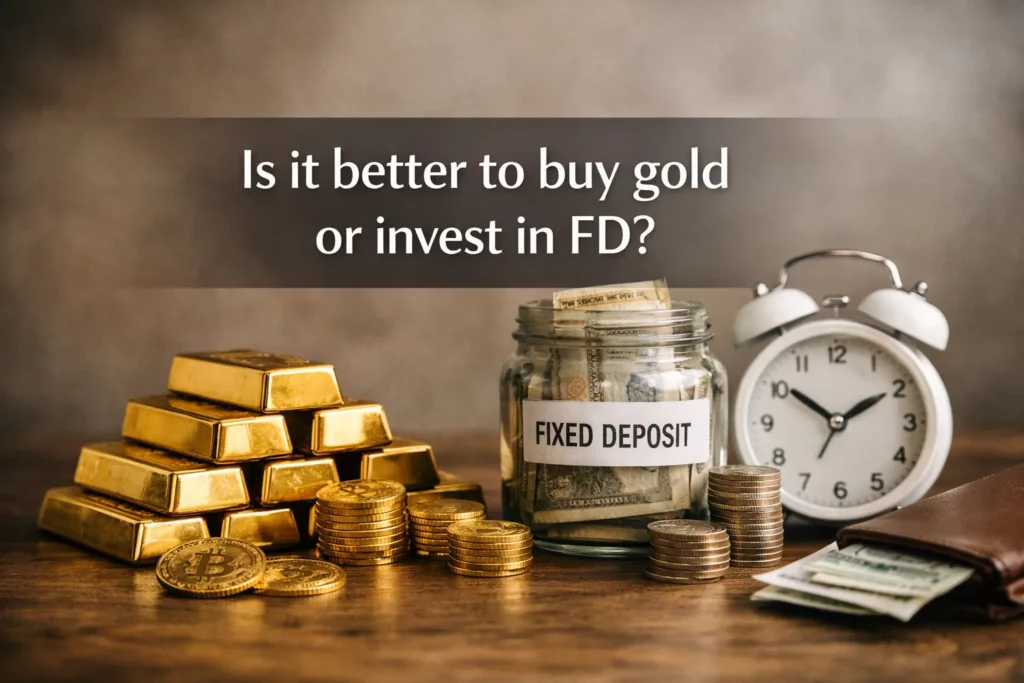
Is It Better to Buy Gold or Invest in an FD? (India 2026 Decision Guide)
If you’re a young Indian saver – student, salaried professional, first-time investor, or small business owner – you’ve probably asked this exact question:
-
“Should I put my money in a Fixed Deposit for safety?”
-
“Or should I buy gold because it beats inflation?”
-
“And is there a modern way to do gold without jewellery drama, storage risk, or big minimums?”
This guide answers it cleanly – with real numbers, real trade-offs, and a simple decision framework.
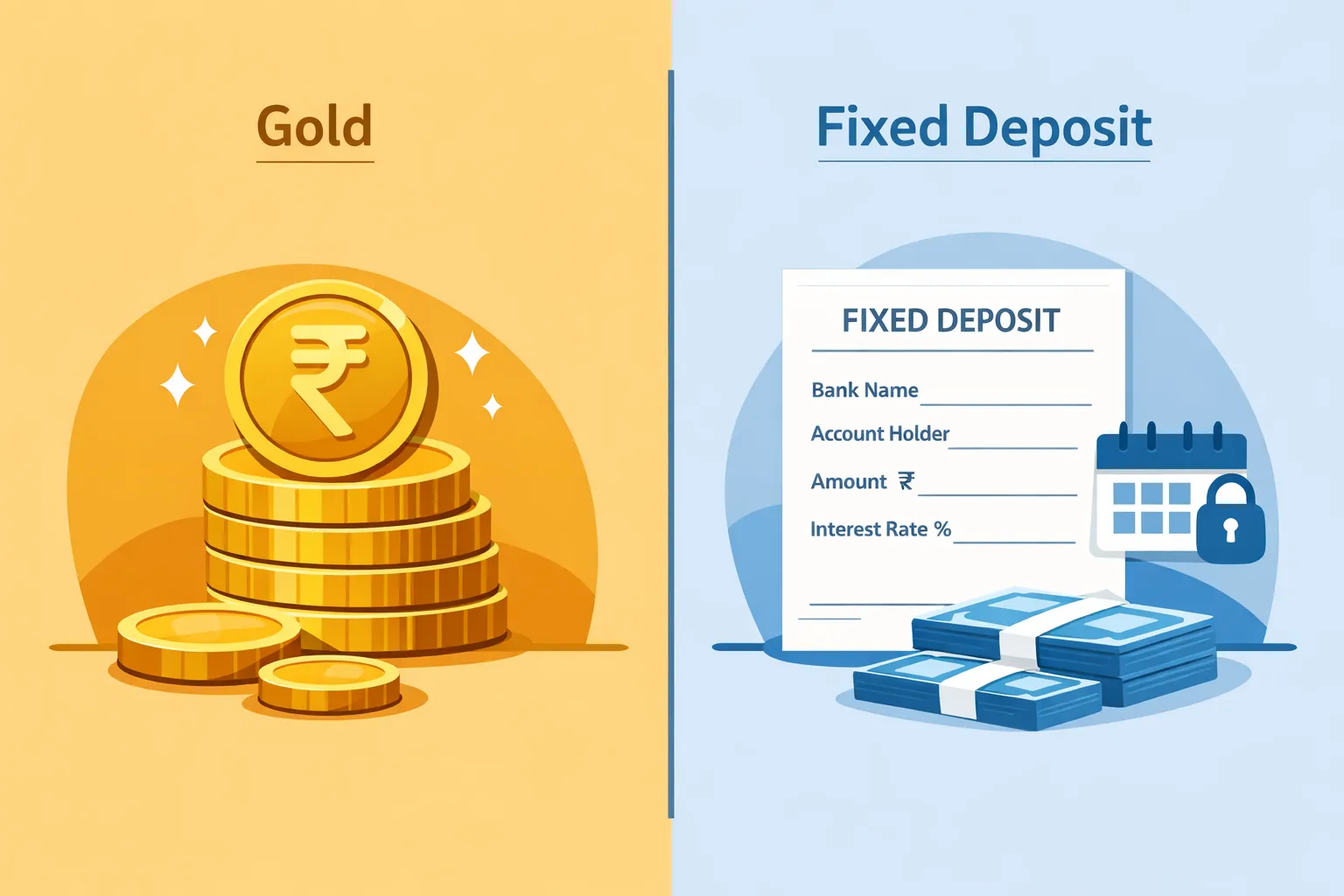
The Short Verdict (Before We Go Deep)
Choose FD when: you need certainty + a fixed date, like tuition fees, rent buffer, or a near-term goal (6–36 months).
Choose Gold when: you want an inflation hedge + long-term wealth protection (3+ years).
Choose OroPocket when: you want gold’s inflation hedge but with micro-investing, UPI speed, and free Bitcoin rewards – starting from ₹1.
If you’re unsure: most smart portfolios don’t pick one – they combine both.
Why This Choice Matters in 2026: Inflation vs “Safe” Returns
Many people feel “safe” in an FD, but forget one thing: inflation silently reduces purchasing power.
“Gold delivered strong annual returns from 2019–2024 (including ~23.79% in 2024), while inflation averaged ~5% and FD rates hovered around ~5.5–6.5%.” – Aditya Birla Capital
That’s the core problem: FDs can protect capital, but may not grow real wealth after inflation and tax. Gold can.
To understand daily price moves and what actually drives gold rates, use this: live gold rate today and why prices change in India.
FD vs Gold: The Comparison That Actually Helps (Not Just “Risk vs Return”)
Quick comparison table (India context)
|
Factor |
Fixed Deposit (FD) |
Gold (Physical / Digital / ETF / SGB) |
|---|---|---|
|
Return type |
Fixed & known upfront |
Market-linked (can rise/fall) |
|
Risk |
Low (bank/NBFC risk + reinvestment risk) |
Medium (price volatility) |
|
Inflation protection |
Often weak after tax |
Historically strong over long periods |
|
Liquidity |
Premature withdrawal usually penalized |
Generally high (esp. digital/ETF); jewellery has deductions |
|
Income |
Interest payout possible |
No regular income (except SGB interest) |
|
Tax |
Interest taxed at slab |
Capital gains rules apply; depends on product |
|
Convenience |
Easy |
Varies: jewellery is messy; digital is easy |
|
Best for |
Near-term goals, stability |
Long-term protection + diversification |
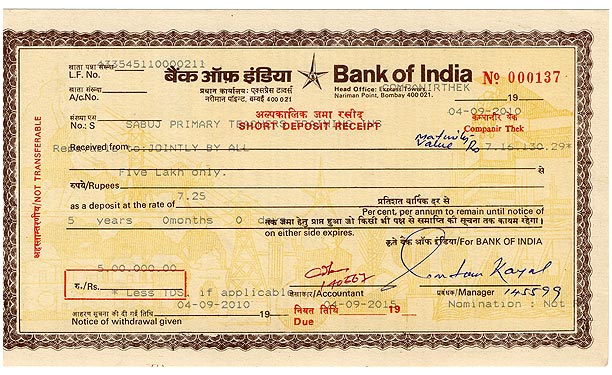
Fixed Deposits (FDs): Where They Win (And Where They Don’t)

Why people love FDs
-
Guaranteed returns (you know your maturity amount)
-
Capital protection (especially with large, reputed banks)
-
Goal matching (pick a tenure that fits your need)
-
Simple (no charts, no tracking, no market timing)
The hidden FD risks most people ignore
-
Post-tax returns can feel “low”
FD interest is taxed at your slab rate. For many salaried investors, that reduces effective returns significantly. -
Inflation can beat your FD
Even if your FD gives 6–7%, inflation can eat most of it. Real returns can be close to zero some years. -
Reinvestment risk
When your FD matures, the next available rates may be lower.
FD safety: what deposit insurance actually covers
“DICGC insures bank deposits up to ₹5,00,000 per depositor per bank (principal + interest).” – DICGC (RBI subsidiary)
Practical implication: If you have larger sums, diversify across banks to spread coverage.
Gold: Why It’s Still a Power Asset (If You Buy It Smart)
What gold does best
-
Hedges inflation + currency weakness
-
Protects wealth during uncertainty
-
Diversifies your portfolio (often moves differently from equities)
The big mistake: buying the “wrong” gold
Most competitor articles talk about “gold vs FD” but skip the real deciding factor: which form of gold.
Here’s the real hierarchy for investors:
-
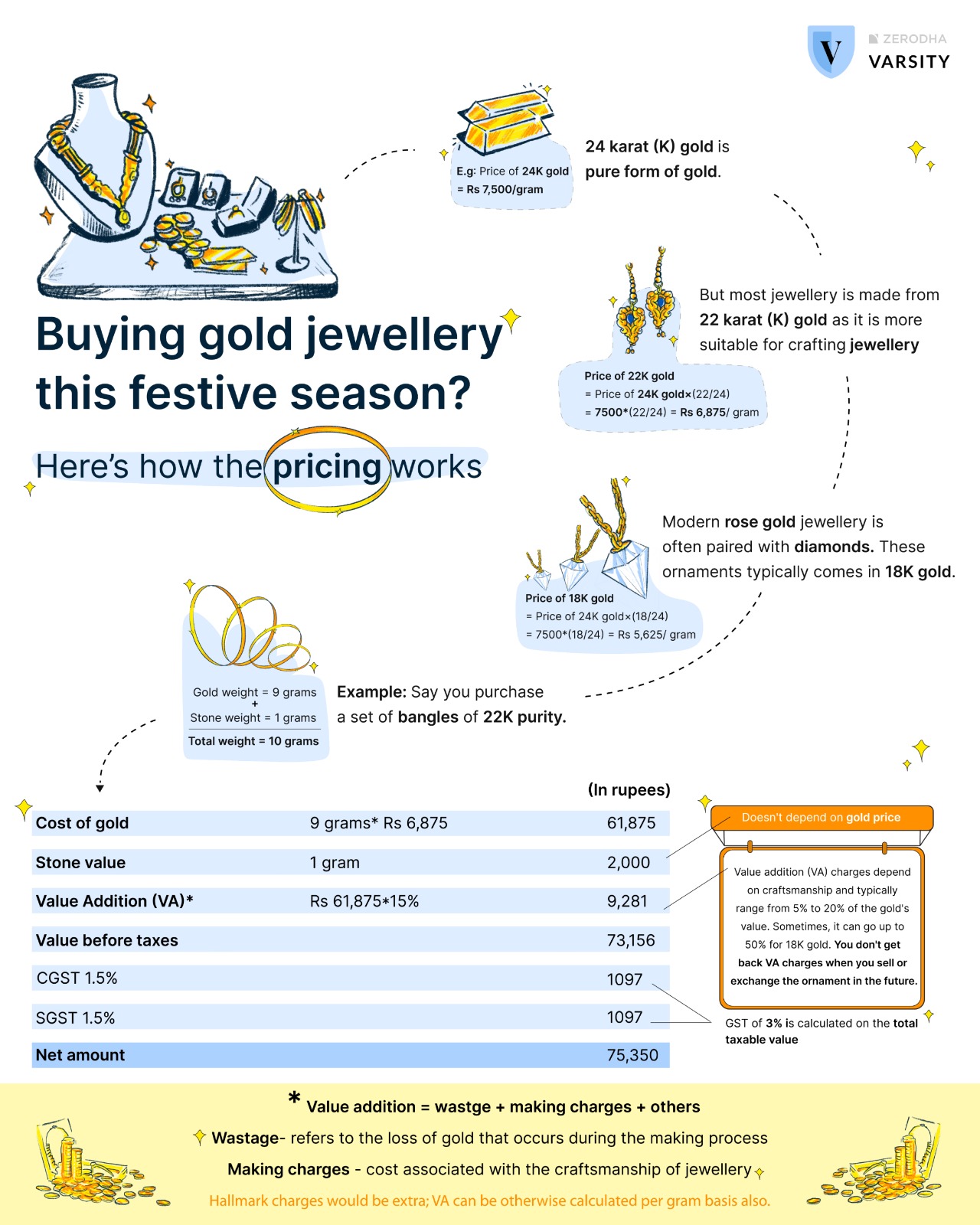
Jewellery: emotional value, but poor investment due to making charges & deductions
-
Coins/Bars: better than jewellery, but storage & buy/sell spread still matters
-
Digital Gold / Gold ETF: high convenience, transparent pricing, easier liquidity
-
SGBs: great structure (price-linked + interest), but lock-in/liquidity constraints
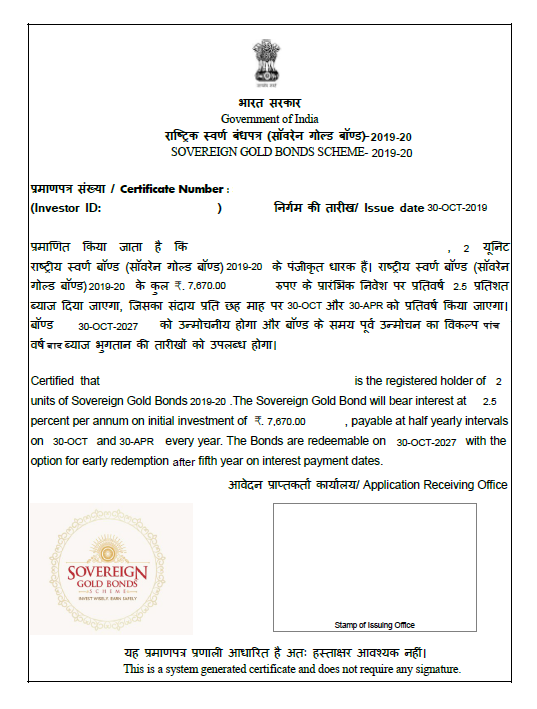
Want a clean breakdown of what you actually pay (spot vs local rate)? Read: spot price vs local gold rate in India – what you’re really paying.
The Decision Framework: Pick Gold or FD in 60 Seconds
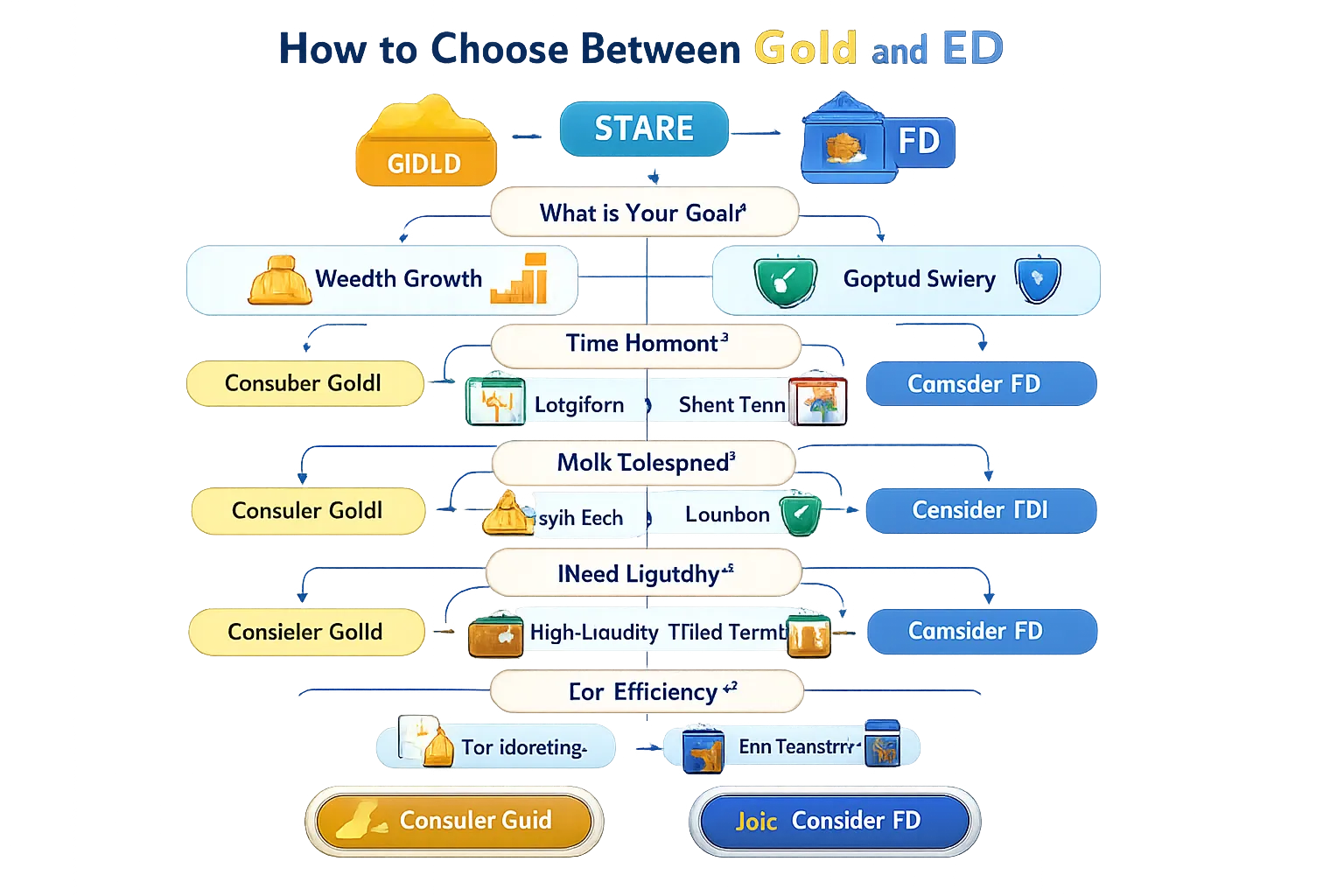
Choose FD if:
-
Your goal is within 6–36 months
-
You need a fixed maturity value/date
-
You can’t tolerate price swings
-
You want predictable income payouts
Examples: exam fees, down payment in 12 months, emergency buffer you don’t want to fluctuate.
Choose Gold if:
-
Your goal is 3+ years away
-
You want inflation protection
-
You want portfolio diversification
-
You can handle short-term volatility
Examples: long-term wealth building, protecting savings from rupee depreciation, building a “hard asset” layer.
The “grown-up” move: do both
If you’re building a stable plan:
-
FD = stability bucket
-
Gold = protection + growth hedge bucket
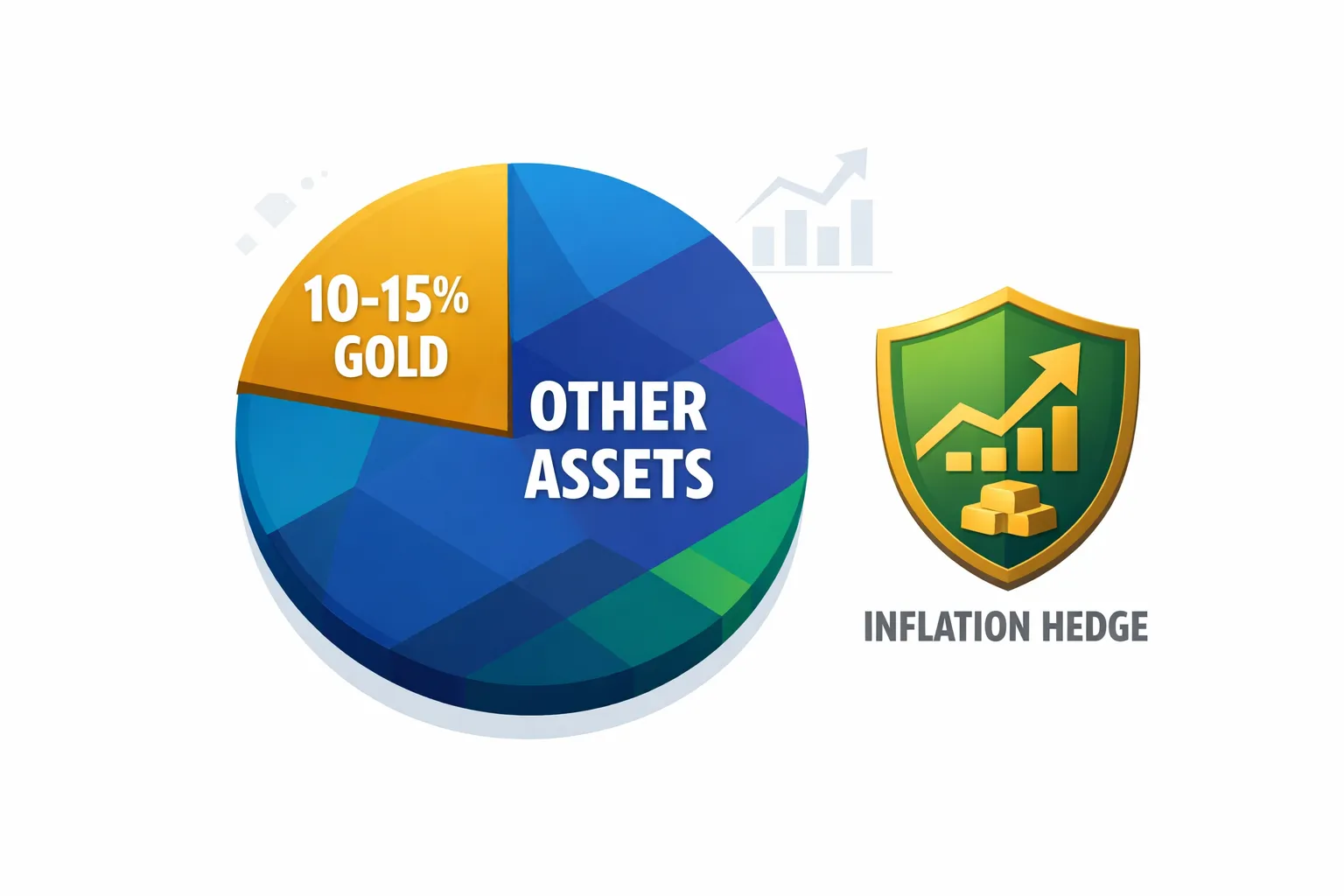
A common starting point many experts suggest is keeping gold around 10–15% of a broader portfolio (based on your risk profile).
Where OroPocket Changes the Game (Gold Investing, Upgraded)
Traditional gold investing has friction:
-
big minimums
-
storage fear
-
unclear pricing
-
no extra benefit for consistency
OroPocket flips that.
Why OroPocket is built for mass-market India
-
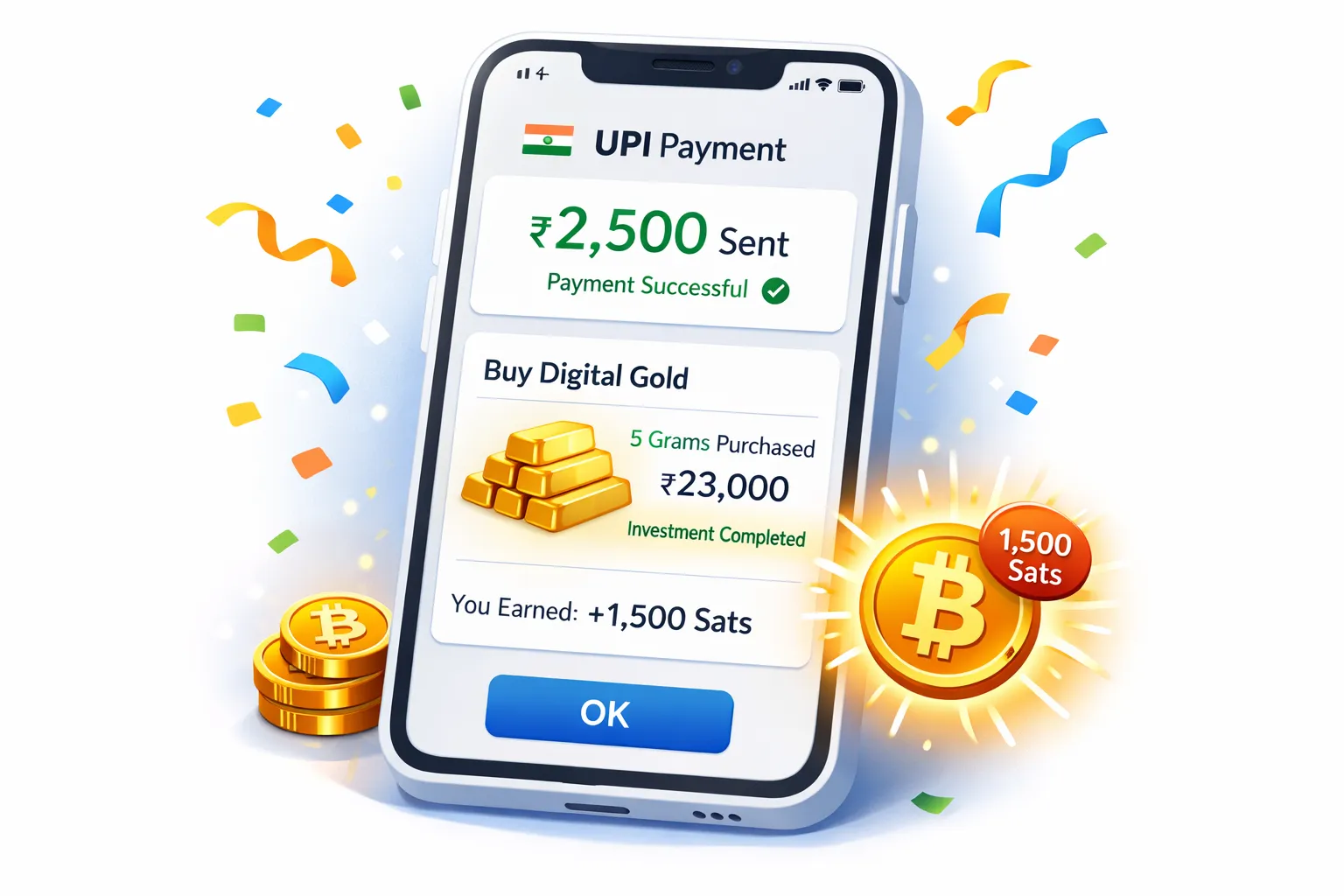
Start from ₹1 (no “salary day only” investing)
-
Instant UPI payments (buy gold in under 30 seconds)
-
24K digital gold + secure vaulting (no locker stress)
-
100% secure & compliant (RBI-compliant workflows, insured vaults, authorized partners)
-
Free Bitcoin (Satoshi) on every purchase
You’re not just buying gold – you’re stacking two assets:
Gold = stability + Bitcoin rewards = upside potential, without trading complexity.
Gamified investing that builds habits
-
Daily streaks (reward consistency, not luck)
-
Spin-to-win rewards (keeps you engaged)
-
Tiered benefits (progress you can feel)
This isn’t just “investing.” It’s momentum.
If you want the cleanest side-by-side on this exact topic, read: FD vs digital gold – what’s better in 2026?
Common Scenarios: What Should You Do?
If you’re building an emergency fund
-
Keep 3–6 months essential expenses in bank savings / liquid instruments
-
Add FD laddering for stability
-
Use gold as a secondary buffer only if you’re comfortable with price movement
If you’re a long-term saver (5–10 years)
-
Add gold gradually (micro-buying beats timing)
-
Avoid jewellery as an investment
-
Use OroPocket to build a disciplined gold habit + earn Bitcoin rewards along the way
If you’re risk-averse but inflation-aware
-
Put the “must-not-fall” money in FDs
-
Put a small portion into gold (start tiny)
-
Increase allocation slowly as comfort grows
Conclusion: So, Gold or FD?
If your priority is certainty, FDs are your tool.
If your priority is inflation protection and long-term wealth resilience, gold is your tool.
But if your priority is:
“I want to start small, invest daily, pay via UPI, and get rewarded for building wealth” – then OroPocket is built for you.
Stop watching. Start growing.
Start with ₹1, buy gold in seconds, and earn free Bitcoin with every purchase – because your money should do more than just sit.