What will be the silver rate in the next 5 years in India?

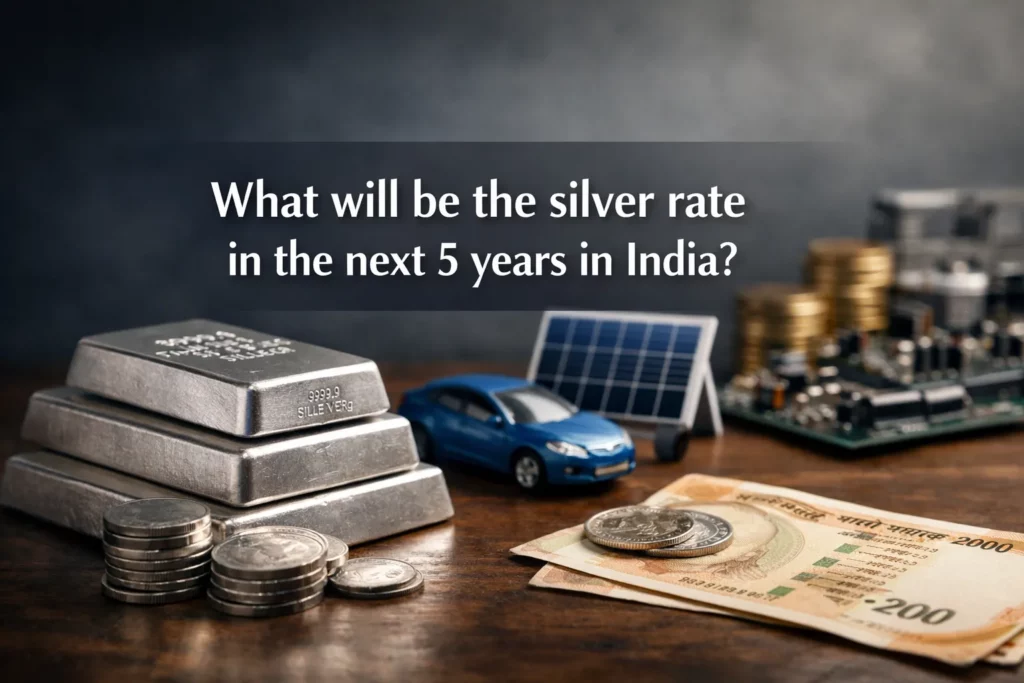
What will be the silver rate in the next 5 years in India? (2026–2030 Outlook)
You’re here for one thing: a realistic view of where silver prices in India could go over the next 5 years – without the hype.
Silver is no longer just “poor man’s gold.” In 2026–2030, it’s increasingly treated like a strategic industrial metal (solar, electronics, EVs) and a macro hedge (inflation, currency swings, geopolitical risk). That dual personality is exactly why silver can deliver outsized rallies – and brutal pullbacks.
If you want exposure but don’t want the headache of storage, making charges, purity risk, or timing the market perfectly: micro-buying silver regularly is the simplest way to play the trend.
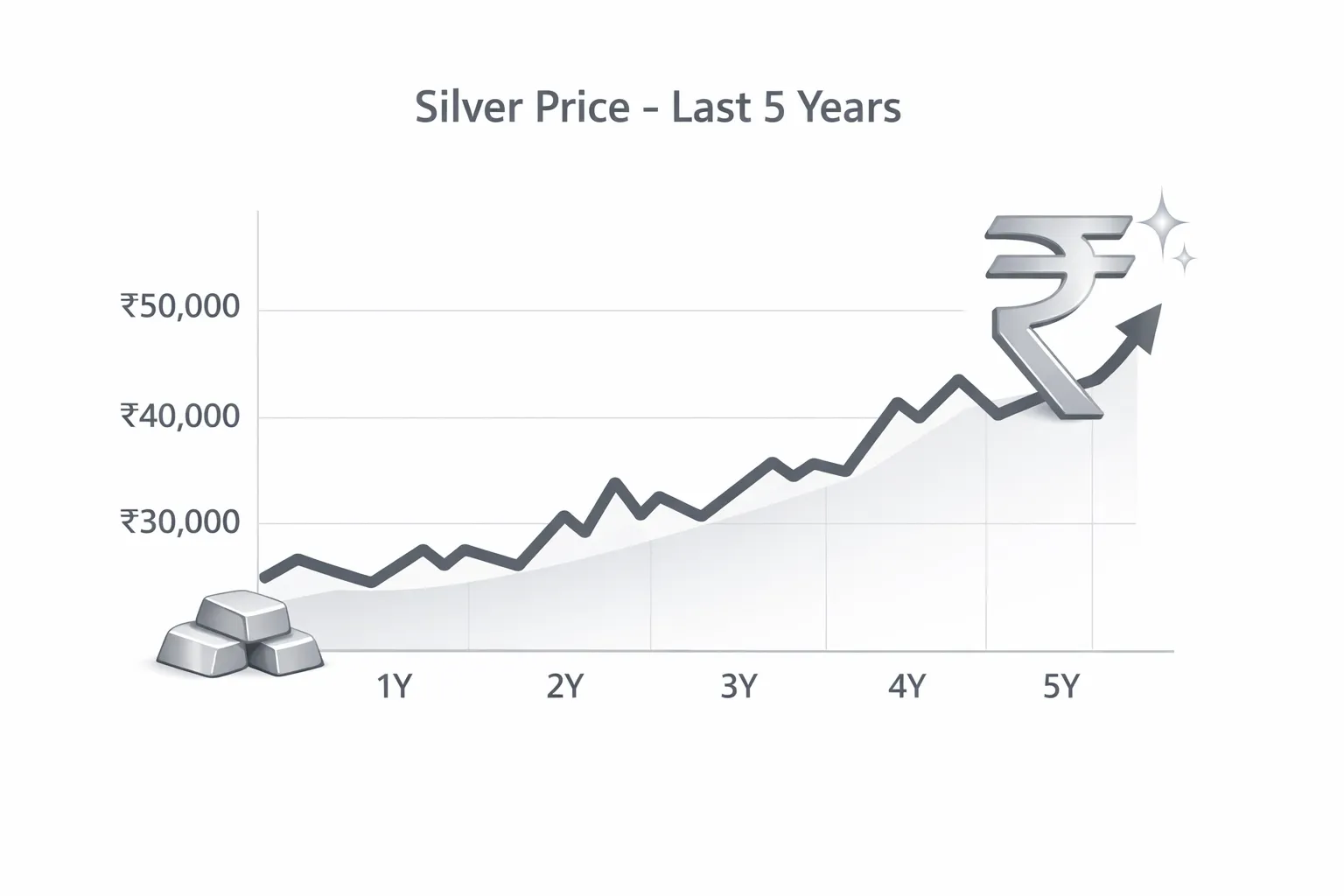
The 5-year silver price forecast in India (best-case, base-case, worst-case)
Silver prices in India are driven by:
-
Global silver price (USD/oz)
-
USD/INR (rupee weakness makes silver costlier in India even if global prices are flat)
-
Domestic demand cycles + import flows
-
Industrial demand (especially solar + electronics)
-
Investment demand (ETFs, bars/coins, digital silver)
Below is a scenario range – not a “guaranteed target.”
2026–2030: scenario-based price bands (INR/kg)
|
Year |
Bear Case (₹/kg) |
Base Case (₹/kg) |
Bull Case (₹/kg) |
What would drive it |
|---|---|---|---|---|
|
2026 |
2,10,000 |
2,60,000 |
3,30,000 |
Cooling after a rally vs. continued deficit + risk-off demand |
|
2027 |
2,00,000 |
2,80,000 |
3,60,000 |
Rate cuts + industrial growth vs. substitution/thrifting |
|
2028 |
1,90,000 |
3,00,000 |
4,00,000 |
Strong solar/EV buildout + weaker INR |
|
2029 |
1,85,000 |
3,20,000 |
4,40,000 |
Tight supply + investor flows return |
|
2030 |
1,80,000 |
3,40,000 |
5,00,000 |
Commodities super-cycle or major inflation/currency shock |
How to use this table (smartly):
-
If you’re saving, plan for base-case and invest consistently.
-
If you’re speculating, understand silver can drop 20–30% fast even in a long-term uptrend.
-
If your goal is wealth-building: build a position gradually, don’t bet the month’s salary on a single price.
What most “silver prediction” articles miss (and what actually matters)
Competitor blogs usually do one of two things:
-
Throw a big number (“₹5 lakh/kg soon!”)
-
Repeat generic drivers (“inflation, demand, geopolitics”)
Here are the real gaps – the factors that decide whether silver is a steady grower or a volatility machine.
Gap #1: Silver is primarily an industrial metal now, not just a precious metal
Silver demand is getting pulled by industries that don’t care about “sentiment” – they care about production.
“Industrial demand reached a record 680.5 million ounces in 2024, representing about 60% of total global silver demand.” – Source
What it means for India (2026–2030):
-
If solar + electronics scale as expected, silver gets a structural floor.
-
But if prices spike too fast, manufacturers may thrift (use less silver) or substitute materials – creating sharp mean reversion.
Gap #2: India is becoming a massive silver consumer – and import flows matter
India is not just buying jewellery. The demand is increasingly industrial.
“In 2024, the total industrial silver demand in India was approximately 42.9 million ounces (1,335 metric tonnes), marking a 4% increase from the previous year.” – Source
Why this matters for your silver rate over 5 years:
-
More industrial usage = more import reliance = greater sensitivity to USD/INR and global supply disruptions.
-
Any policy shocks (tariffs, export restrictions, licensing) can create sudden squeezes.
Key drivers of silver rates in India (2026–2030)
1) INR vs USD (the silent driver most people ignore)
Even if global silver stays flat, a weaker rupee can push Indian silver higher.
Rule of thumb:
If USD/INR rises 5–7% in a year, silver in INR can rise similarly even without a global rally.
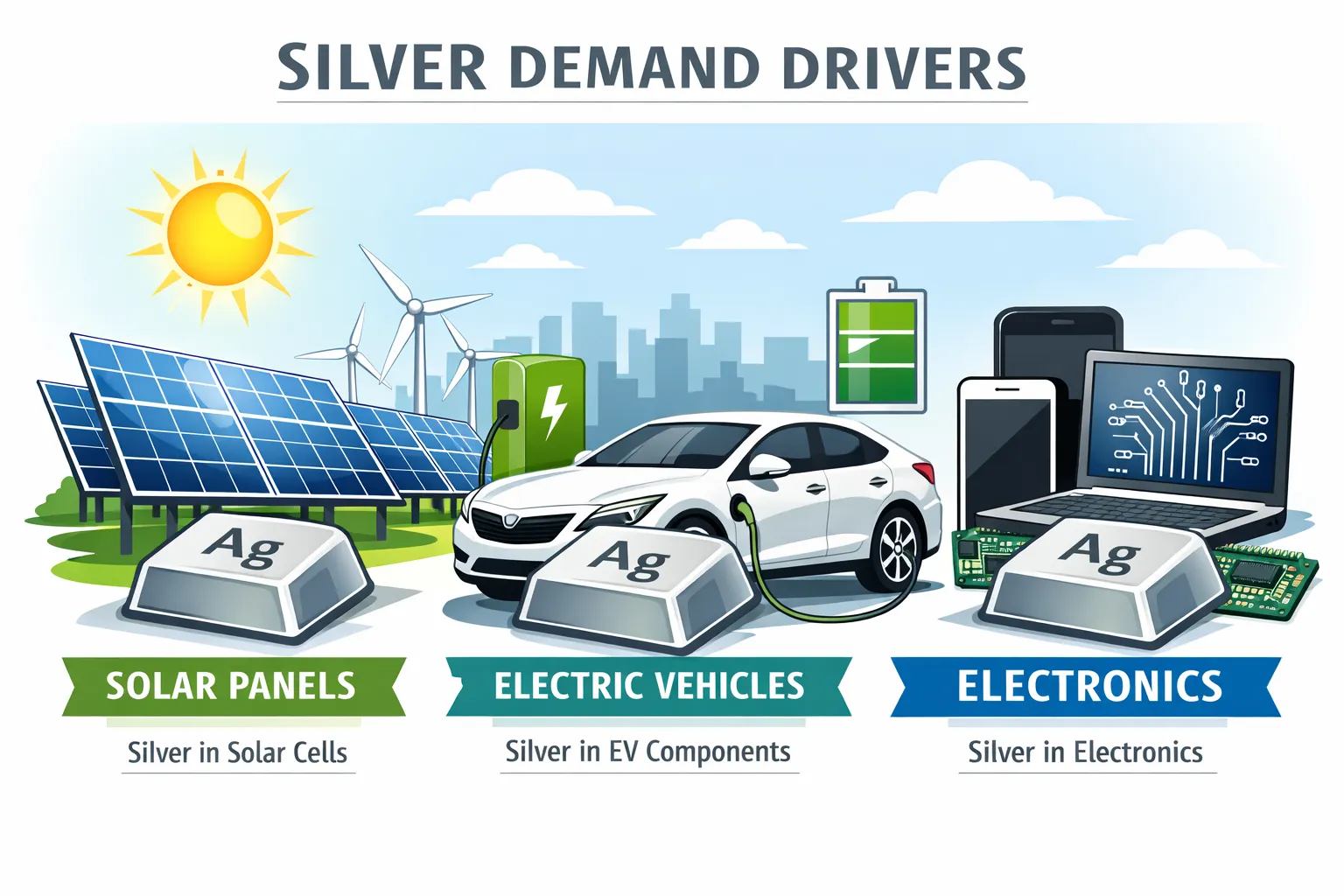
2) Industrial demand: solar, EVs, electronics, data centers
Silver is a top-tier conductor. That’s why it’s used in:
-
Solar PV
-
EV components and charging infrastructure
-
Electronics and high-spec manufacturing
-
Power grids and connectivity expansion
3) Supply constraints (silver isn’t “easy” to ramp up)
A big chunk of silver supply comes as a byproduct (from mining other metals). So even if silver prices rise, supply can respond slowly – supporting long cycles.
4) Investment demand + “risk-off” cycles
When markets fear inflation, war, or banking stress, precious metals attract flows. Silver typically:
-
Outperforms in melt-up phases
-
Underperforms in risk-on equity rallies
-
Falls harder than gold in sharp corrections (because it’s a smaller, more volatile market)
If you’re comparing gold and silver for your portfolio, read: gold vs silver investing in 2026 (India).
What could go wrong? (volatility risks you must respect)
Silver has “wealth-builder” potential – but only if you don’t get shaken out.
Major downside risks (2026–2030)
-
Industrial thrifting/substitution if prices remain very high
-
Strong USD + higher rates (bad for commodities priced in USD)
-
Global growth slowdown reducing industrial demand
-
Speculative froth unwinding (fast 20–30% drops are normal in silver)
Want a quick reality check on down-moves? Read: why silver prices fall.
Best way to invest in silver for the next 5 years (India)
Most Indians leak returns through:
-
Making charges
-
Purity uncertainty
-
Storage and resale spread
-
Bad timing (buying only after headlines)
Smart 5-year strategy: “Buy small, buy often”
That’s how you reduce regret and smooth volatility.
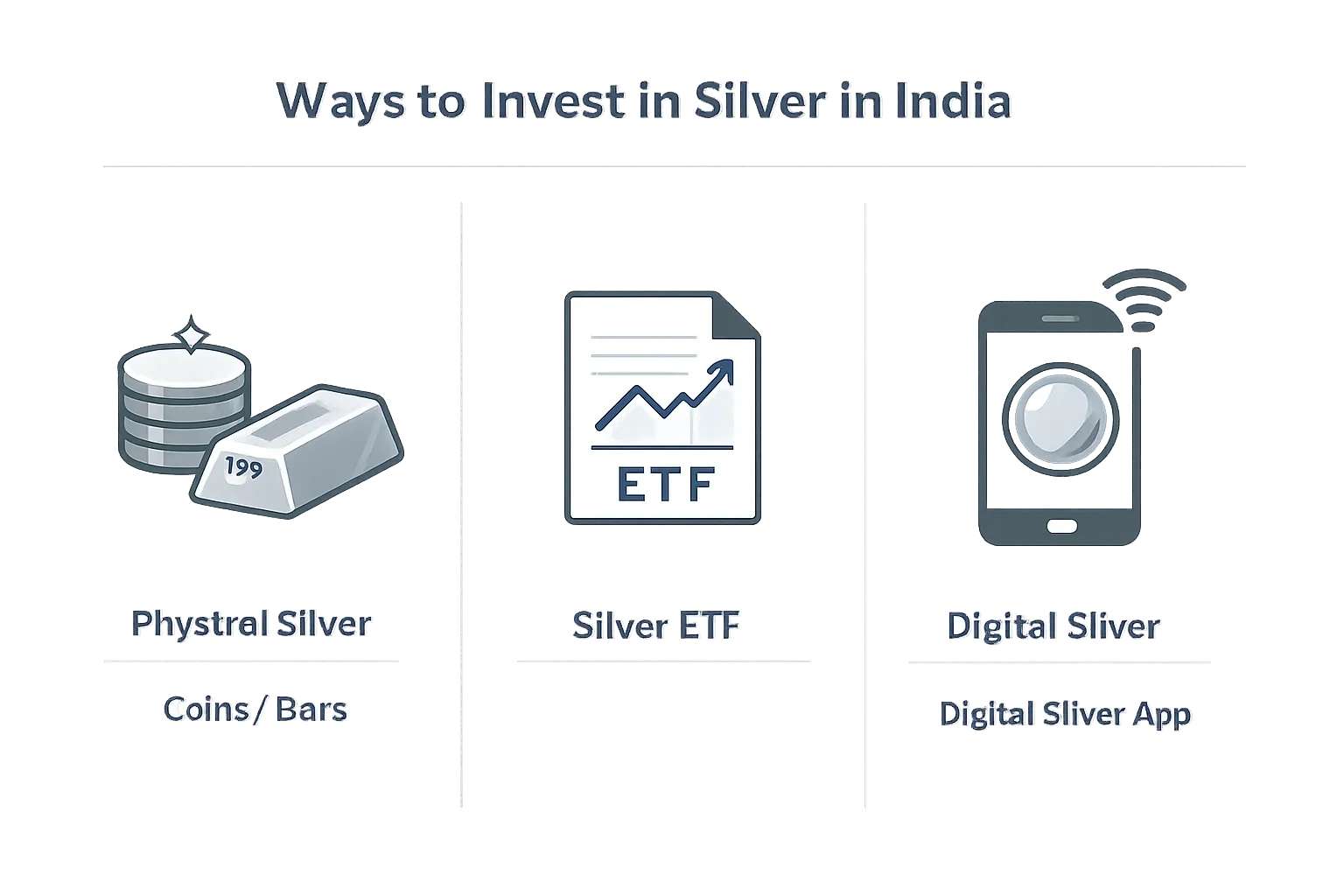
Here’s a clean comparison:
|
Method |
Best for |
Pros |
Cons |
|---|---|---|---|
|
Physical silver (coins/bars) |
Traditional buyers |
Tangible |
Storage + resale spread + purity checks |
|
Silver ETF |
Market-linked investors |
Demat convenience |
Fees + market hours + tracking/custody mechanics |
|
Digital silver (app) |
Mass-market savers |
Start tiny, instant liquidity, no storage |
Must choose a trusted platform |
If you’re deciding between modern options, this guide helps: digital silver vs silver ETF in 2026.
Why OroPocket is built for long-term silver investing (not one-time speculation)
If your goal is the next 5 years, your edge is not prediction – it’s process.
What makes OroPocket different
-
Start from ₹1: no “minimum ticket size” excuses. Start today.
-
Buy in under 30 seconds with UPI: no friction, no delays.
-
100% secure & compliant: RBI-compliant systems, insured vault storage, authorized bullion partners.
-
Free Bitcoin on every buy: you don’t just accumulate silver – you also earn Satoshi (Bitcoin cashback). Two assets. One habit.
-
Gamified investing that builds consistency: daily streaks, spin-to-win, tiered rewards.
-
Referral rewards: both referrer and friend earn 100 Satoshi + free spin.
This is how you stay consistent when silver gets volatile: you don’t “watch and panic.” You build and win.

Final verdict: So, what will silver rate be in the next 5 years in India?
A responsible forecast is a range, not a promise.
-
If industrial demand stays strong and INR weakens gradually, ₹3,00,000–₹3,50,000/kg by 2030 is a reasonable base-case band.
-
If we get a true “risk-off + supply squeeze” cycle, a bull-case move toward ₹4,50,000–₹5,00,000/kg is possible.
-
If rates stay high, USD strengthens, and industrial substitution accelerates, silver can stagnate or even trend lower for stretches.
The winning move isn’t guessing the exact peak – it’s owning a position you can hold through cycles.
Stop watching. Start growing.
Start a ₹1 silver habit on OroPocket today. Buy silver with UPI in seconds – and get free Bitcoin rewards every time you invest.