
What was the biggest crash in gold prices?

What Was the Biggest Crash in Gold Prices?
If you’re searching this, you’re probably wondering: “Gold is supposed to be safe… so how badly can it really fall?”
The truth: gold can crash – hard and fast – especially when leverage, panic selling, and sudden policy moves collide.
For Indian retail investors (students, salaried professionals, first-time investors), the real goal isn’t to “predict” crashes – it’s to invest in a way that survives them: small amounts, disciplined buying, and zero stress.
Before we break down history’s biggest gold crashes, watch this quick explainer to get the market mechanics in plain English:

The Short Answer: “Biggest” Depends on How You Measure It
There are three ways people mean “biggest crash”:
|
“Biggest crash” meaning |
What it measures |
Why it matters |
|---|---|---|
|
Biggest 1-day % fall |
A single day wipeout |
Shows how fast sentiment + liquidity can snap |
|
Biggest peak-to-trough bear market |
Multi-month / multi-year decline |
Shows what happens after bubbles burst |
|
Biggest inflation-adjusted collapse |
“Real” loss of purchasing power |
Shows how long recovery can take |
Most investors asking this question mean biggest one-day crash – because that’s what feels like a “shock.”
Biggest 1-Day Gold Crash (Modern Era): Feb 28, 1983 (≈ -9.6%)
This is widely cited as one of gold’s largest one-day percentage drops in history (modern trading era).
“On Feb. 28, 1983, gold prices fell by 9.6% in a single day.” – InvestingNews
Why it happened (the simple version)
-
Gold was coming off a hype era (late-70s inflation shock)
-
Monetary policy and rates changed the “fear trade”
-
Liquidity + positioning amplified the move
What it teaches Indian investors
If your gold plan relies on perfect timing, one day can destroy months of confidence. You need a system.
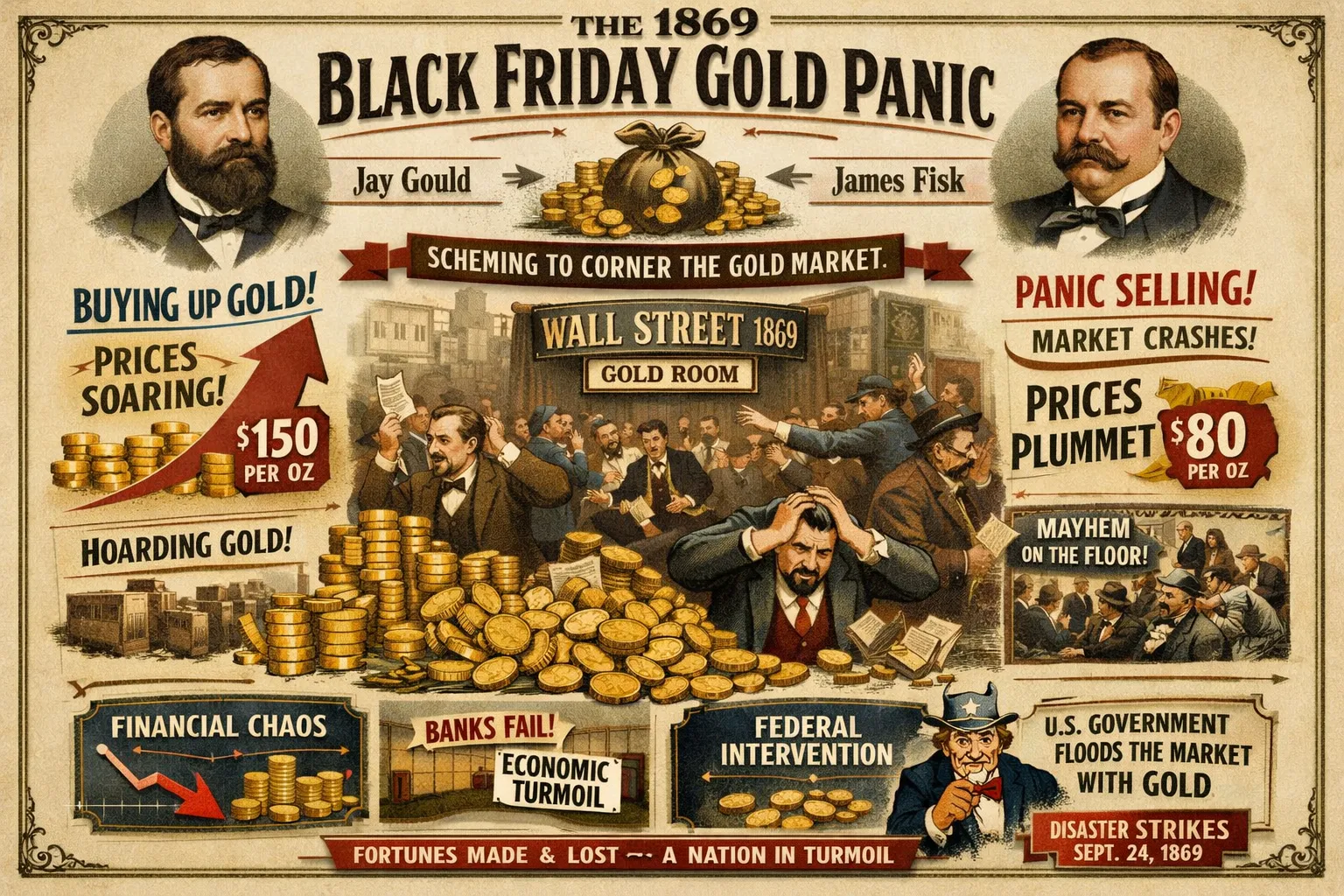
The Most Famous Historic Gold Crash: “Black Friday” (Sept 24, 1869)
This one is legendary because it wasn’t just “market forces” – it was an attempted corner of the market.
What happened
-
Financiers tried to corner gold supply (force price up)
-
The U.S. Treasury intervened and released gold
-
Prices fell sharply, causing panic across markets
What it teaches
Gold is “safe” long-term – but in the short term, policy + big money + liquidity can still create violent moves.
The Crash That Shook ETF Investors: April 15, 2013 (≈ -8% intraday)
This is the crash most modern investors remember because it happened in the age of ETFs, fast news, and global positioning.
“On April 15, 2013, gold suffered its largest one-day drop in 30 years, plunging more than 8% in midday trading.” – InvestingNews

Why it happened (in plain English)
-
“Gold is the only safe asset” started breaking as a narrative
-
Money moved out of gold products quickly
-
Stop-losses + forced selling accelerated the fall
The hidden lesson competitors miss
Most blogs talk about “reasons.” The more important part is structure: ETFs and derivatives made gold more liquid, and liquid assets can fall faster when everyone rushes out.
If you want to understand how traders identify breakdown zones before these moves, read how to read gold chart trends, support/resistance, and key indicators.
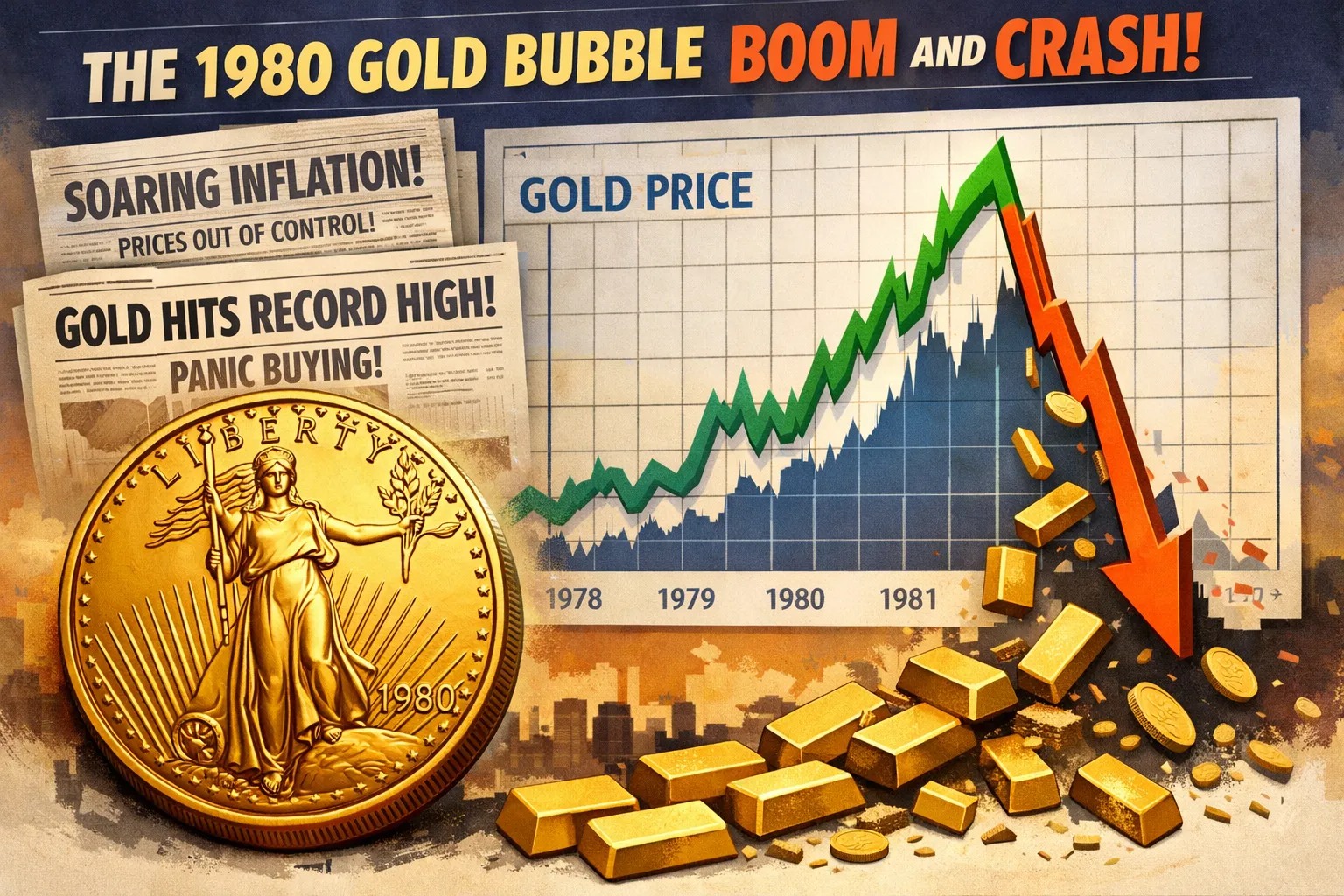
The Peak-to-Trough “Real Pain” Crash: After the 1980 Peak
Gold hit around $850/oz (Jan 1980) and then entered a long painful downcycle. Even if there wasn’t a single “one day” headline, many investors experienced a multi-year wealth hangover.
Why this matters more than a 1-day crash
Because most retail investors don’t lose money from one bad day – they lose money by:
-
buying near peaks due to FOMO
-
then stopping their investing plan completely
That’s why a micro-investing habit wins over “lump sum bravado.”
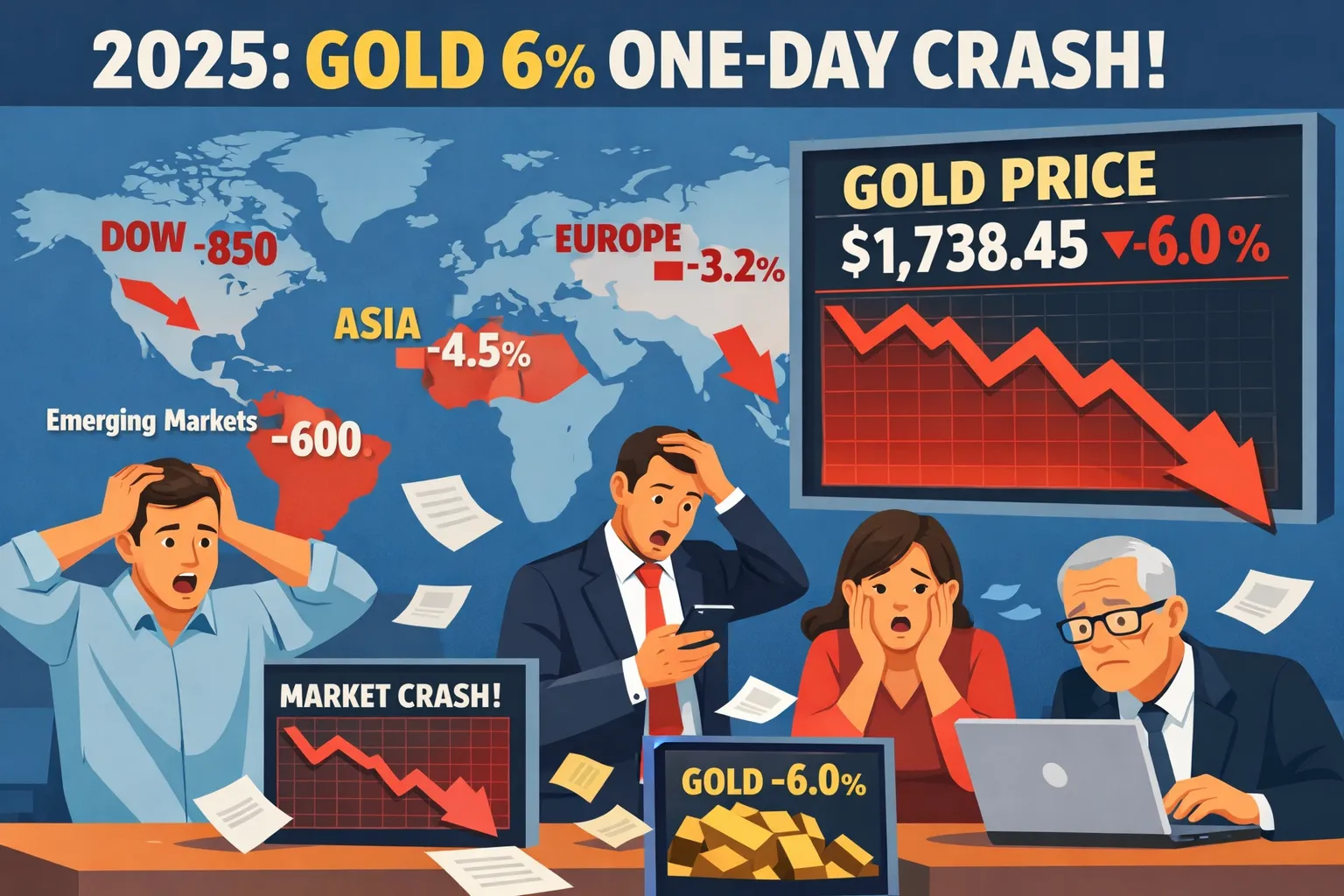
The New-Age Shock: Oct 21, 2025 (≈ -6.3% in a day)
Recent markets gave a reminder: gold can still drop sharply even in a bullish macro narrative.
“Gold prices fell by approximately 6.3% in a single day… from a record high of $4,381.21 to $4,082.03 per troy ounce.” – Business Today
What triggered it (common crash recipe)
-
Profit booking after new highs
-
Dollar strength / yields moving up
-
Technical levels breaking (stop-loss cascades)
What Smart Indian Investors Do Differ (So Crashes Don’t Break Them)
Most people ask: “When will gold crash again?”
Better question: “How do I invest so I’m fine even if it does?”
The crash-proof approach (simple, effective)
-
Start tiny, start now (you don’t need ₹10,000 to “begin”)
-
Buy in small slices (weekly or daily)
-
Avoid emotional lump sums near headlines
-
Keep liquidity (so dips feel like opportunity, not danger)
If you’re comparing formats (jewellery vs coins vs digital), this guide helps you avoid the common overpaying traps: coins vs bars vs jewellery vs digital gold – what’s best for investment in India.
Why OroPocket Is Built for This Exact Problem
Gold crashes hurt most when you’re overexposed, illiquid, and investing based on emotion.
OroPocket flips that:
-
₹1 entry point: Start immediately – no “I’ll do it next month” excuse.
-
Instant UPI: Buy gold in under 30 seconds.
-
100% secure & compliant: 24K gold, insured vaulting, authorized partners.
-
Gamified investing: streaks + spin rewards that build the habit.
-
Free Bitcoin on every purchase: you get Satoshi cashback alongside gold – two assets, one action.
-
Referral rewards: both sides earn 100 Satoshi + free spin.
This is the 21st-century version of “buy gold regularly” – with built-in motivation.
If you want the full playbook on smart buying options (digital gold, ETFs, etc.), use how to invest in gold: smart options for Indians.
Conclusion: The Biggest Gold Crash Isn’t the Point – Your Strategy Is
Yes, gold has seen brutal drops – ~9.6% in a day (1983), ~8% intraday (2013), and sharp modern shocks like 2025’s ~6.3% fall. The “safe haven” can still shake you.
But disciplined investors don’t fear crashes – they use them.
Stop watching. Start growing.
Start with ₹1 on OroPocket, buy with UPI in seconds, and earn free Bitcoin rewards while you build long-term gold wealth – calmly, consistently, and confidently.