
What is the 60 20 20 rule for gold?


What Is the 60/20/20 Rule for Gold? (And How Indians Can Use It Without Overthinking)
If you’ve been hearing “60/20/20” everywhere, you’re not alone. It’s showing up because investors globally are questioning the old 60/40 (stocks/bonds) playbook – and asking a simpler question:
How do I add gold in a way that’s balanced, liquid, and still has upside?
That’s exactly what the 60/20/20 rule for gold aims to solve. It’s not a “one magic formula” rule – think of it as a smart structure for your gold exposure (or in some versions, your entire portfolio).
And if you’re in India – salaried, student, freelancer, small business owner – this matters even more because:
-
inflation quietly eats savings,
-
gold prices move daily,
-
and most people either buy too late… or buy in the least efficient way (high making charges, low liquidity, unclear purity).
Before we break it down, watch this quick explainer to lock the idea in.
The 2 Versions of the 60/20/20 Rule (Don’t Confuse Them)
Competitors often mix these up. Here’s the clean breakdown:
|
Version |
What 60/20/20 Splits |
Best for |
|---|---|---|
|
Gold-exposure 60/20/20 |
Within your gold allocation: physical + paper + growth |
People who want gold, but want it diversified |
|
Portfolio 60/20/20 |
Whole portfolio: 60% stocks, 20% bonds, 20% gold |
Long-term asset allocation thinkers |
This blog focuses on what most people mean when they Google the phrase:
“What is the 60/20/20 rule for gold?” → the gold-exposure framework.
What the 60/20/20 Rule for Gold Investing Actually Means
The idea: don’t treat gold as one single thing. Split it into roles.
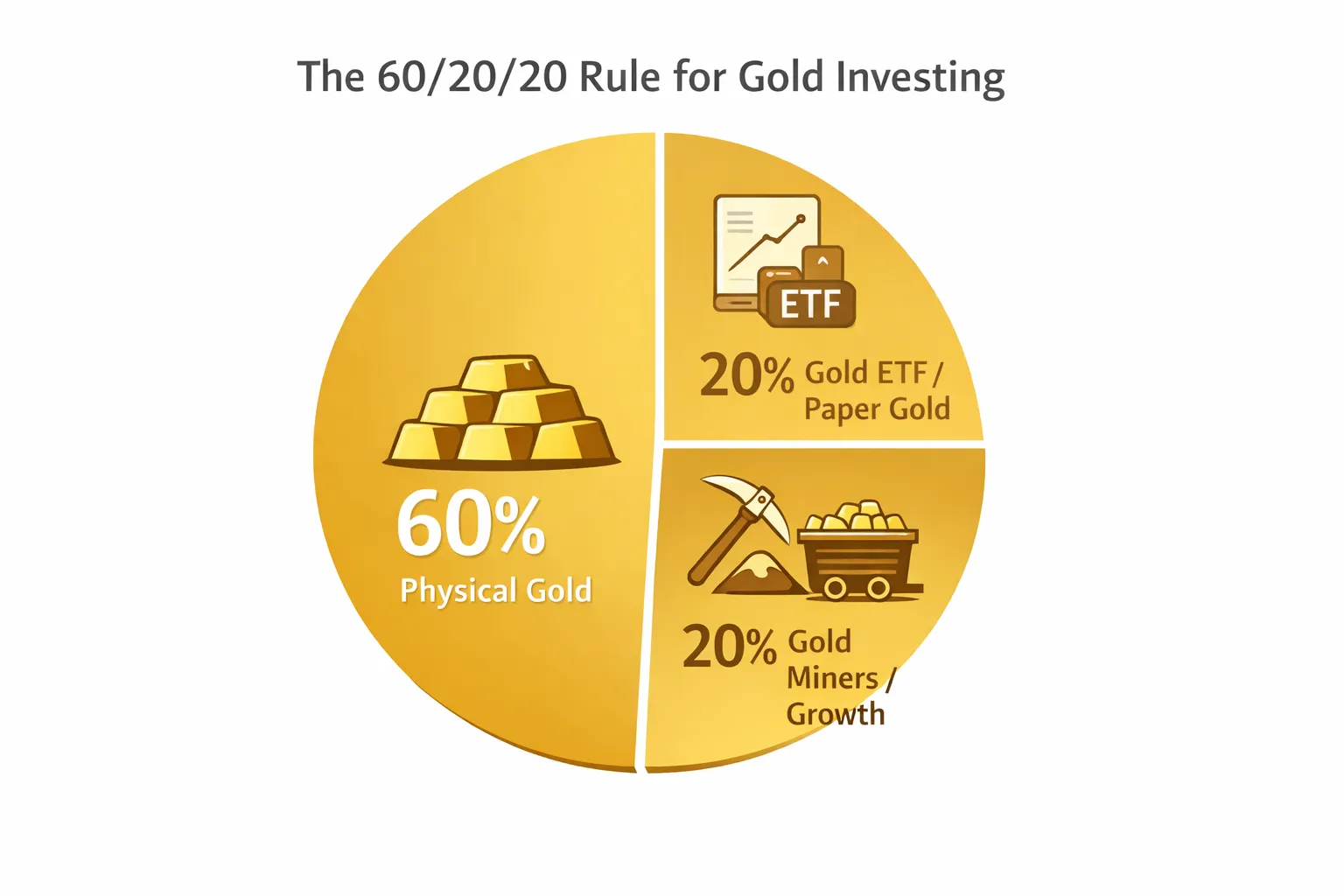
60%: “Foundation” Gold (Wealth Protection)
This is your core protection layer – gold you own for resilience, not drama.
Examples:
-
Physical gold (coins/bars) with strong purity assurance
-
Allocated/insured gold holdings (vault-backed)
Why it exists:
Because it’s meant to be the “sleep-well” part of your gold strategy – less dependent on market narratives.
If you’re buying digitally, it helps to understand what you’re actually paying beyond “today’s gold rate.” Use this guide to avoid hidden premium surprises: spot price vs local gold rate explained.
20%: “Liquid” Gold (Easy Buy/Sell & Rebalancing)
This bucket is about speed and flexibility.
Examples:
-
Gold ETFs / paper gold products
-
Short-term tactical gold exposure
Why it exists:
Because you want a portion you can rebalance quickly without dealing with storage, delivery, or resale negotiation.
In India, many investors also use digital gold here – because it’s easy to buy small amounts regularly, track in-app, and sell instantly.
20%: “Growth” Gold (Higher Risk, Higher Upside Potential)
This is where you accept more volatility in exchange for potential outperformance.
Examples:
-
Gold mining stocks
-
Gold-focused funds
-
Royalty/streaming companies (where available)
Why it exists:
Because in gold bull cycles, miners can run faster than gold. But in bad cycles, they can fall harder too (because they’re still equities).
Why This Rule Matters Right Now (Not “Someday”)
1) Because the old diversification playbook is under pressure
One major reason this framework is getting attention: the traditional stock/bond hedge doesn’t always behave like it used to.
“Morgan Stanley’s Chief Investment Officer, Mike Wilson, has advocated for a shift from the traditional 60/40 portfolio allocation to a 60/20/20 strategy, incorporating a 20% allocation to gold.” – Source
Gold is being treated less like a “side hedge” and more like a core sleeve.
2) Because inflation punishes idle money (even when you “feel safe”)
India’s savers often default to: savings account → FD → repeat. The problem isn’t discipline. The problem is real returns.
“From 2021 to 2026, gold delivered an absolute return of approximately 183%, translating to a compounded annual growth rate (CAGR) of 23.10%.” – Source
Even if future returns are different, the takeaway is simple: gold has historically shown up when purchasing power is under attack.
The Biggest Content Gap Competitors Miss: 60/20/20 Is Useless Without a “How to Execute” Plan
Most articles define the buckets and stop. Here’s how to actually use the rule as a retail investor in India – without a high salary, without a financial advisor, and without complex brokerage moves.
Step 1: Decide your “Gold %” first (then apply 60/20/20)
The 60/20/20 rule is about structuring gold – but you still need to decide:
How much of your total money should be in gold?
A practical approach:
-
Conservative: 5–10% gold
-
Balanced: 10–20% gold
-
Defensive: 20%+ (especially if you distrust bonds or want protection-first)
If you want help thinking through allocation and mistakes Indians make, use: is gold a good investment + how much to allocate in 2026.
Step 2: Use micro-investing so you don’t “lump-sum panic buy”
Most people lose money in gold by doing this:
-
ignore gold for years,
-
see headlines,
-
buy big at highs.
Instead: small, regular buys.
This is where OroPocket is built differently:
-
start from ₹1 (no “minimum amount” pressure),
-
buy in under 30 seconds with UPI,
-
build a habit with streaks and rewards.

Step 3: Make the strategy “self-rewarding” so you actually stick to it
Here’s the uncomfortable truth: most investors don’t fail because of math – they fail because they can’t stay consistent.
OroPocket bakes consistency into the product:
-
Free Bitcoin (Satoshi) on every gold/silver purchase
-
Daily streaks + spin-to-win rewards
-
Referral rewards: both sides earn 100 Satoshi + free spin
So you’re not just “investing.” You’re getting rewarded for the habit – and that habit is what compounds.

If you want a deeper “execution playbook” for Indian investors, follow: gold investing in 2026: how to add gold to your portfolio without overpaying.
60/20/20 Rule: Quick Example (So You Can Copy-Paste the Logic)
Let’s say you decide you want ₹50,000 total gold exposure.
Apply the 60/20/20 structure:
|
Bucket |
% |
Amount |
Goal |
|---|---|---|---|
|
Foundation gold |
60% |
₹30,000 |
Protection + long-term hold |
|
Liquid gold |
20% |
₹10,000 |
Easy rebalance / quick access |
|
Growth gold |
20% |
₹10,000 |
Upside potential (higher risk) |
Now here’s the best part for beginners:
You don’t need to complete this on Day 1. Start from ₹1 and build toward it.
Why OroPocket Fits the 60/20/20 Mindset (Even If You’re Starting Small)
OroPocket is designed for modern Indians who want:
-
control (start anytime, any amount),
-
progress (see it grow daily),
-
smart investing (hedge inflation instead of hoping),
-
modern upside (Bitcoin rewards without crypto trading stress).
OroPocket USPs that matter for this strategy
-
₹1 entry point: stop delaying, start now
-
Instant UPI: buy gold in under 30 seconds
-
Free Bitcoin on every purchase: two assets for the price of one
-
RBI-compliant + insured vaulting: trust and transparency
-
Gamified investing: streaks, spins, tiered rewards = consistency
Conclusion: The Real “Rule” Is Balance + Consistency
The 60/20/20 rule for gold works because it gives gold three jobs:
-
protect,
-
stay liquid,
-
still have upside.
But the rule only pays you if you can stick to it.
Stop watching. Start growing.
Start your gold journey with ₹1, earn free Bitcoin on every buy, and build a real investing habit with OroPocket – without complexity, without minimums, without waiting for the “perfect time.”