
Gold ETF: Pros, Costs, Returns & Best Options in India (2026 Guide)


Gold ETF: Pros, Costs, Returns & Best Options in India (2026 Guide)
Gold ETFs are one of the cleanest ways to invest in gold without lockers, making charges, or purity drama – but most people buy them without understanding the real cost (tracking error + bid–ask spread), tax treatment, or how to shortlist the “best” fund.
This guide fixes that – in plain English – and also shows when a Gold ETF is not the best choice (and when digital gold via OroPocket can be smarter, faster, and more rewarding).
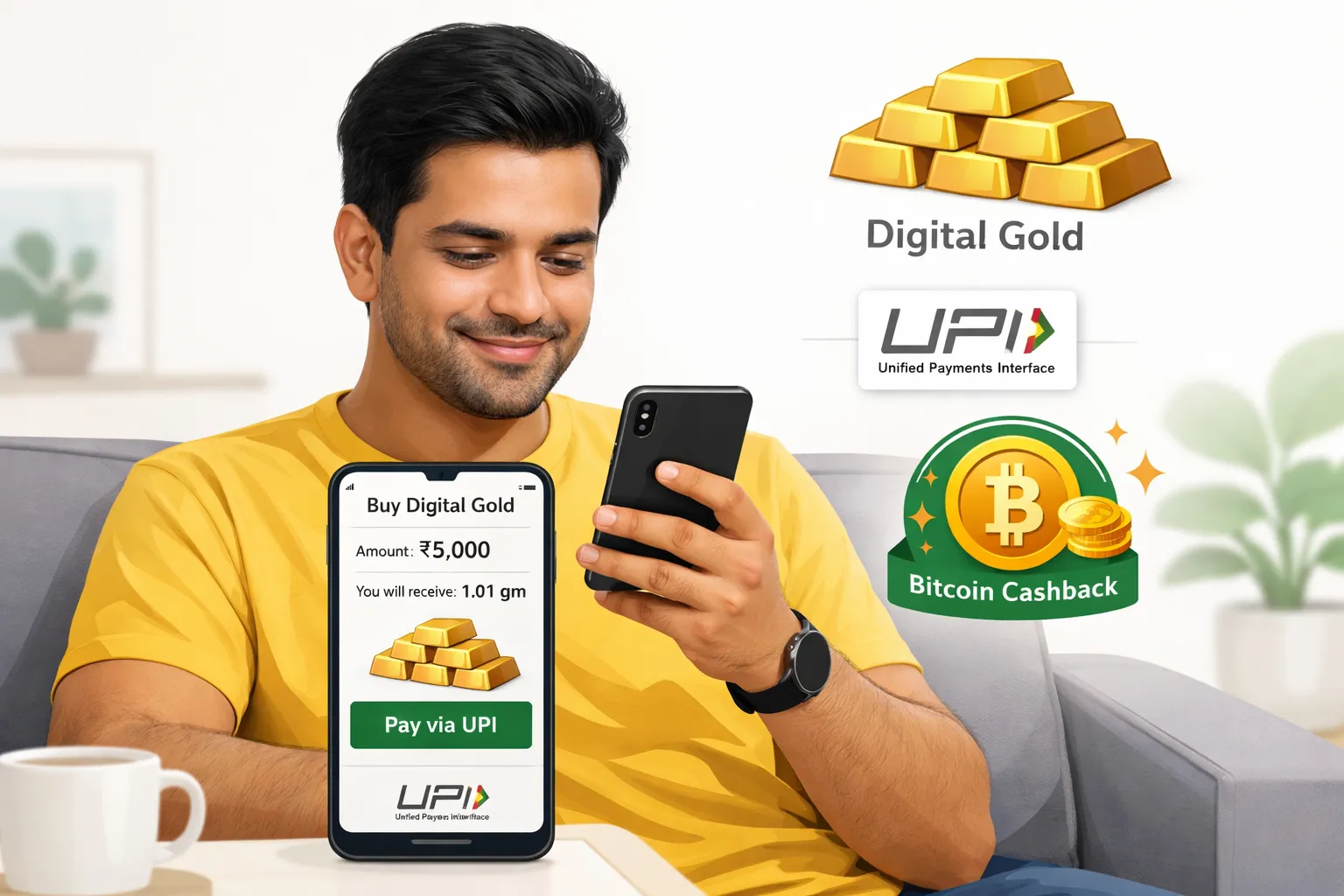
What is a Gold ETF (and how it works in India)?
A Gold ETF is an exchange-traded fund that aims to mirror domestic gold prices. You buy it on NSE/BSE like a stock, and it generally holds physical gold to back the units.
“Each unit of a Gold ETF typically represents one gram of gold with a purity of 99.5% or higher… backed by actual physical gold.” – AMFI
Gold ETF basics (quick and practical)
-
Where it trades: NSE/BSE (market hours)
-
Where it sits: Your Demat account
-
What moves the price: Gold price + ETF demand/supply + costs (more below)
-
Who should care: Anyone wanting liquid gold exposure with low friction
If you’re tracking the market daily, you’ll also like following the live gold price in India so you understand whether your ETF is moving correctly or lagging. OroPocket keeps this simple with real-time market views like live gold prices today.
Gold ETF vs Physical Gold vs SGB vs Digital Gold (which is best in 2026?)
Most competitor articles compare Gold ETFs only on returns. That’s incomplete. In real life, what matters is:
-
costs
-
liquidity
-
tax
-
minimum investment
-
convenience
-
how you’ll actually behave (monthly saving vs occasional buying)
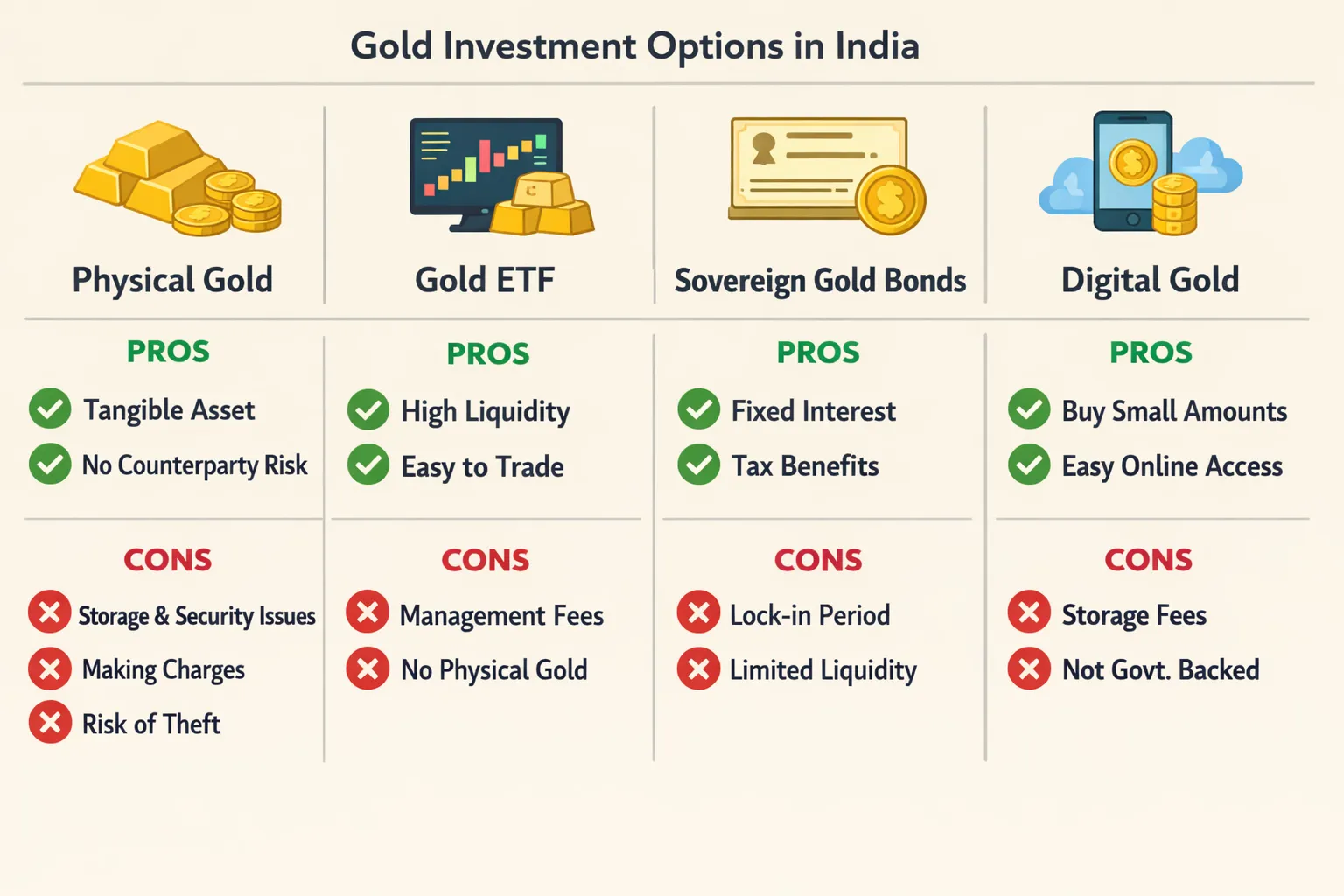
Comparison table (India, 2026)
|
Option |
Best for |
Key advantages |
Key drawbacks |
|---|---|---|---|
|
Gold ETF |
Demat investors, traders, lump-sum buyers |
Liquidity, transparency, no storage hassle |
Demat required, bid–ask spreads, tracking error |
|
Physical gold (coins/jewellery) |
Gifting, jewellery usage |
Tangible, culturally accepted |
Making charges, storage risk, purity concerns |
|
SGB (Sovereign Gold Bond) |
Long-term holders who can wait |
Govt backing, extra interest |
Liquidity varies, lock-in-like behavior, availability cycles |
|
Digital gold (OroPocket) |
Mass-market monthly savers |
Start from ₹1, instant UPI, fractional buying/selling |
Platform-dependent (choose trusted, compliant providers) |
The truth:
If you already have a Demat account and want exchange-traded exposure, ETFs are strong.
If you want to build a daily/weekly saving habit, micro-investing with instant UPI tends to win on behavior.
Stop waiting for “the right time.” Start building the habit.
Gold ETF returns: what to expect (and what’s realistic)
Gold doesn’t behave like equities. It’s not a “10x in 2 years” asset. It’s a wealth stabilizer and an inflation hedge.
“Gold… absolute return: approximately 183% over the five-year period from 2021 to 2026 (CAGR ~23.1%).” – myjar.app
What that means for you
-
Gold can outperform during uncertainty and inflationary periods
-
Gold can underperform equities in risk-on bull cycles
-
A smart investor uses gold as an allocation, not a personality trait
Want to sanity-check your ETF movement? Compare it to gold price chart trends so you spot tracking gaps early.
The real costs of Gold ETFs (most people miss this)
Competitors often list just the expense ratio. That’s only one piece.
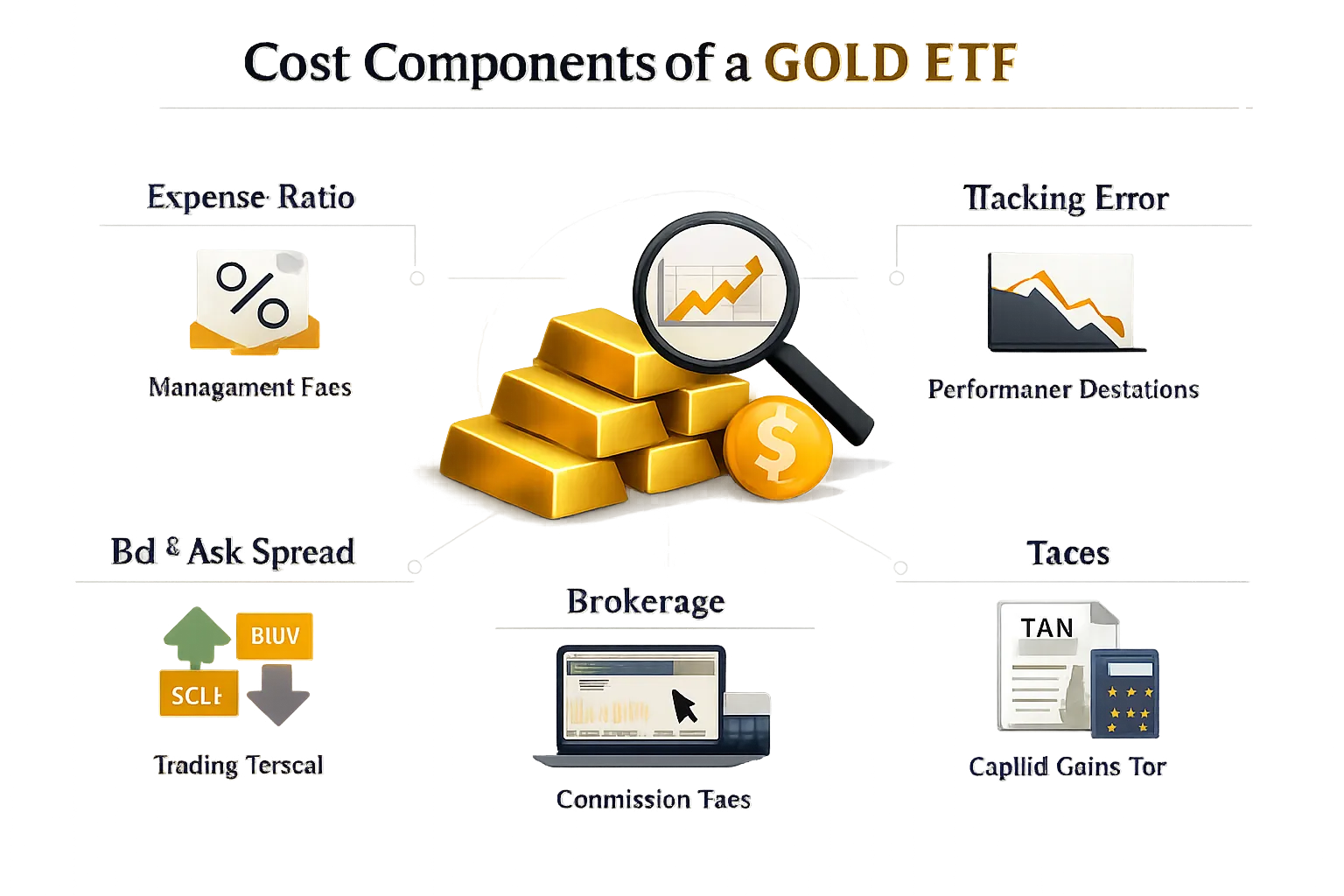
1) Expense ratio (TER)
-
Annual cost charged by the fund
-
Lower is generally better if other things are equal
2) Tracking error (the silent return-killer)
Tracking error = how tightly the ETF matches gold’s price movement.
Lower tracking error typically indicates:
-
better fund execution
-
lower operational drag
-
tighter replication
3) Bid–ask spread (your “hidden entry/exit fee”)
-
If liquidity is low, spread widens and you lose money even if gold hasn’t moved
-
This matters a lot for frequent buyers/sellers
4) Brokerage + exchange charges
-
Depends on your broker plan
-
ETFs trade like stocks – so expect normal trading costs
5) Tracking difference due to cash holdings/custody costs
Even if gold is stable, ETFs can drift slightly.
Practical takeaway:
The “best” Gold ETF is not just the one with high past returns – it’s the one with:
-
low tracking error
-
good liquidity
-
reasonable expense ratio
-
healthy AUM/market presence
Taxation of Gold ETFs in India (2026 snapshot)
Tax rules can change – so always confirm latest rules before investing. But as a working framework:
-
Short-term gains: taxed as per your slab (typically for shorter holding periods)
-
Long-term gains: taxed at applicable LTCG rules (often with indexation-style benefits depending on classification/rules prevailing)
Why this matters
Two funds with the same pre-tax return can deliver different post-tax outcomes depending on:
-
holding period
-
your tax slab
-
your rebalancing frequency
If you’re a regular saver, the real win is: low friction + consistency. Taxes are managed by time, not by overthinking.
Best Gold ETFs in India (2026): shortlist you can start with
Below are widely-followed names that frequently appear across research lists and market screens in 2026 (popular among investors due to size/liquidity/track record). Final selection should be based on the metrics in the next section.
Commonly tracked Gold ETFs (India)
-
Nippon India ETF Gold BeES (GOLDBEES)
-
SBI Gold ETF
-
HDFC Gold ETF
-
ICICI Prudential Gold ETF
-
Kotak Gold ETF
-
Axis Gold ETF
-
UTI Gold ETF
Important: Don’t blindly buy a name. Run the checklist.
2026 Gold ETF selection checklist (use this before you invest)
Check 1: Liquidity first
-
Look at daily volumes and typical bid–ask spread
-
Higher liquidity = less slippage
Check 2: Tracking error (lower is better)
-
Compare across ETFs tracking the same underlying gold price
Check 3: Expense ratio (TER)
-
Differences look small, but compound over years
Check 4: AUM / market presence
-
Larger, established ETFs can be more liquid and stable operationally
Check 5: Your investing behavior
Ask yourself:
-
Will I invest monthly in small amounts?
-
Or will I invest lump sum and hold?
If you’re a small-ticket, frequent buyer, Gold ETFs can be inconvenient (Demat + brokerage + spreads). That’s where OroPocket’s ₹1 entry point + instant UPI can fit better.
The OroPocket angle: when Gold ETFs aren’t enough
Gold ETFs are great – for Demat-first investors.
But for most Indians (students, salaried, first-time investors), the bigger problem is not “which ETF” but:
“Why am I not investing consistently?”
OroPocket is built for that.
Why OroPocket feels like gold investing for 2026
-
Start from ₹1 (no minimum, no excuse)
-
Instant UPI buys in under 30 seconds
-
Daily streaks + spin-to-win: habit-building, not guilt-building
-
Free Bitcoin (Satoshi) on every gold/silver purchase: you earn two assets while saving in one
-
Secure, insured, compliant: RBI-compliant processes, authorized bullion partners, insured vaulting
You can still track your investing decisions with live market context like gold rate today in India – and actually act on it instantly.
How much gold should you allocate in a portfolio?
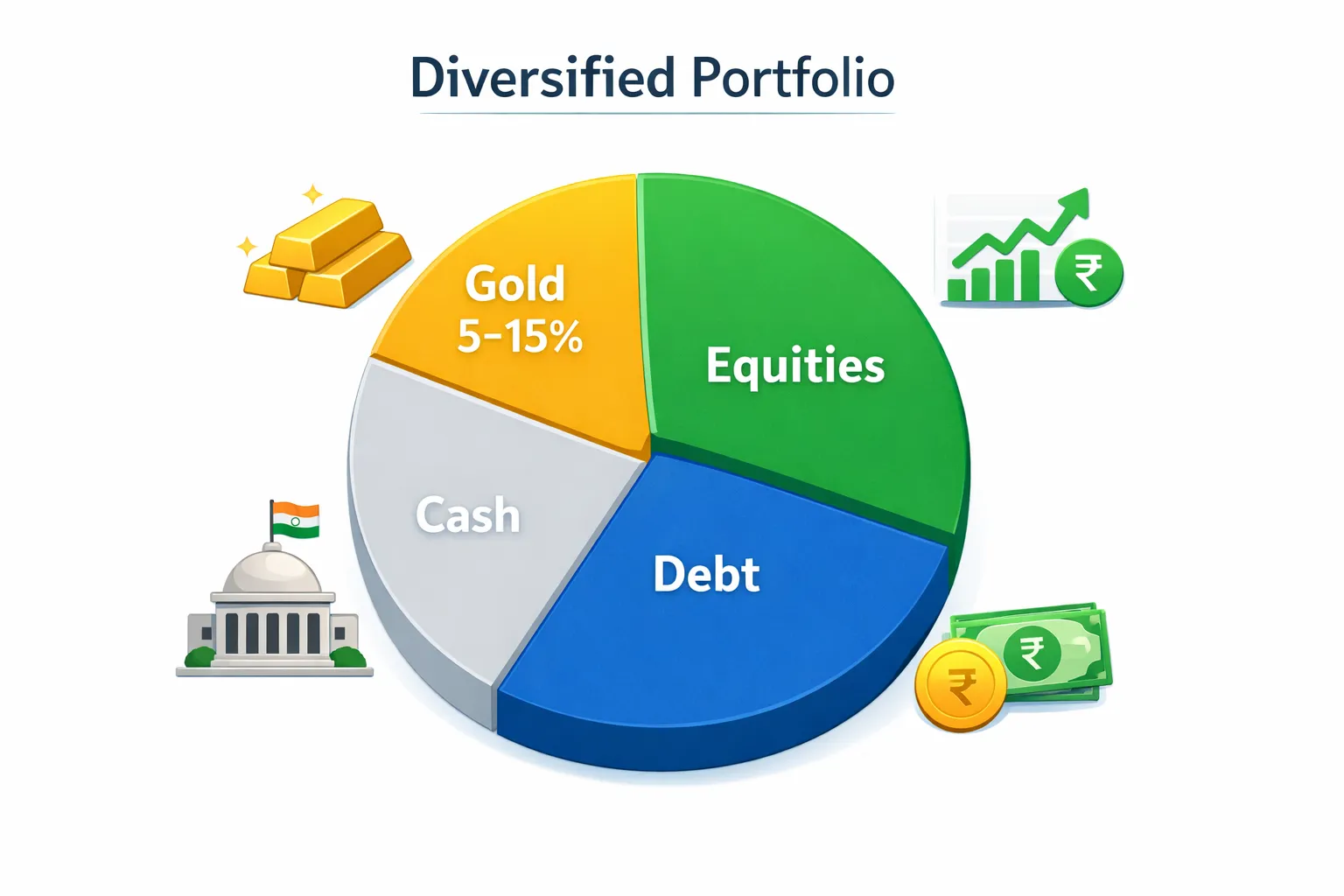
There’s no one perfect number, but many investors use gold as a 5%–15% allocation depending on:
-
income stability
-
equity exposure
-
time horizon
-
risk tolerance
Common mistake
Going “all-in on gold” after a rally. Gold is insurance – don’t buy the insurance only after the fire.
Common mistakes investors make with Gold ETFs (avoid these)
-
Buying the least-known ETF with low liquidity (spread eats returns)
-
Ignoring tracking error and focusing only on past returns
-
Trading too frequently and paying costs repeatedly
-
Assuming ETF price = gold price (it’s close, but not identical)
-
Investing without a clear allocation plan
Conclusion: Gold ETF or OroPocket – what’s your best move?
If you already have a Demat account, invest in lump sums, and want exchange-based exposure: Gold ETFs are a strong, transparent choice.
But if your goal is to start small, stay consistent, and beat inflation without friction, OroPocket is built for you.
₹1 entry. Instant UPI. Real 24K gold. And free Bitcoin on every purchase.
Stop watching. Start growing.
Download OroPocket and start your first gold buy today – ₹1 is all it takes.