
How much silver is allowed to keep at home?

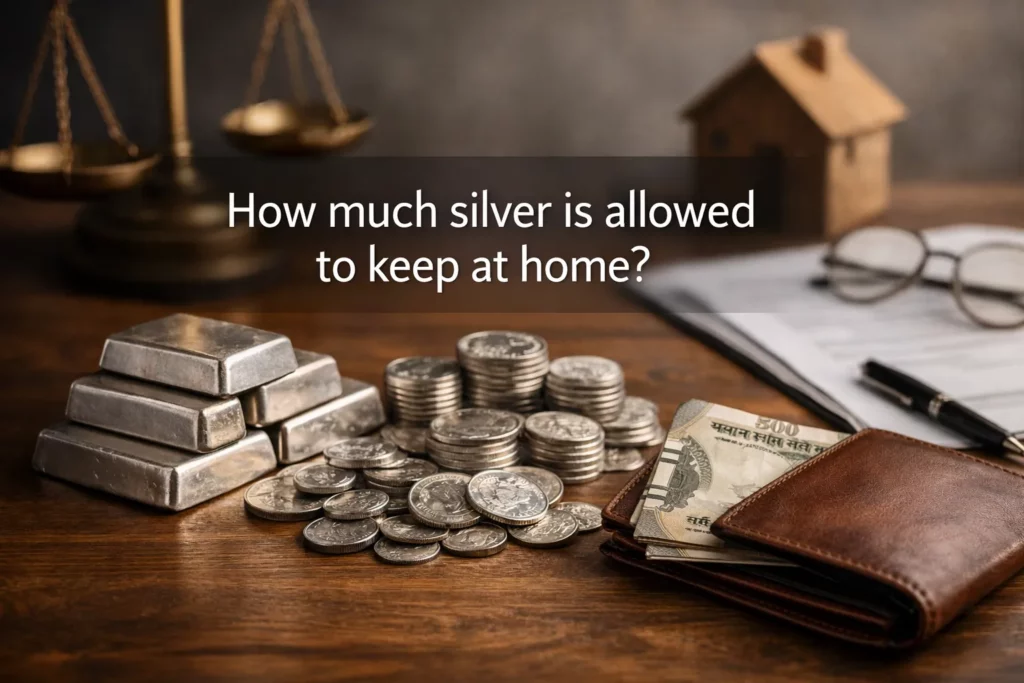
How Much Silver Is Allowed to Keep at Home in India? (Rules, Tax Triggers & Smart Ways to Invest)
Most Indians buy silver as coins, bars, jewellery, or utensils – especially around festivals and weddings. The big question is simple: Is there a “legal limit” on how much silver you can keep at home?
Answer: Under Indian income tax law, there is no fixed gram/weight limit for holding silver at home. Holding doesn’t create tax. Tax risk shows up when:
-
you can’t explain the source (unexplained asset),
-
you sell silver and make a profit (capital gains),
-
you receive silver as a taxable gift.
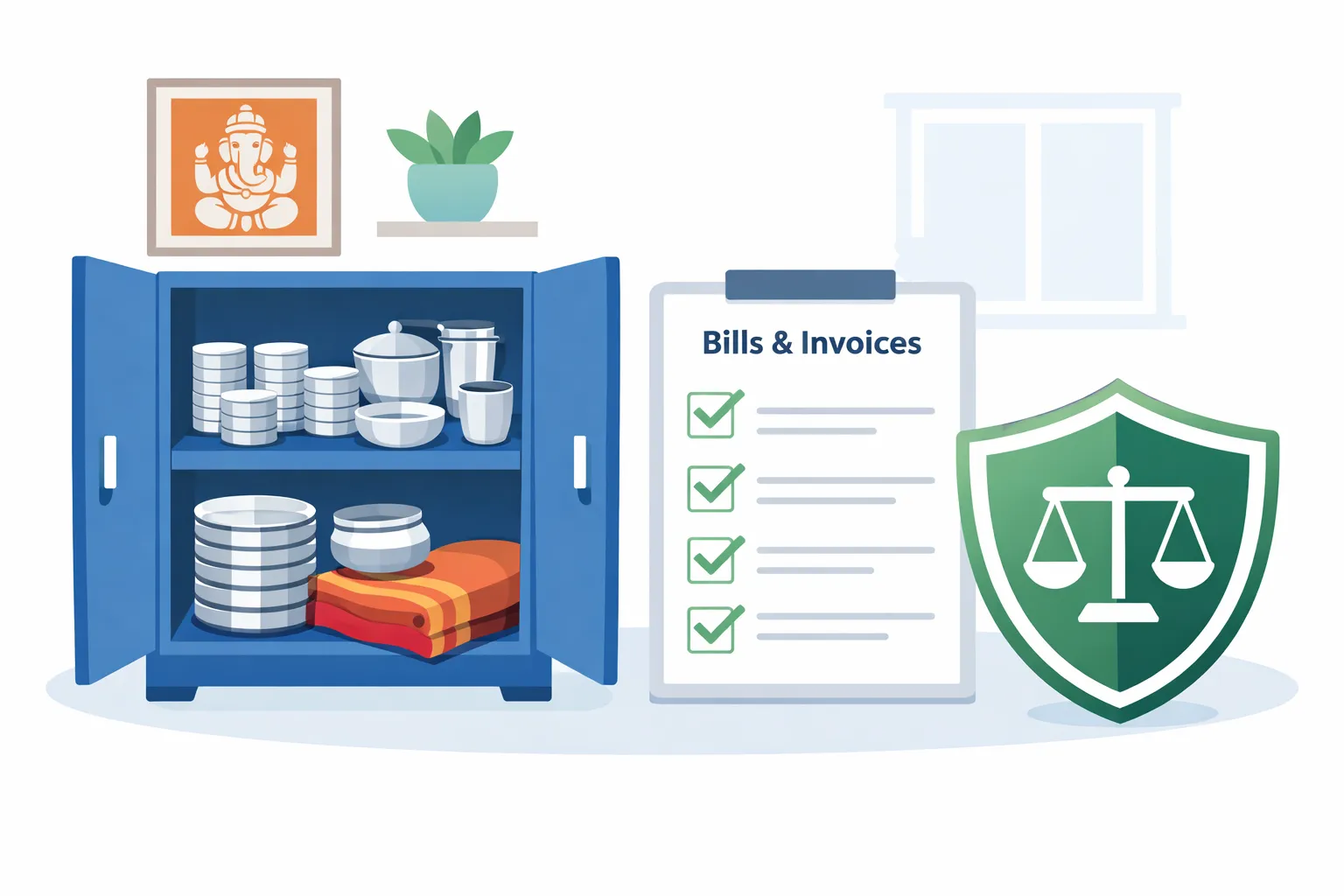
What the Law Actually Cares About: Source, Records, and Events (Sale/Gift)
Competitor articles broadly agree on three things:
-
No statutory holding limit for silver at home.
-
Proof of source matters (bills, bank trail, inheritance docs).
-
Tax applies mainly on sale (capital gains) or unexplained silver.
Content gap most people miss: “No limit” doesn’t mean “no questions”
If you hold a large quantity of silver with no invoice or cash-only trail, you may still face scrutiny. The practical rule is:
Keep as much as you want – but be able to explain it.
Is Silver a Capital Asset in India?
For most individuals, silver (coins, bars, jewellery) is treated as a capital asset (unless you’re trading it as a business). That means:
-
No tax just for holding
-
Capital gains tax when sold at profit
“Under Section 69A… unexplained money, bullion, jewellery, or other valuable articles… is deemed as income… taxed at 60% under Section 115BBE… resulting in an effective tax rate of 78%.” – Source
When Does Holding Silver Become a Tax Problem?
1) When silver is treated as unexplained (no credible source)
If the tax department finds you own silver and you cannot substantiate:
-
how you acquired it (purchase/inheritance/gift), and
-
from what funds,
then it can be taxed under “unexplained assets” provisions – often the harshest outcome.
Your defensive toolkit:
-
Purchase invoices (jeweller/online order)
-
Bank statement / UPI proof
-
Gift deed + giver details (if gifted)
-
Inheritance documents / will (if inherited)
2) When you sell silver (profit = capital gains)
Selling silver can create:
-
Short-term capital gains (STCG) if held for a shorter period
-
Long-term capital gains (LTCG) if held long enough
(Exact holding-period rules and rates can vary by product structure and current tax law changes; always verify for your assessment year.)
3) When you receive silver as a gift (gift tax rules)
If silver is received:
-
from a non-relative, and
-
total value crosses the gift-tax threshold in the year, and
-
no exemption applies (e.g., marriage, inheritance),
then it may be taxable as “Income from Other Sources.”
Do You Need to Report Silver in Your ITR?
Reporting depends on your income level and the ITR schedule applicable.
Silver holdings disclosure (assets schedule)
If you fall under asset disclosure requirements (commonly via Schedule AL in relevant ITR forms), you may need to disclose:
-
silver (as part of movable assets),
-
plus related liabilities.
Important: Disclosure is reporting, not a new tax on holding.
Silver sale disclosure (capital gains schedule)
If you sold silver, you typically must report:
-
purchase date and cost,
-
sale date and value,
-
expenses on transfer (if any),
-
capital gains computation.
“Keep Silver at Home” vs “Invest in Silver Digitally”: What’s Smarter in 2026?
Physical silver is familiar – but it brings friction:
-
storage risk
-
purity concerns
-
resale spread / making charges (especially jewellery)
-
paperwork gets lost
Digital investing is built for modern savers: small amounts, clean records, and easy selling.
If you’re tracking prices before you buy, use OroPocket’s live gold price dashboard to stay rate-aware (gold often moves with macro factors that also impact silver sentiment).

OroPocket Angle: Turn Silver from “Stored Metal” into a Wealth Habit
Most people don’t fail because they chose the wrong asset.
They fail because they don’t invest consistently.
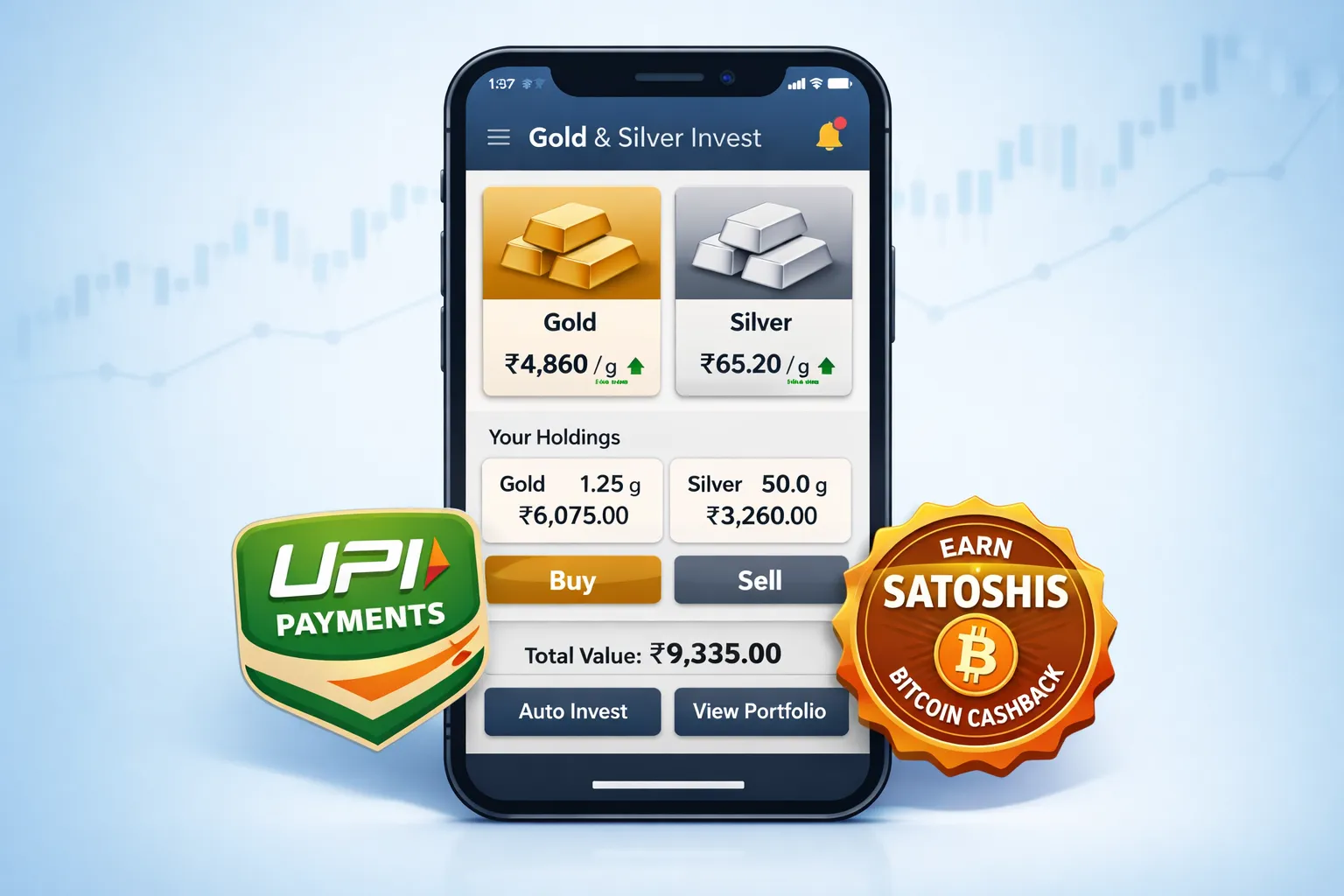
OroPocket is built to make precious metals a daily habit, not a once-a-year purchase.
Why OroPocket works for first-time & mass-market investors
-
₹1 entry point: start instantly – no “I’ll do it later”
-
Instant UPI payments: buy in under 30 seconds
-
100% secure & compliant: insured vault storage + authorized partners
-
Gamified investing: streaks, spins, tiers – momentum you can feel
-
Referral rewards: invite friends and both win (100 Satoshi + spin)
The unfair advantage: Free Bitcoin on every gold/silver purchase
You’re not just buying silver. You’re stacking two assets:
-
Silver/Gold: stability, time-tested store of value
-
Bitcoin rewards (Satoshi): upside exposure without “trading stress”
This is how modern India invests: stable base + growth kicker.
What to Do If You Already Have Silver at Home (Quick Action Plan)
-
Create a “Silver folder” today
-
invoices + photos of items + bank/UPI proofs
-
-
If it was inherited/gifted
-
keep a simple note: from whom, when, occasion + any supporting papers
-
-
Avoid large undocumented cash purchases
-
If you’re building wealth going forward:
-
keep physical for tradition (coins/utensils), and
-
use digital for discipline and liquidity.
-
Also, if you’re comparing metal allocation or tracking market movement, OroPocket’s gold price chart can help you understand trends before you accumulate.
Final Verdict: How Much Silver Is Allowed?
There’s no legal weight limit on keeping silver at home in India.
The real “limit” is your ability to prove the source and report taxable events (sale/gifts) correctly.
Stop parking value in cupboards with missing bills. Start building wealth with records, rewards, and consistency.
Ready to invest the smart way?
Start with ₹1 on OroPocket, pay via UPI, and earn free Bitcoin on every purchase.
Stop watching. Start growing.