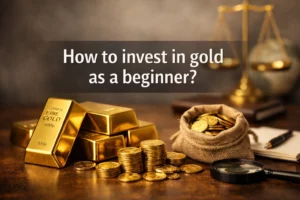
Financial Investments: Best Options for Indians in 2026


Financial Investments: Best Options for Indians in 2026
If you’re searching “financial investments,” you’re probably trying to answer one simple question: Where should I put my money in 2026 so it grows (not just “sits”) – without taking reckless risk?
In India, most people fall into one of these buckets:
-
You’re young (student/early-career) and want to start small.
-
You’re salaried and want a clean plan: emergency fund + SIP + safe hedge.
-
You’re a small business owner/freelancer and need liquidity + stability.
-
You want inflation-beating growth, but you don’t want confusing products.
This guide breaks down the best investment options in India for 2026 – FD/RD, mutual funds (SIP), ETFs, stocks, NPS/PPF, and gold/silver (physical vs digital) – with a simple decision framework.

The #1 rule of investing in 2026: beat inflation, then chase growth
Inflation silently eats your money when your returns are lower than price rises.
“India’s inflation rate was 6.68% in 2022 and 5.65% in 2023 – often higher than typical savings account interest, causing negative real returns in those years.” – RateInflation
Translation: savings accounts are for parking money, not building wealth.
A simple “best investment” framework (steal this)
Before picking products, pick the purpose:
|
Goal |
Time horizon |
Best-fit instruments |
|---|---|---|
|
Emergency fund |
0–12 months |
Savings + Liquid funds + short FD |
|
Near-term goals (travel, gadgets, wedding prep) |
1–3 years |
FD/RD, short-duration debt funds |
|
Wealth creation |
5+ years |
SIP in mutual funds, ETFs, selective stocks |
|
Retirement |
10–30 years |
NPS, EPF/PPF (plus equity allocation) |
|
Inflation hedge + stability |
Any |
Gold/Silver (prefer digital for flexibility) |
Best financial investment options in India (2026): a clear comparison
|
Option |
Risk |
Liquidity |
Return potential |
Best for |
|---|---|---|---|---|
|
FD/RD |
Low |
Medium |
Low–Medium |
Safety-first, short goals |
|
Mutual Funds (SIP) |
Medium |
High |
Medium–High |
Long-term wealth creation |
|
ETFs / Index funds |
Medium |
High |
Medium–High |
Low-cost, passive investing |
|
Stocks (Direct Equity) |
High |
High |
High |
Higher risk appetite, active learning |
|
PPF |
Low |
Low |
Medium |
Tax-friendly, long-term safety |
|
NPS |
Medium |
Low |
Medium |
Retirement corpus + tax benefits |
|
Gold/Silver (Physical) |
Medium |
Low–Medium |
Medium |
Traditional hedge, but storage issues |
|
Gold/Silver (Digital) |
Medium |
High |
Medium |
Hedge + convenience + small ticket size |
If you want to track prices while timing your buys, you can refer to OroPocket’s live gold rate today in India pages.
1) Fixed Deposits (FD) & Recurring Deposits (RD): stable, but not a wealth engine
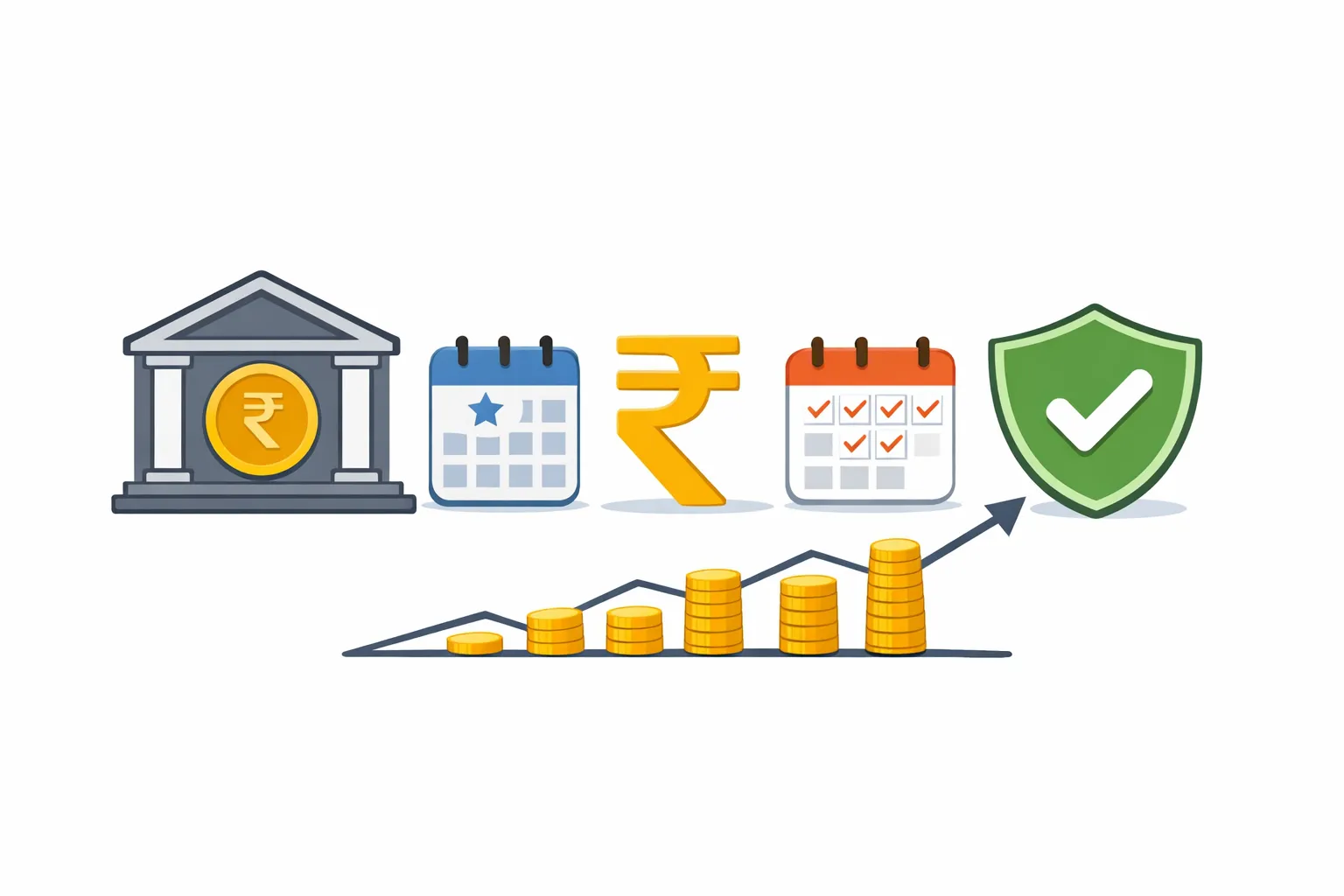
FD/RD are popular because they feel safe – and for short-term goals, they are.
When FD/RD makes sense
-
Building a predictable short-term corpus (1–3 years)
-
Parking money you cannot afford to see fluctuate
-
Laddering: split into 3–5 FDs with different maturities
The hidden downside
-
After tax + inflation, real returns can shrink fast.
-
Liquidity penalties if you break early.
Verdict: Keep FDs as stability, not your “growth plan.”
2) Mutual Funds (SIP): the most practical wealth plan for most Indians
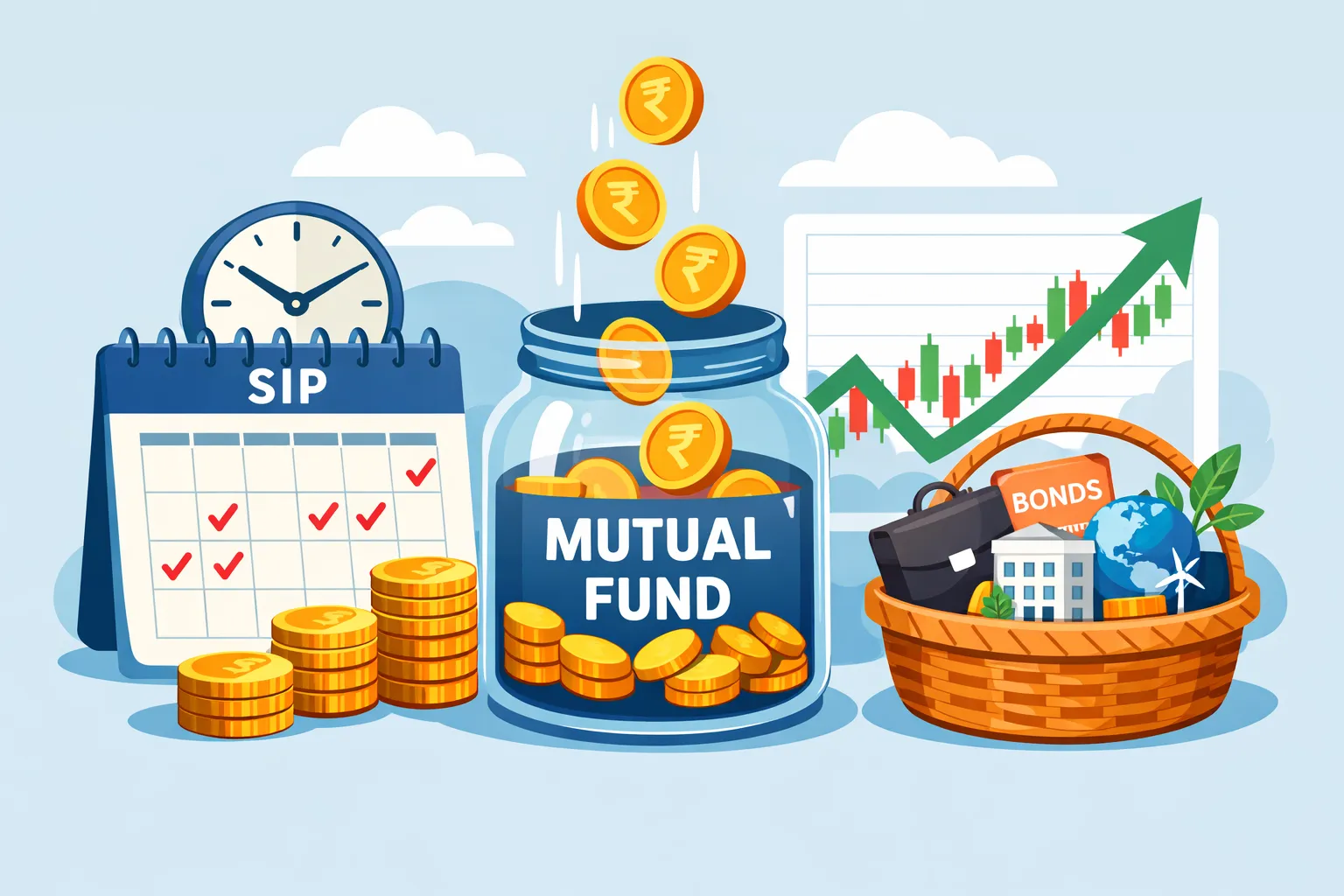
If you want a simple system that works for salaried and first-time investors: SIP is hard to beat.
Why SIP wins in 2026
-
Builds discipline automatically
-
Reduces timing risk (you don’t need to “predict the market”)
-
Scales with income (start small, increase annually)
Smart SIP structure (simple)
-
Core: Index / large-cap oriented
-
Satellite: Mid/small allocation (only if horizon is 7–10+ years)
-
Debt / liquid: for near-term needs
Verdict: For most people, SIP is the backbone of long-term investing.
3) ETFs & Index investing: low-cost, transparent, powerful
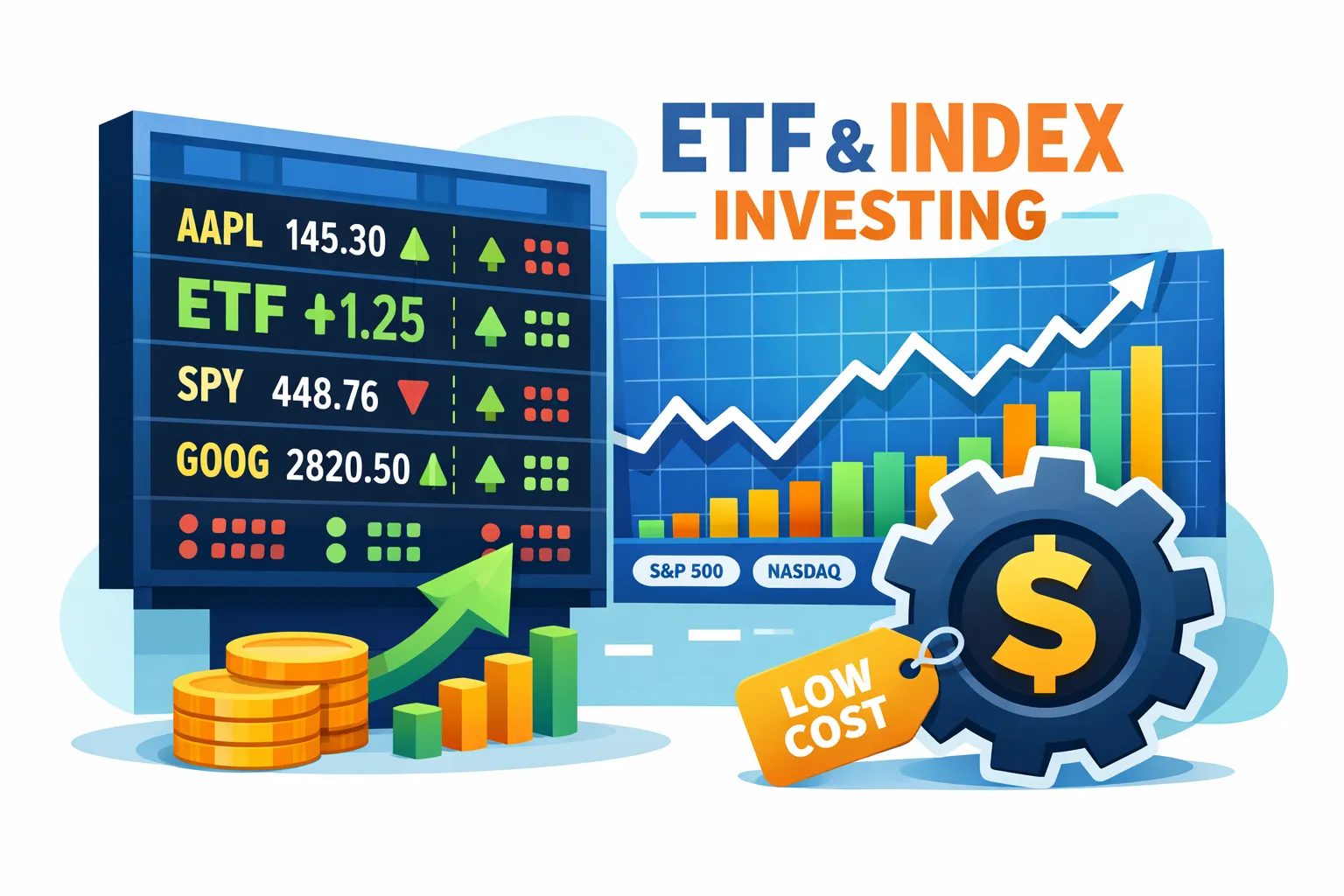
ETFs (Exchange Traded Funds) and index funds are the “clean” version of investing: low cost + diversification + no fund manager drama.
Best use-cases
-
You want market returns with minimal complexity
-
You prefer passive investing over stock-picking
-
You already have a demat account
Watch-outs
-
ETF liquidity/volume matters
-
Tracking error exists (small, but real)
Verdict: ETFs are excellent for “set-and-grow” investors.
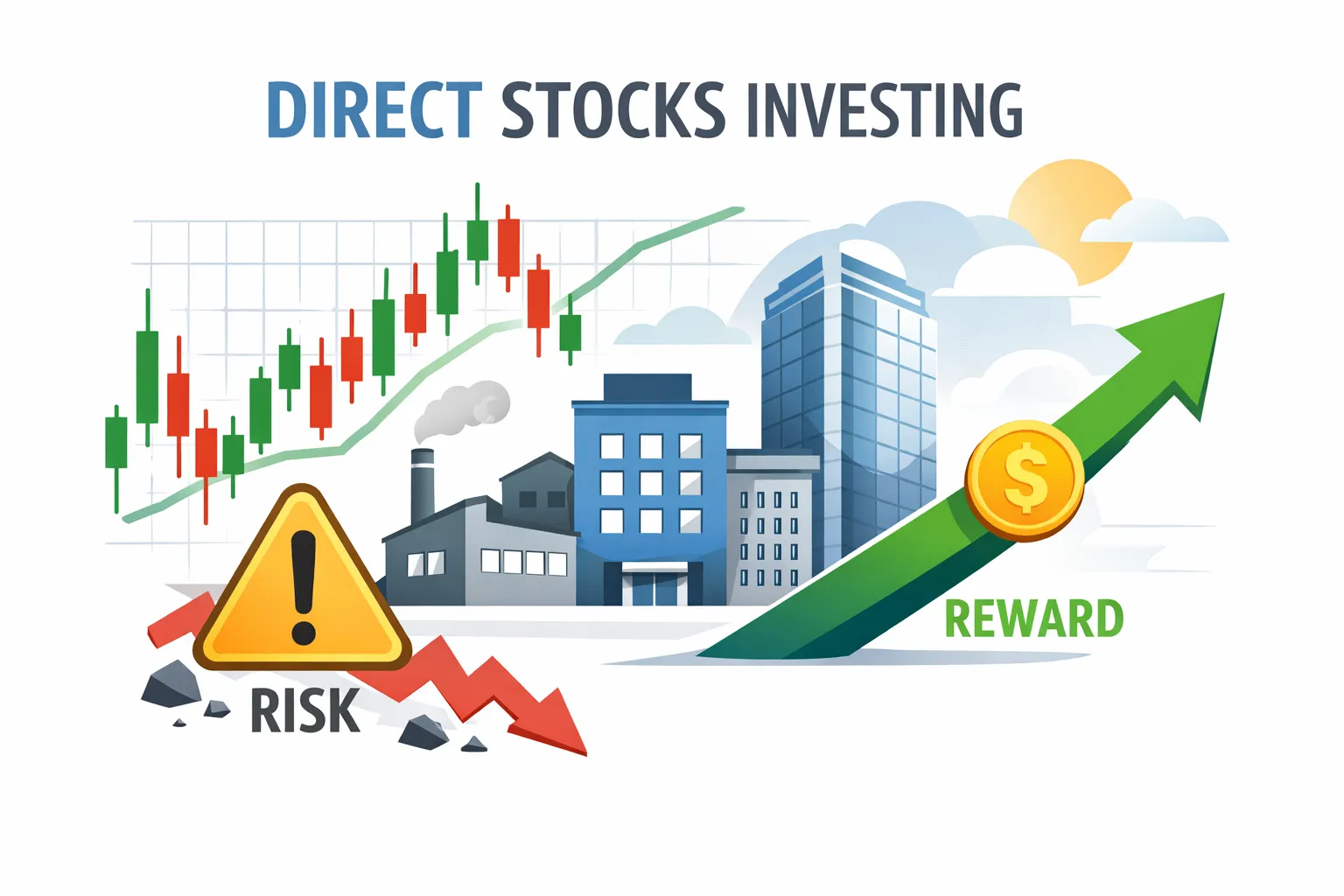
4) Stocks (Direct Equity): high upside, high responsibility
Stocks can deliver strong long-term returns – but only if you can handle volatility and avoid emotional decisions.
Who should invest in stocks in 2026?
-
You can hold for 5+ years
-
You can survive drawdowns without panic-selling
-
You’re willing to learn basics: valuation, business quality, cycles
Safer approach
-
Keep direct stocks as 10–30% of your long-term portfolio
-
Keep the rest in diversified funds/ETFs
Verdict: Great tool, not a beginner’s first weapon.
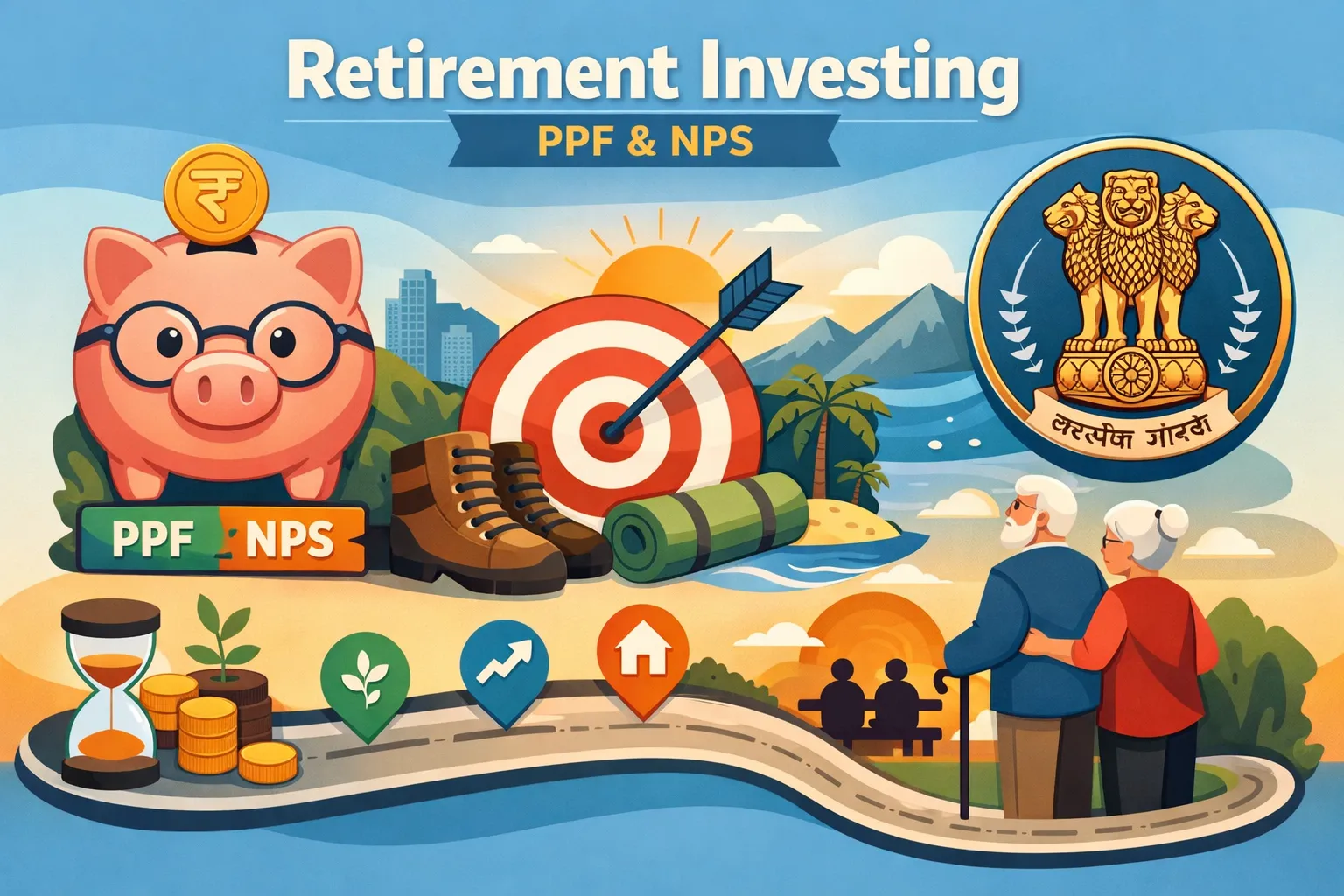
5) PPF & NPS: boring (good), long-term (great), tax-efficient (useful)
These are the “quiet performers” for disciplined Indians.
PPF (Public Provident Fund)
-
Strong for long-term, tax-efficient saving
-
Not flexible – long lock-in
NPS (National Pension System)
-
Built specifically for retirement
-
Mix of equity + debt exposure (based on chosen allocation)
-
Liquidity is restricted (by design)
Verdict: Use them for retirement + tax planning, not short-term goals.
6) Gold & Silver in 2026: your inflation hedge + stability layer
Gold has stayed relevant for 5,000+ years for a reason: it acts as a hedge when currencies and markets get shaky.
“In India, 24K gold rose from about ₹41,275 per 10g in 2020 to about ₹1,01,350 by April 2025 – an increase of roughly 145% over five years.” – INDmoney
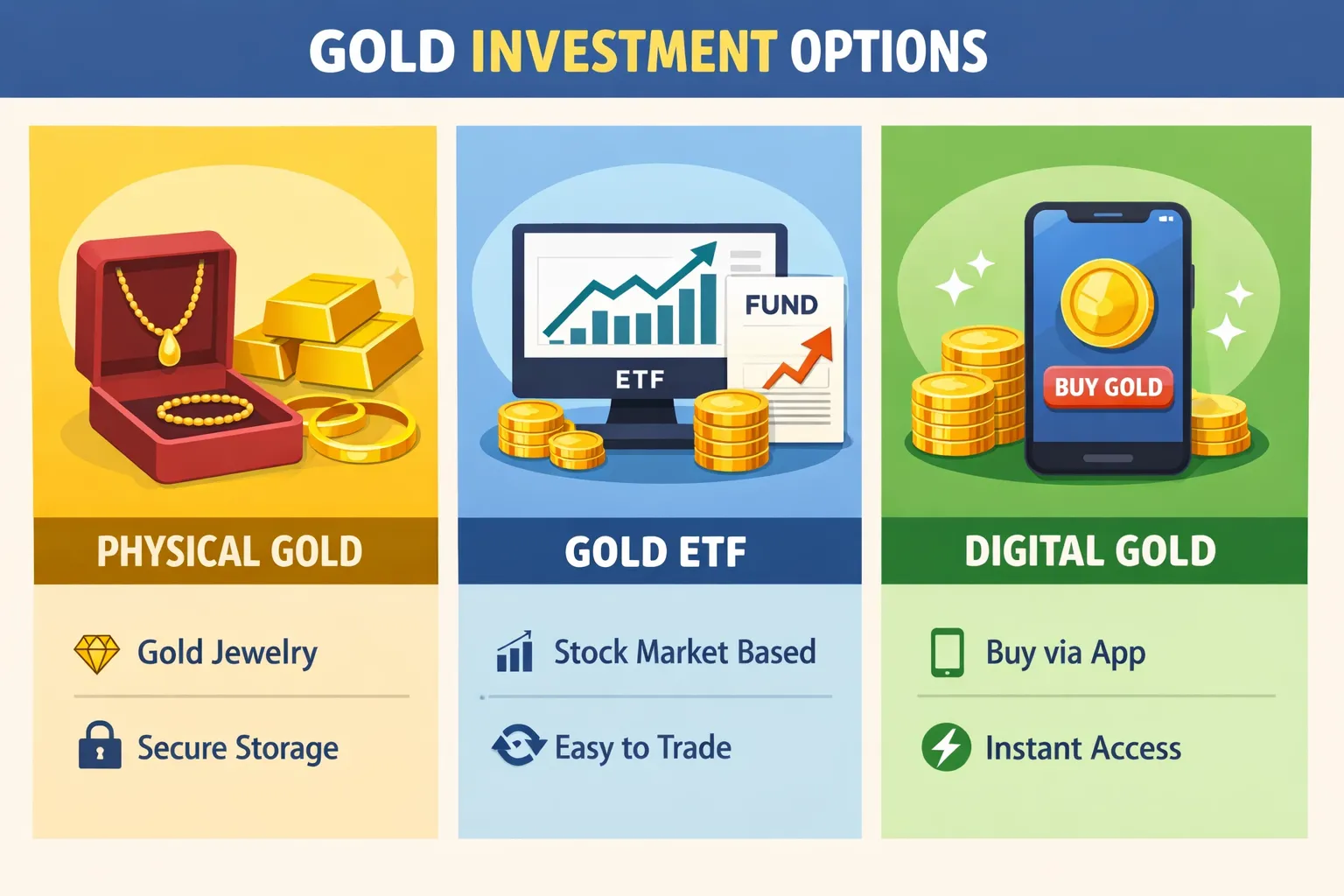
Physical vs Digital (quick truth table)
|
Type |
Storage |
Purity risk |
Liquidity |
Best for |
|---|---|---|---|---|
|
Physical gold/silver |
Your problem |
Can be a risk |
Slower |
Traditional holding |
|
Gold ETFs |
Demat |
Low |
High |
Market-linked, demat users |
|
Digital gold/silver |
Vaulted |
Low |
Very high |
Beginners + micro-investors |
If you want to follow market moves quickly before buying, check live gold prices today.
Why OroPocket is built for modern Indians (and why it’s different)
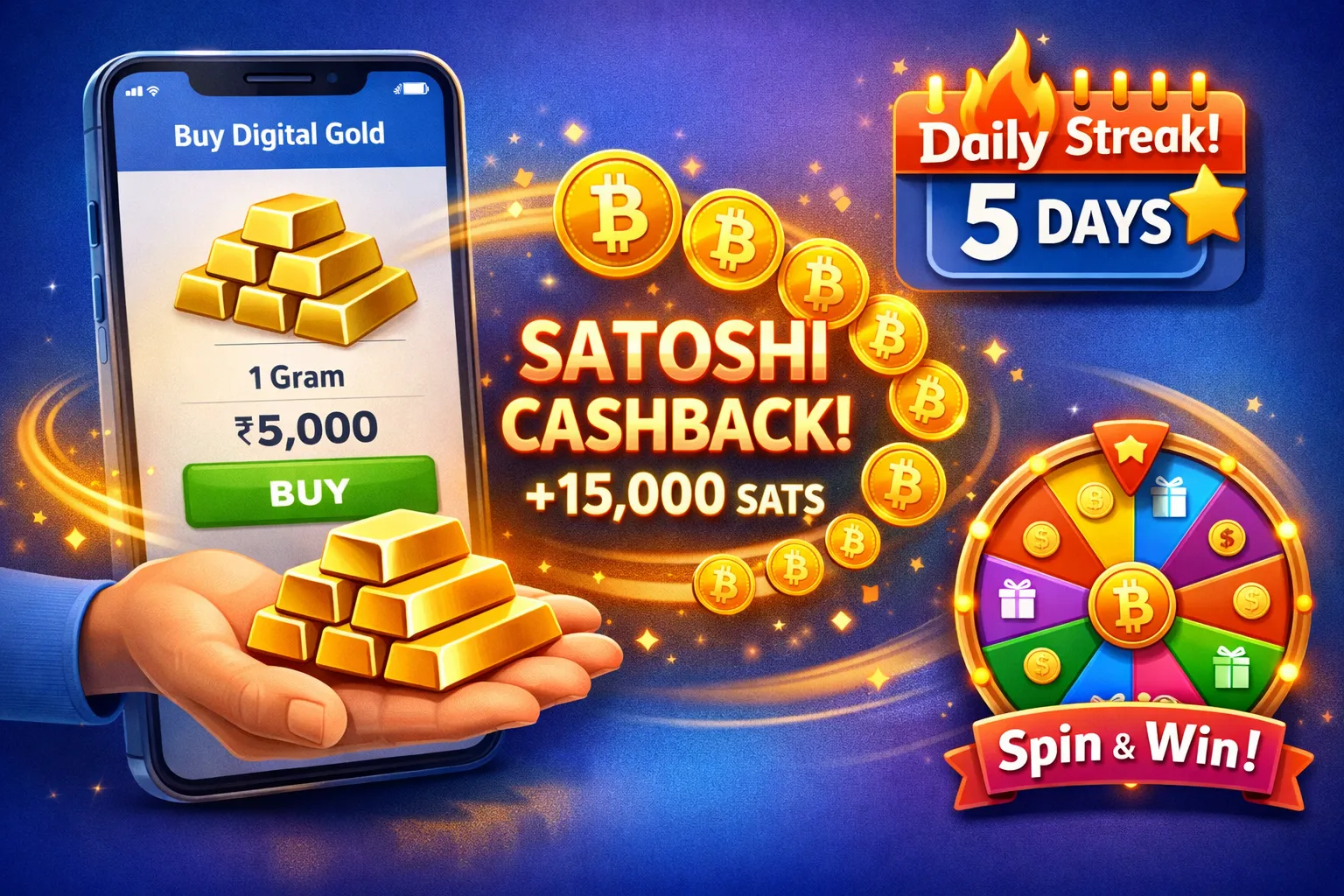
Most platforms stop at “buy gold.” OroPocket goes further: build habits, reward consistency, and let you start from ₹1.
OroPocket’s edge (USPs that actually matter)
-
₹1 entry point: start today, not “someday”
-
Free Bitcoin on every gold/silver purchase: you earn Satoshi cashback – automatically
-
Gold + Bitcoin combination: stability + upside, without “crypto trading stress”
-
Gamified investing: streaks + spin-to-win + tiered rewards → habit > hype
-
Instant UPI payments: buy in under 30 seconds
-
100% secure & compliant: RBI-compliant, insured vault storage, authorized partners
-
Referral rewards: both sides earn 100 Satoshi + free spin
And when you’re ready to act, you can start directly on the OroPocket app.
Sample portfolios for Indians in 2026 (choose one, then customize)
1) Beginner (low stress, high clarity)
|
Asset |
Allocation |
|---|---|
|
SIP / Index funds |
50% |
|
FD / Liquid funds |
25% |
|
Gold/Silver (digital) |
25% |
2) Growth-focused (long horizon, can handle volatility)
|
Asset |
Allocation |
|---|---|
|
SIP / ETFs |
65% |
|
Gold/Silver |
15% |
|
Debt funds / FD |
20% |
3) Conservative (capital protection first)
|
Asset |
Allocation |
|---|---|
|
FD/RD + short debt |
55% |
|
Gold/Silver |
25% |
|
SIP (large cap/index) |
20% |
Pro move: rebalance once a year. Don’t overtrade.
Conclusion: the best financial investment is the one you can stick with
In 2026, winning isn’t about finding a “secret” investment. It’s about:
-
building an emergency buffer,
-
investing consistently,
-
diversifying smartly,
-
and holding long enough to let compounding work.
If you want the simplest way to start today, without big minimums – and you like getting rewarded while building wealth – OroPocket is built for you.
Stop watching. Start growing.
Start with ₹1 in digital gold/silver on OroPocket, pay via UPI in seconds, and earn free Bitcoin on every buy.