Will gold prices rise by 2030?

Will Gold Prices Rise by 2030? A Realistic, India-Focused Forecast (and How to Start From ₹1)
If you’re wondering whether gold will be higher by 2030, you’re really asking three things:
-
Will gold keep protecting my money from inflation?
-
Will the next decade bring enough uncertainty (rates, wars, currency moves) to keep gold in demand?
-
How do I invest without buying jewellery, paying making charges, or locking money for years?
The evidence points to one direction: gold’s long-term trend remains bullish, even if the ride is not smooth. And if you’re in India, where gold is both a cultural asset and a financial safety net, the case gets stronger.
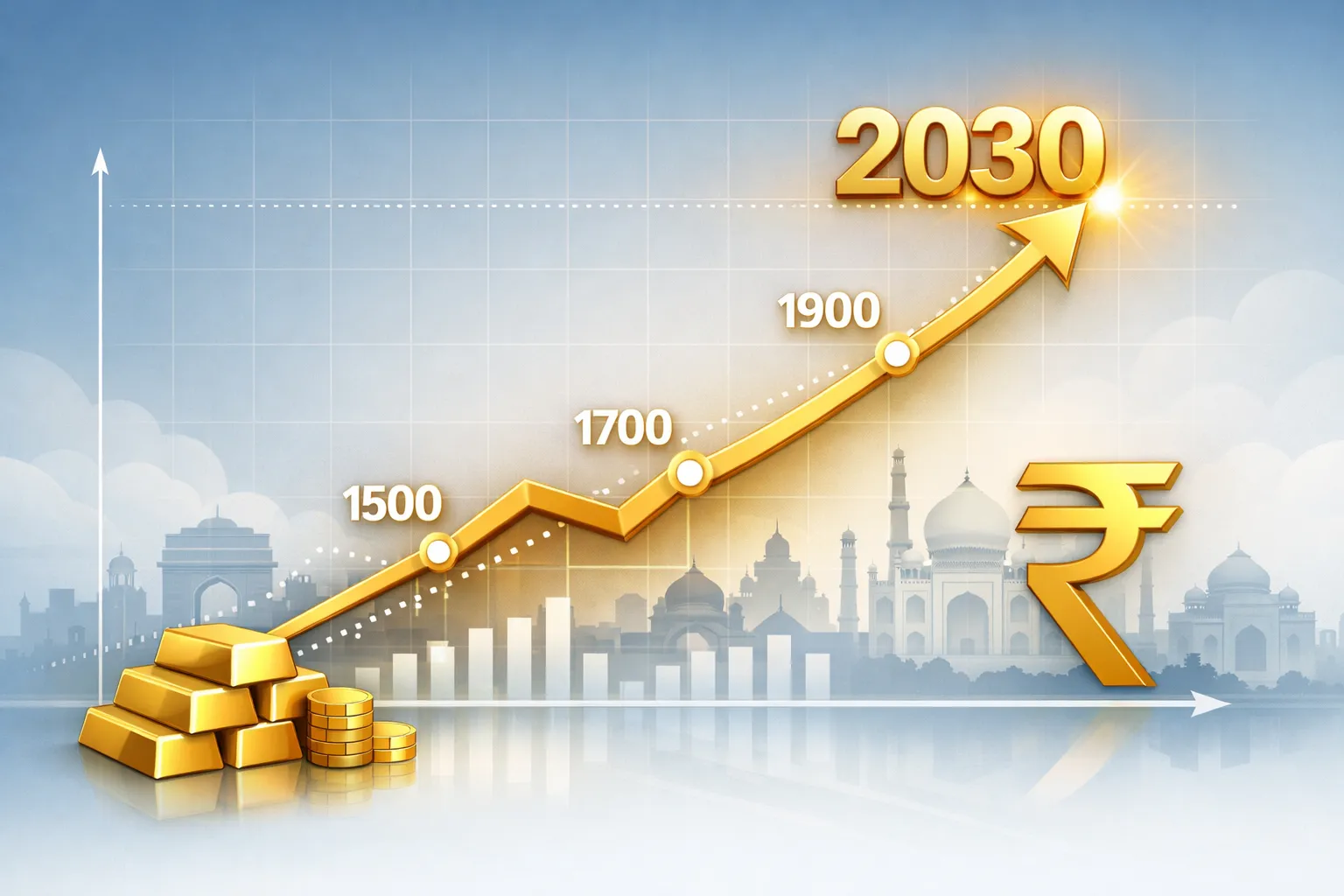
The 2030 Answer: Likely Up, But Not in a Straight Line
Gold doesn’t move like a stock. It behaves more like a financial insurance policy that gets more valuable when the world feels riskier or when money loses purchasing power.
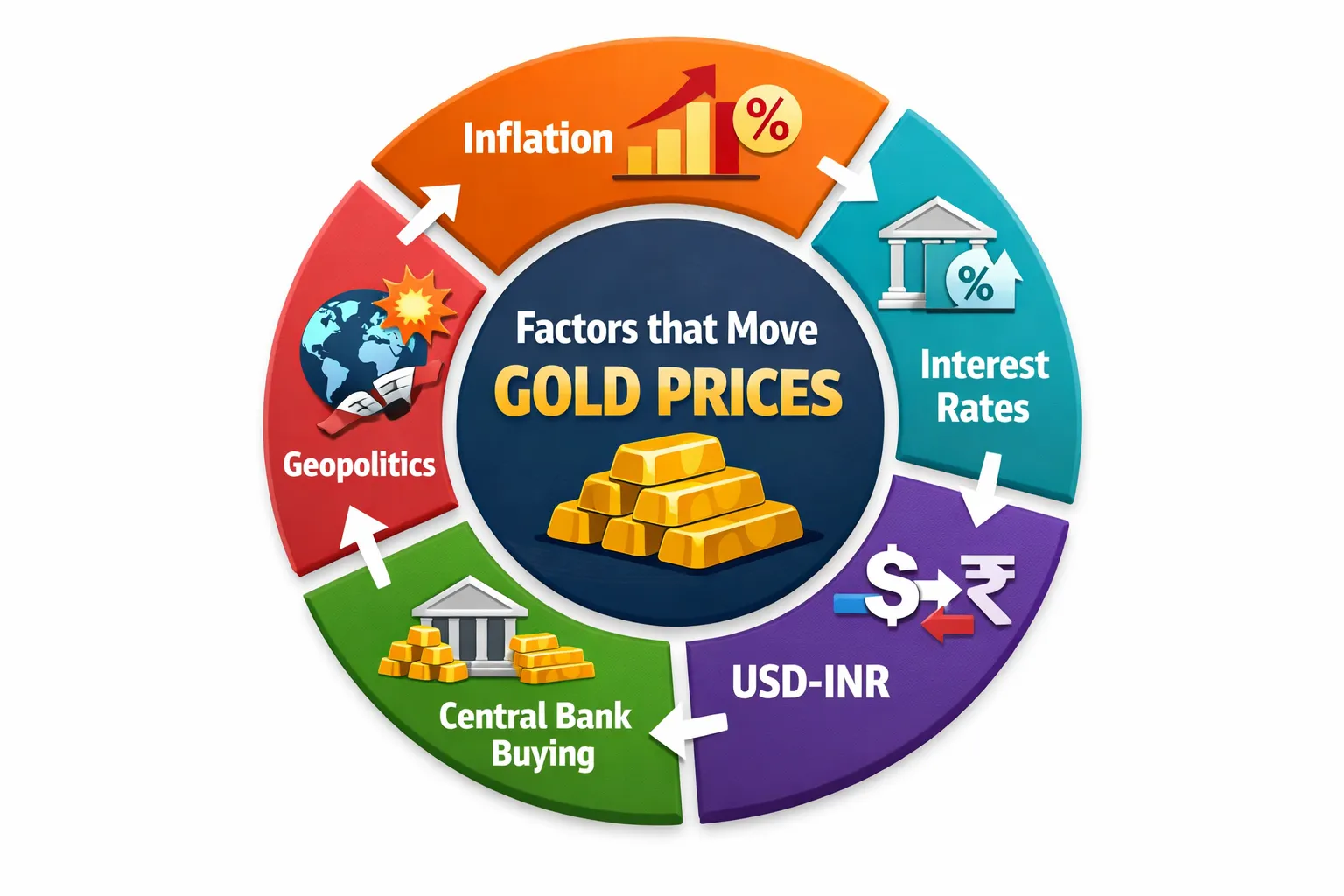
Here’s what typically pushes gold higher over multi-year periods:
-
Rate cuts / falling real yields (gold becomes more attractive vs fixed-income)
-
Inflation shocks (gold protects purchasing power)
-
Geopolitical risk (safe-haven flows)
-
Central bank buying (structural demand)
-
Rupee weakness (India’s gold price can rise even faster than global USD gold)
So yes – gold prices can rise by 2030. But expect cycles: rallies, pullbacks, then new highs.
Early insight you can track daily: spot + rupee movement. If you like monitoring daily gold prices before you buy, start with OroPocket’s live pages like live gold prices today.
Why India’s Gold Price Can Rise Even If Global Gold Is Flat
Indian gold price is basically:
Global gold price (USD) × USD/INR + taxes/fees
So even if international gold is steady, a weakening rupee can lift domestic prices.
The 3 India-specific engines that support gold into 2030
-
Currency volatility (USD/INR): India imports most of its gold, so INR weakness = higher local price.
-
Persistent household demand: weddings, gifting, savings behavior.
-
Financialization: more investors are moving from jewellery to digital gold/ETFs/SGB-like alternatives for convenience and transparency.
“India and China together account for over 50% of the global gold jewellery market.” – World Gold Council
The “Big 5” Drivers That Will Decide Gold’s 2030 Trajectory
1) Inflation stays “sticky”
Even mild inflation compounds brutally over years. Gold’s role is simple: store value when cash loses it.
2) Real interest rates (the #1 macro lever)
Gold often performs best when real yields fall (interest rates minus inflation). If 2026–2030 sees easing cycles, that’s supportive.
3) Central bank demand
When central banks buy gold, it creates a steady baseline of demand that doesn’t panic-sell like retail money.
4) Geopolitics and trade fragmentation
Supply chains, sanctions risk, and cross-border tensions keep safe-haven demand alive.
5) Investor allocation shift (ETFs + digital gold)
A small increase in allocation from equities/deposits into gold can move prices meaningfully because gold supply is relatively slow to respond.
What Competitor Articles Usually Miss (and What Smart Investors Do Differently)
Most “gold price prediction till 2030” articles do the basics – historical prices, broad reasons, maybe a target range.
Here are the gaps that matter for your actual wealth:
Gap #1: They don’t separate forecasting from execution
A prediction is useless if you invest in the wrong instrument (high charges, low liquidity, storage risk).
Gap #2: They ignore the “behavior advantage”
Gold wealth is built by consistency, not perfect timing. The winners use:
-
small amounts
-
frequent buying
-
automation/streaks
-
discipline during dips
Gap #3: They don’t talk about pairing gold with growth
Gold stabilizes. But long-term wealth also needs growth exposure – which is why OroPocket pairs your gold buys with Bitcoin rewards.
Gold by 2030: 3 Practical Scenarios (Not Hype, Just Frameworks)
|
Scenario (2026–2030) |
Macro Setup |
What Gold Typically Does |
|---|---|---|
|
Bull case |
Rate cuts + geopolitical risk + heavy central bank buying |
Strong multi-year uptrend; new highs likely |
|
Base case |
Inflation moderates but uncertainty persists |
Upward drift with volatility and pullbacks |
|
Bear case |
High real rates + strong USD + low crisis premium |
Choppy/sideways periods, but long-term floor remains |
The point: Even the “bear case” doesn’t kill gold – it just slows it down. That’s why gold belongs in a portfolio as a stabilizer.
The Modern Way to Invest for 2030: Digital Gold (Not Jewellery)
Jewellery has emotional value, but it’s not an efficient investment because of:
-
making charges
-
purity ambiguity
-
resale spreads
-
storage risk
Digital gold is built for long-term investors who want clean exposure and easy liquidity.
If you want a fast reference point before investing, use a live tracker like gold price today in India and invest when it fits your plan – not your emotions.
Why OroPocket Is Built for the 2030 Gold Investor (Not the 1990 One)

What you get with OroPocket (in plain English)
-
Start from ₹1: no “minimum investment” excuses.
-
Instant UPI buys: invest in under 30 seconds.
-
Real 24K gold, insured vault storage: built for trust.
-
Free Bitcoin on every purchase: you stack gold + Satoshi – two assets with one habit.
-
Gamified investing that builds discipline: streaks, spin-to-win, tier rewards.
-
Referral rewards: both sides earn 100 Satoshi + free spin – so you grow together.
This is how everyday Indians actually win: small consistent buys + rewards that keep you investing.
Gold + Bitcoin: Stability Meets Upside (Without “Trading” Stress)
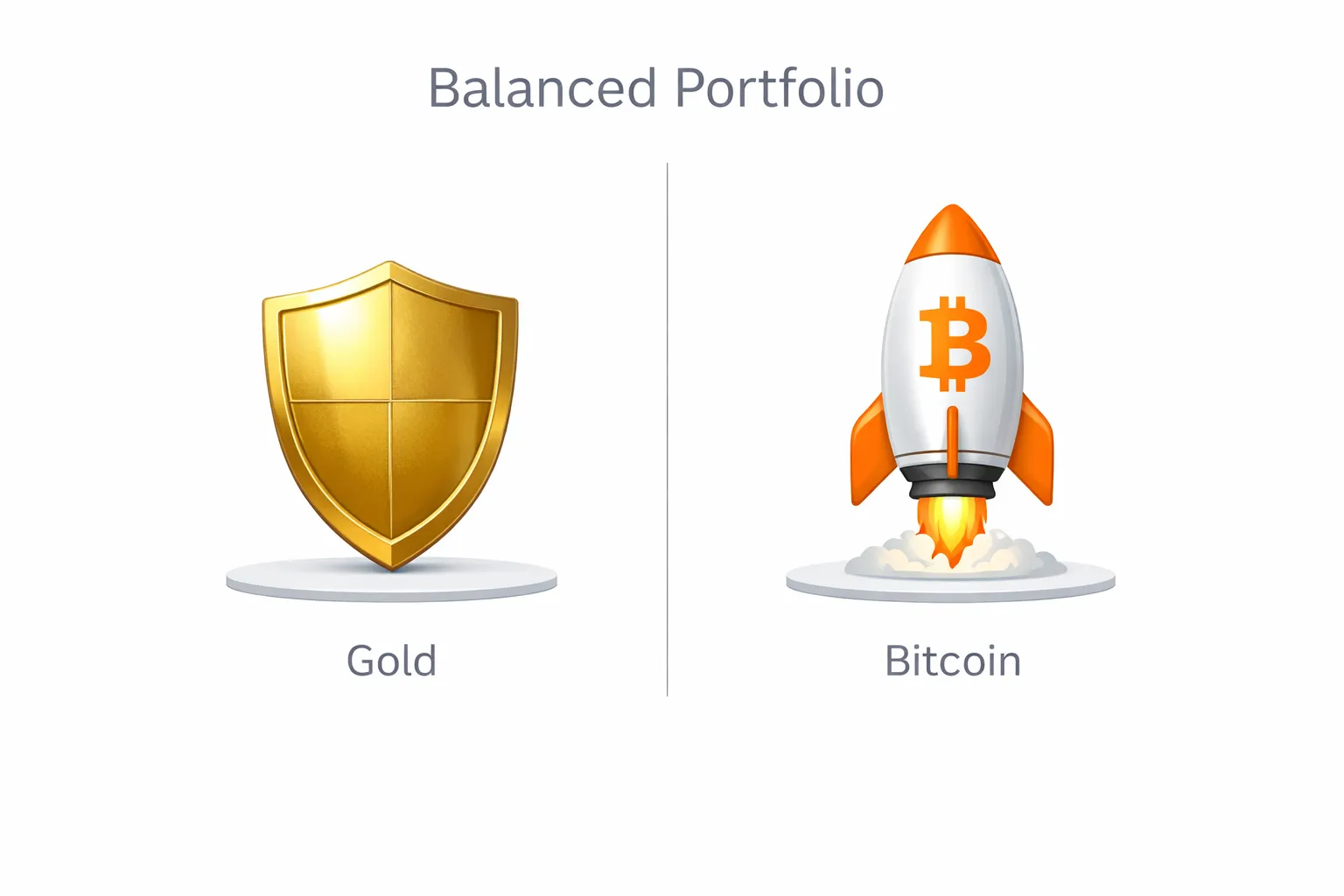
Gold has a 5,000-year record. Bitcoin has asymmetric upside. OroPocket’s edge is simple:
You don’t have to “be a crypto trader” to benefit from crypto growth.
You buy gold like a normal saver – and you get Bitcoin cashback as a reward layer.
“Over a five-year period ending in May 2024, gold delivered an annual return of 18%, surpassing the Nifty 50’s 15% gain.” – Times of India
The 2030 Game Plan: A Simple Strategy That Beats Waiting
Most people lose money in gold because they do one of two things:
-
buy only at peaks (FOMO), or
-
never buy at all (analysis paralysis)
Do this instead:
A disciplined, real-life approach
-
Buy small, regularly (daily/weekly)
-
Use dips to add a little more
-
Track your average price, not headlines
-
Keep it liquid and transparent (digital beats jewellery for this)
If you want to sanity-check the market as you build the habit, keep a daily view of gold rate today in India and invest with consistency – not prediction addiction.
Final Verdict: Yes, Gold Can Rise By 2030 – So Don’t Just Watch It
Gold’s long-term drivers (inflation protection, central bank demand, uncertainty, and INR impact) make a strong case for higher levels by 2030. But the real alpha isn’t predicting the exact number.
The real alpha is starting early, staying consistent, and using a platform that rewards the habit.
Stop watching. Start growing.
Download OroPocket, start with ₹1, buy real digital gold via UPI, and collect free Bitcoin on every purchase – the 21st-century way to build a stronger 2030.