Is Investing in Gold a Good Investment? 2026 Reality Check

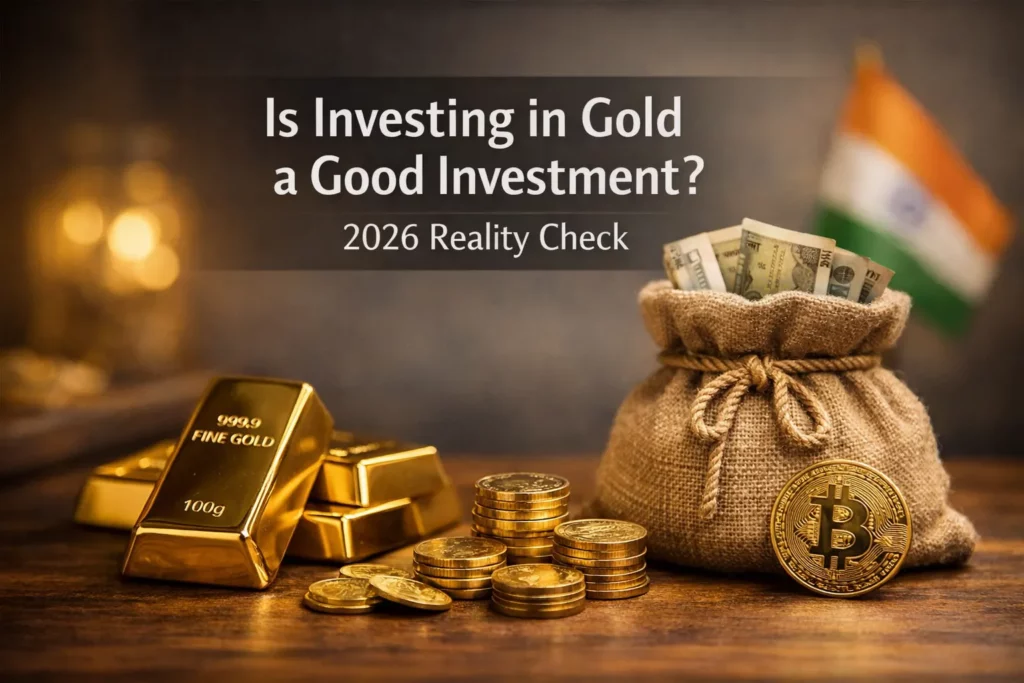
Is Investing in Gold a Good Investment? 2026 Reality Check
Gold isn’t a “get rich quick” asset. It’s the asset you hold so your money doesn’t quietly get destroyed by inflation, currency swings, and chaos in markets.
And in 2026 – when uncertainty is normal, not exceptional – gold still earns its place in a smart Indian portfolio. But only if you buy it the right way, at the right allocation, with the right expectations.
If you’re a student, a salaried professional, or a first-time investor who wants:
-
a simple, mobile-first way to start investing,
-
ultra-low entry (no “minimum 5g/10g” nonsense),
-
UPI speed,
-
and rewards without trading crypto…
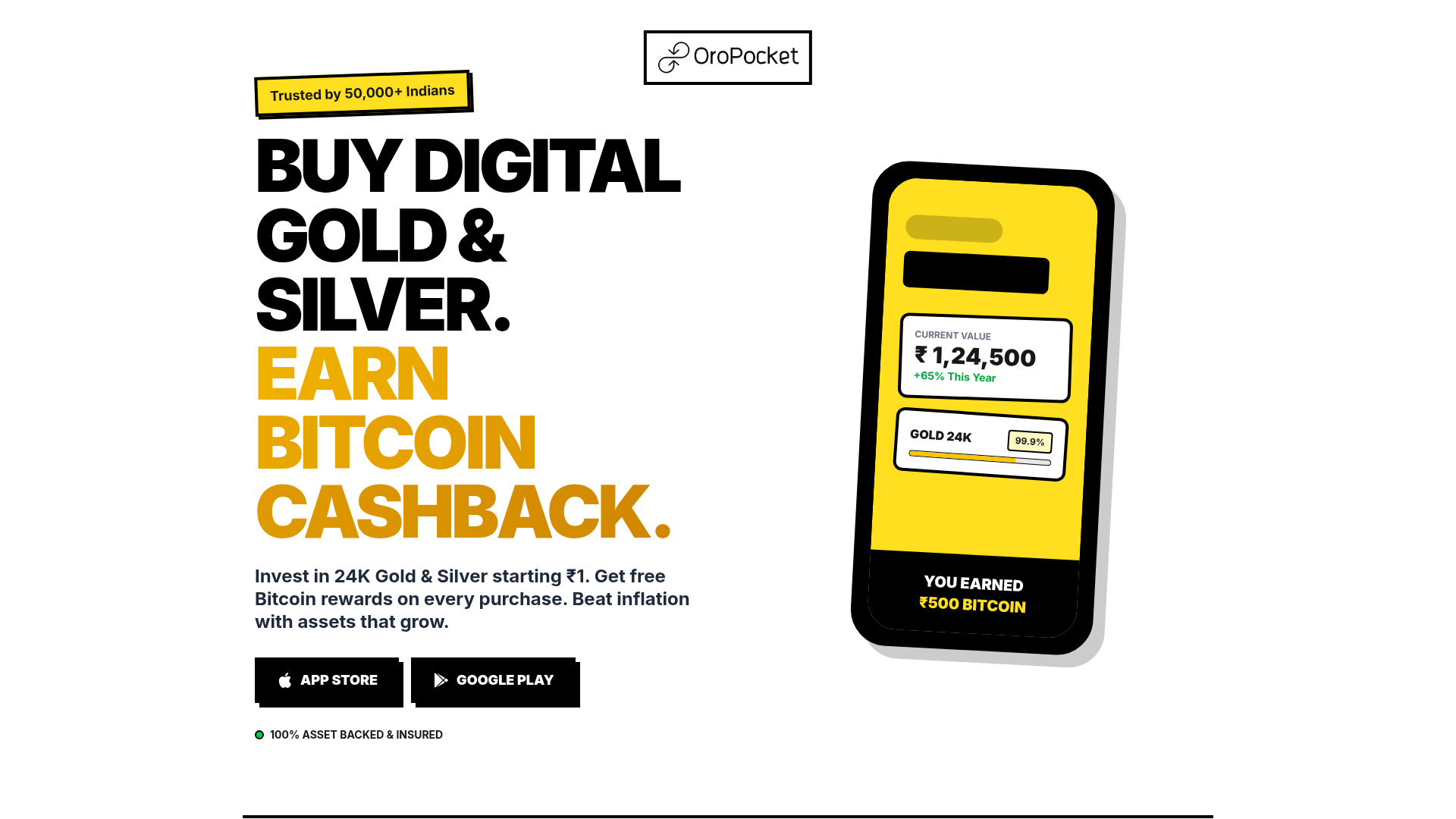
OroPocket was built for you. Stop watching. Start growing.
The 2026 answer: Yes – gold is a good investment (but not for the reason most people think)
Gold’s “job” in your portfolio is not to beat equities in every year.
Gold’s real job is to:
-
reduce portfolio shock during drawdowns,
-
protect purchasing power during inflationary periods,
-
diversify when stocks, bonds, and currencies get shaky.
In 2026, the conditions that historically support gold are still on the table:
-
sticky inflation risk,
-
geopolitical and trade uncertainty,
-
rising government debt,
-
central banks diversifying reserves away from overdependence on the US dollar.
One more truth: gold is also emotional insurance
Gold helps you stay invested.
Because when markets fall, gold often doesn’t fall the same way – so you panic less, sell less, and stick to your plan more.

The big misconception: “Gold gives returns like stocks”
Gold can deliver strong returns in bursts, but it’s not a compounding machine like quality equities.
Here’s the correct mental model:
|
Asset |
Primary purpose |
Expected behavior |
|---|---|---|
|
Equities |
Growth |
Volatile, best long-term compounding |
|
Bonds/FDs |
Stability + income |
Lower volatility, rate-sensitive |
|
Gold |
Hedge + diversification |
Performs in uncertainty/inflation/currency stress |
|
Cash |
Liquidity |
Loses purchasing power over time |
Gold wins when your other assets are struggling. That’s why it belongs in the portfolio.
What competitor articles get right (and where they fall short)
Common “winning” points competitors repeat
Most top-ranking articles agree on:
-
Gold is a safe-haven asset
-
It’s a hedge against inflation
-
It’s great for diversification
-
Long-term allocation often ranges around 5%–15%
Content gaps you should know (what they don’t explain clearly)
Competitors often gloss over:
-
Real-world cost drag (making charges, spreads, storage, GST, ETF costs)
-
Which gold vehicle fits which goal (emergency liquidity vs long-term hedge vs gifting)
-
What makes digital gold “good” or “bad” (depends on purity, vaulting, liquidity, compliance, spreads)
-
Behavioral advantage of micro-investing (habit beats timing)
-
A decision framework (so readers can say “yes/no” confidently)
This guide fills those gaps.
When gold tends to perform best (and when it underperforms)
Gold tends to do well when:
-
inflation is high or resurging
-
real interest rates are falling
-
the rupee weakens vs USD (important for India)
-
geopolitical risk rises
-
investors seek safety (risk-off markets)
Gold can underperform when:
-
equities are in a strong bull market
-
real yields rise (fixed income becomes more attractive)
-
the US dollar strengthens sharply
-
risk appetite is high (people chase growth assets)
Bottom line: gold is not an “always up” asset. It’s an “always useful” asset.
How much gold should you hold in 2026? (Practical allocation)
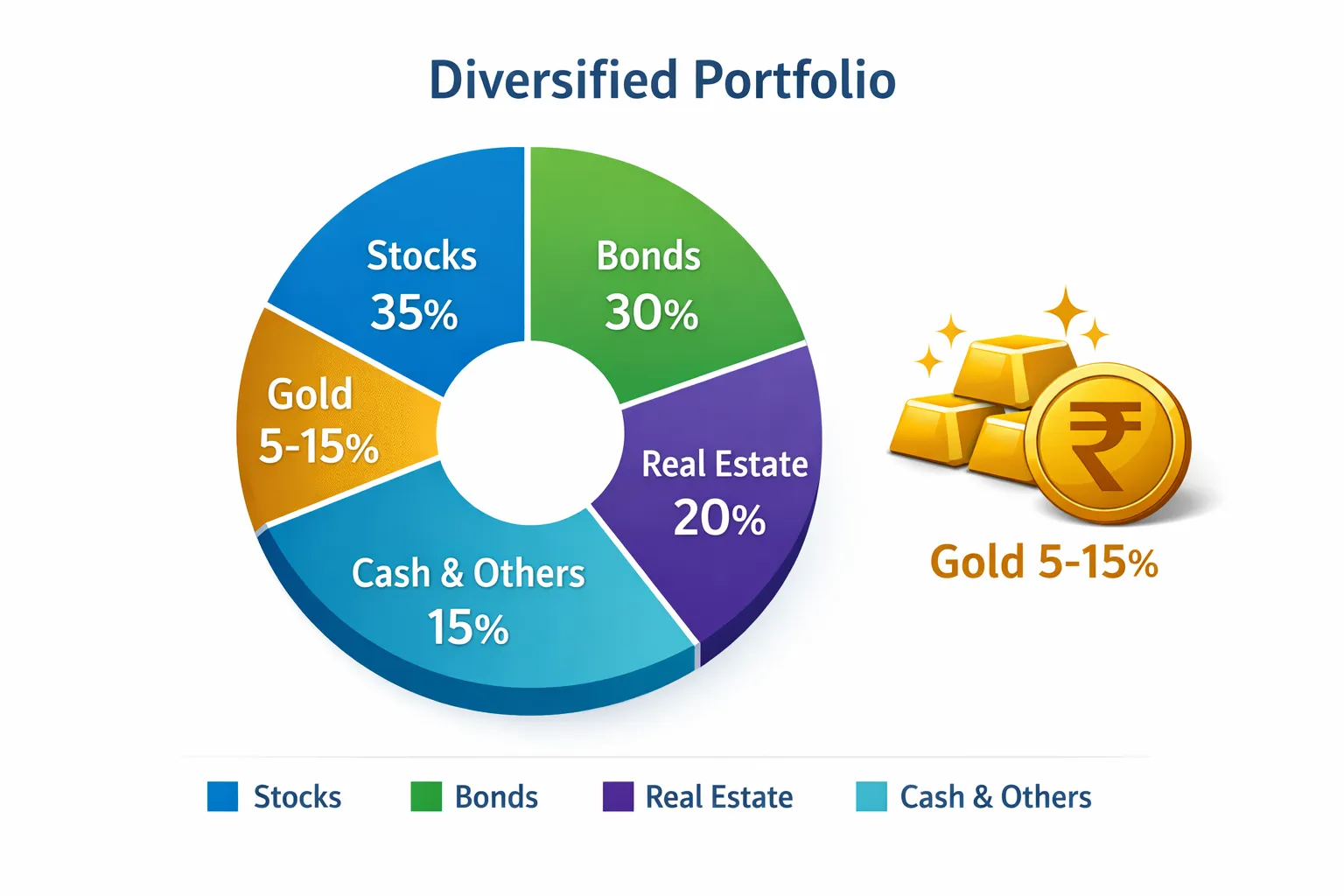
A solid, widely used range for most retail investors: 5% to 15% of your total portfolio.
Use this quick guide:
|
Investor type |
Goal |
Suggested gold allocation |
|---|---|---|
|
Conservative |
Stability + hedge |
10%–15% |
|
Moderate |
Balanced growth + protection |
7%–12% |
|
Aggressive |
Max growth, still want hedge |
5%–10% |
The hidden costs of gold (what really decides your returns)
This is where investors lose money – not because gold is bad, but because the format is expensive.
Cost checklist (India)
-
Physical jewellery: making charges + GST + buy/sell spread
-
Coins/bars: premiums + storage risk
-
ETFs: expense ratio + demat + market liquidity (varies)
-
SGBs: price fluctuation + liquidity depends on market
-
Digital gold: platform spread + transparency of vaulting/purity
If your goal is “portfolio hedge + liquidity + simplicity,” you want a format with:
-
low friction,
-
easy buying/selling,
-
no storage headache,
-
and the ability to invest small amounts consistently.
That’s the logic behind digital gold done right.
Track the market before buying: see live gold price in India so you invest with clarity, not guesswork.
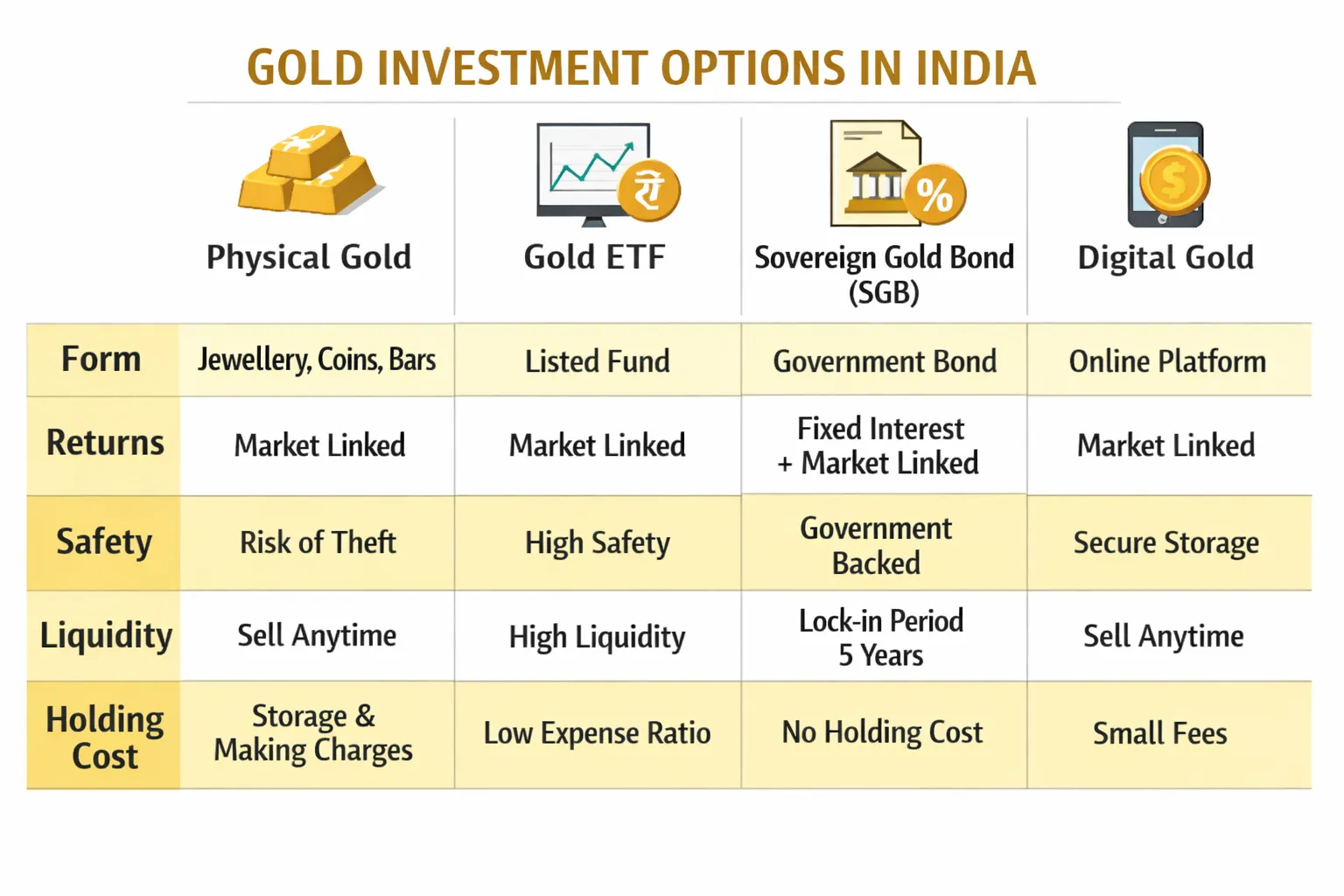
Best ways to invest in gold in India (2026 comparison)
Quick comparison table
|
Option |
Best for |
Pros |
Cons |
|---|---|---|---|
|
Physical jewellery |
Consumption + tradition |
Emotional value, gifting |
Making charges, resale loss, storage risk |
|
Gold coins/bars |
Long-term holding |
Direct ownership |
Premiums + storage/insurance needed |
|
Gold ETFs |
Market-linked exposure |
Easy to buy/sell, regulated |
Demat needed, fees, tracking differences |
|
SGBs |
Long-term (if available) |
Interest + potential tax benefit on maturity (subject to rules) |
Lock-in/liquidity realities, issuance depends |
|
Digital gold (app-based) |
Habit + micro-investing |
Start small, no storage burden, quick liquidity |
Must trust platform quality, spreads |
OroPocket sits in the “habit + micro-investing” lane – built for everyday investors who want gold exposure without the friction.
You can also check gold price chart to understand how volatility plays out over time.
India taxation: what you should know before investing
Tax rules can change, so confirm with a tax professional for your situation. But here’s the practical view:
-
Physical gold / digital gold / gold ETFs are typically treated as non-equity assets for capital gains.
-
Holding period and indexation rules depend on current law.
-
SGBs have historically had special tax treatment on redemption at maturity (subject to prevailing rules).
Your takeaway: taxation should influence how you buy gold, not whether gold belongs in your portfolio.
The macro reality that supports gold in 2026 (with proof)
“In 1999, the U.S. dollar accounted for approximately 71% of global foreign exchange reserves. By the first quarter of 2025, this share had declined to around 56.9%.” – Source
This matters because reserve diversification and de-dollarisation narratives often increase the strategic role of gold globally – especially among central banks.
And performance context matters too:
“In 2025 alone, gold prices surged by approximately 74% in India.” – Source
OroPocket’s 2026 play: Gold stability + Bitcoin upside (without crypto complexity)
Most apps give you gold.
OroPocket gives you gold + free Bitcoin (Satoshi cashback) on every purchase – so you’re building two assets together:
-
Gold: stability, hedge, 5,000-year track record
-
Bitcoin rewards: growth potential exposure without needing to “trade crypto”
Why this works for real people (not finance Twitter)
-
₹1 entry point: start instantly – no “wait till salary day” barrier
-
Instant UPI: buy in under 30 seconds
-
Gamified investing: streaks + spin-to-win turns saving into a habit
-
Referral rewards: you and your friend both earn 100 Satoshi + free spin
-
Security & compliance: RBI-compliant, insured vault storage, authorized bullion partners
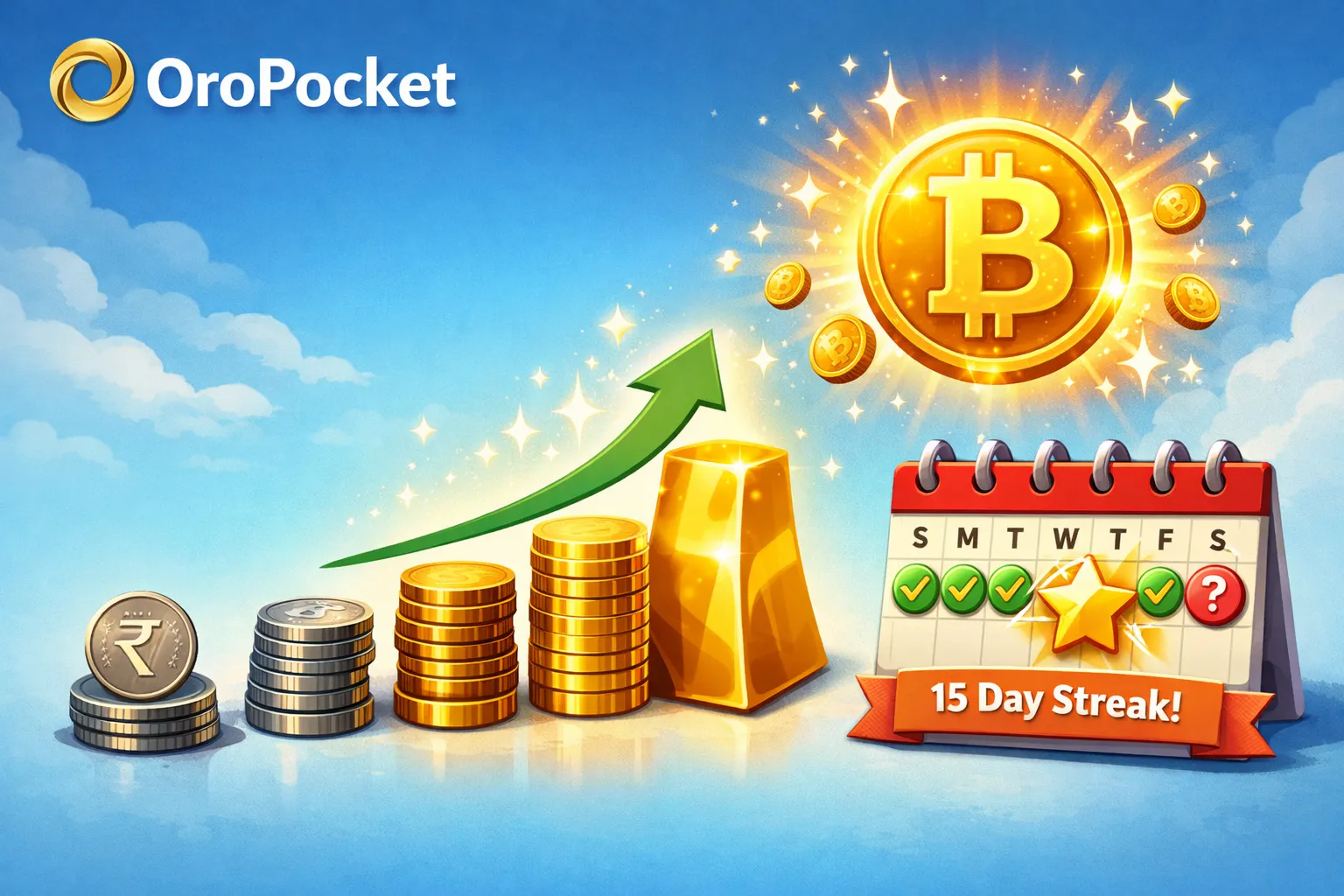
This is what “modern gold investing” looks like: control, progress, and rewards – daily.
Want to sanity-check before you buy? Follow gold prices live and invest on your schedule.
2026 decision checklist: Is gold right for you?
Gold makes sense if you want:
-
a hedge against inflation + uncertainty
-
smoother portfolio ride (less panic-selling)
-
diversification away from “only equity”
-
a long-term holding (3–10+ years) or systematic accumulation habit
Gold may not be ideal if you:
-
need aggressive growth in 12–24 months
-
already struggle to invest in equities (fix that first)
-
expect gold to behave like a high-beta asset
Final verdict + CTA: Don’t debate gold. Build the habit.
Gold remains a good investment in 2026 – as a hedge and diversifier, not as your main growth engine.
The real edge is how you invest:
-
low friction,
-
consistent buying,
-
clear pricing,
-
secure storage,
-
and rewards that make you want to continue.
That’s OroPocket. Start with ₹1. Pay via UPI. Earn free Bitcoin. Build wealth daily.
Stop watching. Start growing.