
Bullion Gold vs Coins vs Jewellery: Which Is Best for Investors in 2026?


Bullion Gold vs Coins vs Jewellery: Which Is Best for Investors in 2026?
If you’re searching for “bullion gold” in 2026, you’re probably not looking for another generic “gold is safe” article. You want the real answer:
-
What gives the best returns after all costs (premiums, GST, making charges)?
-
What’s easiest to sell in an emergency?
-
What’s safest from fraud?
-
And if you’re a modern investor: what’s the smartest, lowest-friction way to build gold exposure with UPI – without locking big money?
This guide breaks down bullion gold vs coins vs jewellery like an investor – not a showroom.
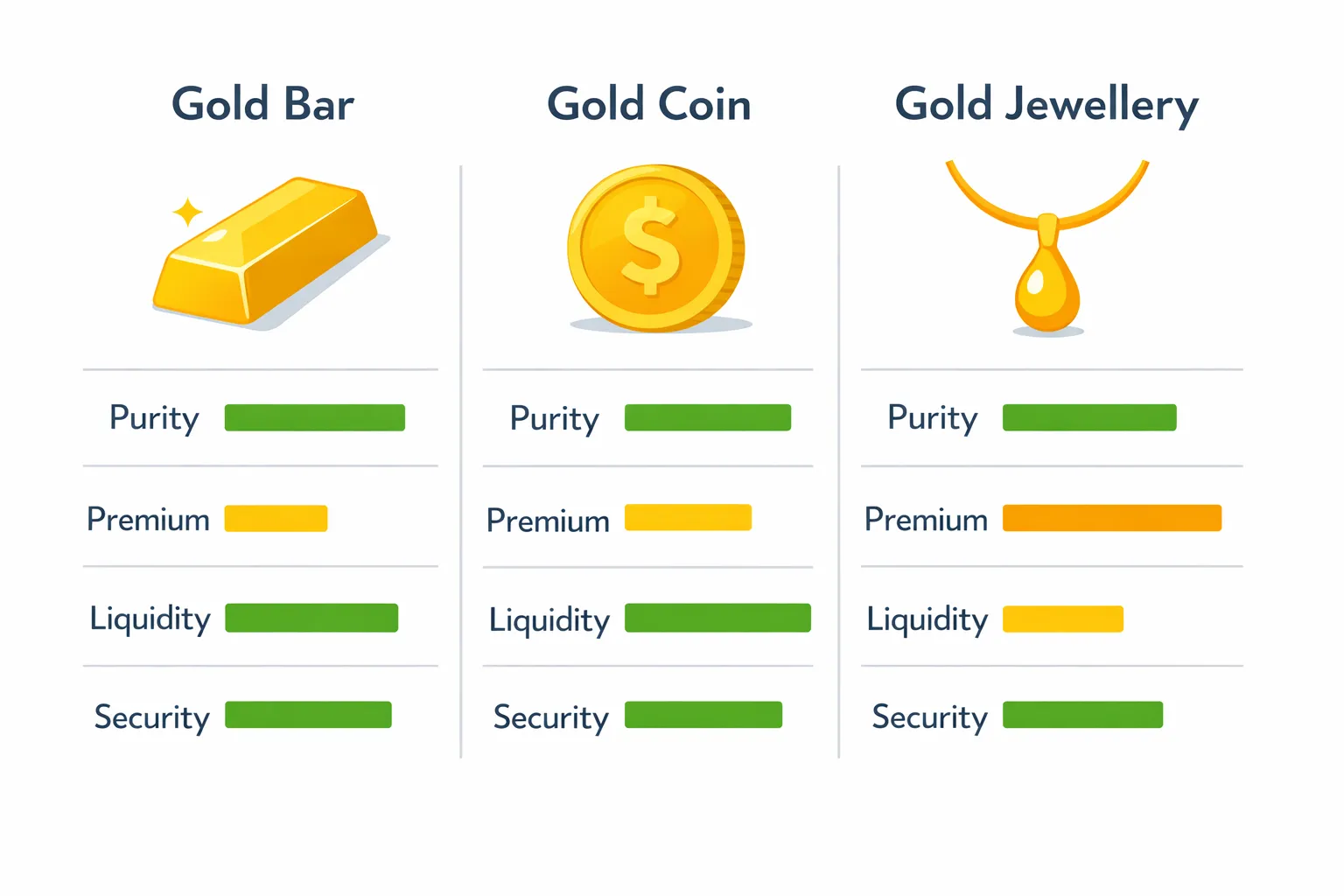
The investor’s scorecard (what actually matters)
Most competitor articles repeat the same 3 points: purity, making charges, resale. True – but incomplete. The real decision comes down to total cost of ownership + exit friction.
Here’s what to evaluate:
|
Factor |
Bullion Gold (Bars) |
Gold Coins |
Gold Jewellery |
|---|---|---|---|
|
Typical purity |
999.9 / 995 |
999.9 (often) |
Usually 22K (sometimes 18K/14K) |
|
Upfront extras |
Low premium + GST |
Moderate premium + GST |
High making + GST + wastage/brand premium |
|
Storage & insurance |
Needed (if physical) |
Needed (if physical) |
Usually kept at home (riskier) |
|
Liquidity (ease of selling) |
High, but needs trusted bullion buyer |
High at jewellers/buyback desks |
Medium – deductions are common |
|
Fraud risk |
Medium if dealer not authorised |
Medium if coin not certified |
Higher (stones, solder, purity disputes) |
|
Best for |
Large-ticket, long-term hedge |
Smaller physical investing |
Wearing, gifting, cultural value |
Want to track your entry price before buying any physical form? Check the gold rate today in India first and calculate your premium from spot.
Quick definitions (so you don’t get trapped by marketing)
What is bullion gold?
Bullion gold is investment-grade gold, typically:
-
999.9 fine (24K) or 995 fine
-
Sold as bars (and sometimes coins, depending on context)
-
Priced close to the spot price + a dealer premium
Coins vs bars: what’s the difference?
Bars are usually cheaper per gram (lower premium) at larger weights. Coins give flexibility (you can sell smaller units).
Jewellery: investment or expense?
Jewellery is a dual-purpose asset: emotional + aesthetic + cultural. But purely as an investment, it often loses because of making charges and deductions.
The real cost: premiums, GST, and “hidden” losses
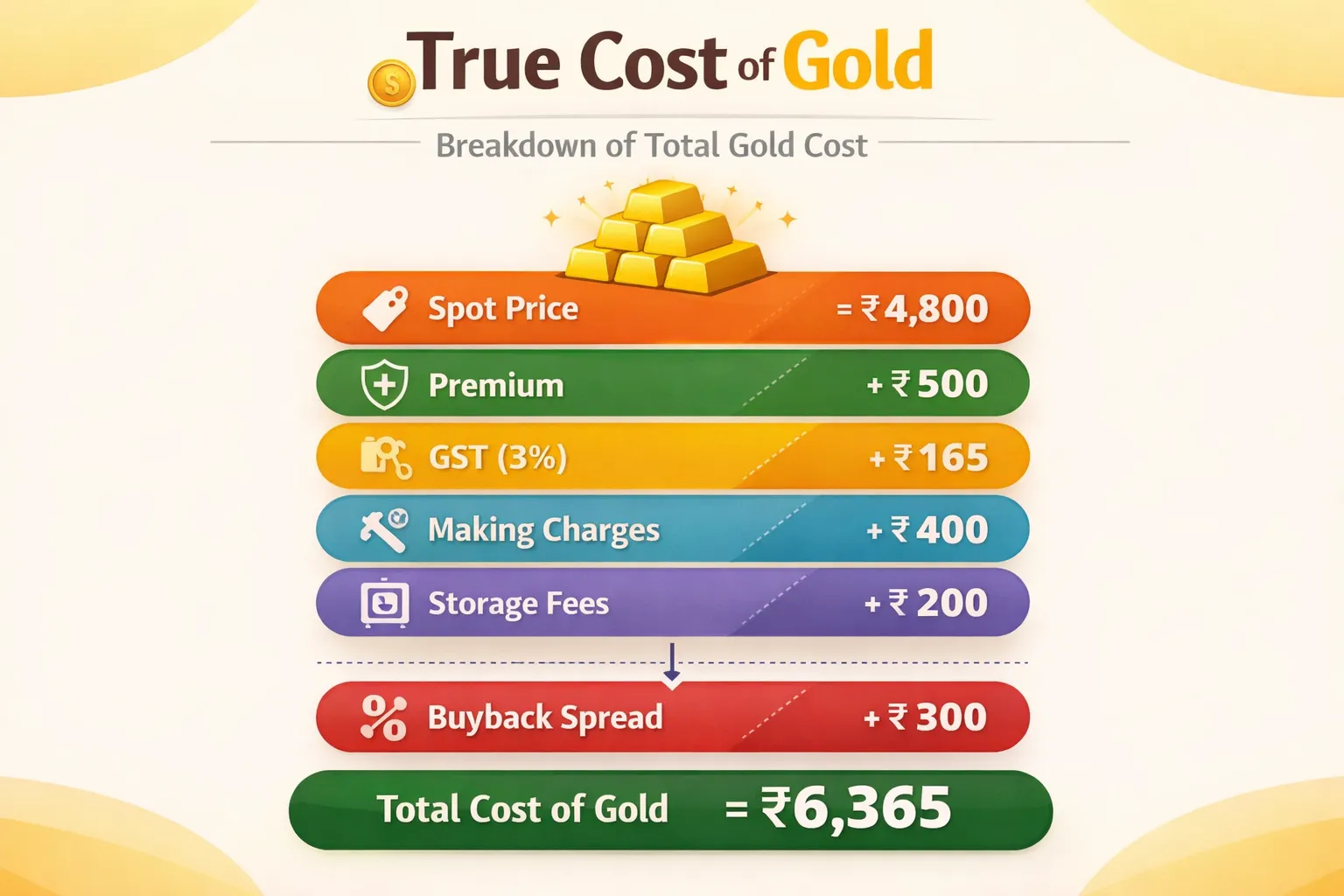
Bullion gold (bars): lowest drag on returns – if you buy right
Bullion bars typically have:
-
Lower premium (especially for higher weights like 50g/100g/1kg)
-
Clear pricing based on weight and purity
But you still pay:
-
GST (as applicable)
-
Premium/handling
-
Possibly assay verification at sale (depending on buyer)
Gold coins: flexible, but premiums can bite
Coins are easy to sell and store, but you often pay:
-
Premium for minting + packaging + certification
-
Sometimes higher buy-sell spread for small denominations
Gold jewellery: making charges are the return-killer
This is where most retail investors silently lose money.
“Making charges can vary widely, typically ranging from 3% to 30% of the gold’s value… and are generally not recoverable during resale.” – Source
That means: even if gold prices go up, your jewellery may still underperform because you’re trying to “earn back” costs that buyers won’t pay you for.
Purity in 2026: 999 vs 995 vs 22K – what should you choose?
999.9 (24K)
Best for:
-
Maximum purity
-
Cleaner resale math
-
Bullion bars, many coins, digital gold
995
Still investment-grade; common in some bullion formats.
22K (916)
Common for jewellery – more durable for wearing, but:
-
Not the highest pure gold content
-
Resale often includes deductions for non-gold parts and wear
Bottom line: if your goal is investment, choose 24K exposure wherever possible.
Liquidity and buyback spreads: “Can I sell fast at a fair price?”
Bullion bars
-
Great for serious investors
-
But you must sell to: authorised bullion dealers, refineries, or reputed buyback counters
-
Avoid random “cash for gold” shops unless you’re okay with heavy deductions
Coins
-
Very liquid if certified
-
Easier to sell in smaller chunks
Jewellery
-
Liquidity depends on:
-
Hallmarking
-
Stone content
-
Seller’s buyback policy
-
Condition and deductions
-
If you want liquidity without physical selling friction, consider a modern route: buy digital gold and sell instantly at market-linked rates. (More on that below.)
Storage & insurance: the silent cost everyone ignores
Physical gold has a recurring “maintenance tax”:
-
Locker charges (annual)
-
Risk of theft at home
-
Insurance (if you choose to insure)
This is why many 2026 investors prefer vaulted digital gold – you get gold exposure without physically managing risk.
Fraud & verification risks (and how to protect yourself)
Here’s the practical checklist that reduces fraud risk across all forms:
Bullion bars checklist
-
Buy only from authorised dealers
-
Ask for:
-
Invoice with weight & purity
-
Assay certificate (where applicable)
-
Serial number on larger bars
-
-
Check packaging integrity (tamper-evident)
Coins checklist
-
Prefer coins with:
-
Assay certification
-
Reputed mint branding
-
Clear weight and purity markings
-
-
Avoid “decorative coins” that aren’t investment grade
Jewellery checklist
-
Demand:
-
BIS hallmark
-
Detailed invoice (net gold weight, stone weight, making charges, GST)
-
-
Prefer simpler designs if you care about resale
So what should you buy in 2026? (Use-case based verdict)
Choose bullion gold (bars) if…
-
You’re investing large amounts
-
You want lowest premium per gram
-
You’re holding long-term as a hedge
Choose coins if…
-
You want flexibility
-
You may need to sell in smaller parts
-
You still want physical ownership
Choose jewellery if…
-
Your primary value is wearing, gifting, tradition
-
Investment return is secondary
Investor truth: jewellery is emotionally priceless – but financially, it’s usually the most expensive way to buy gold exposure.
The 2026 alternative smart investors use: digital gold (micro, fast, UPI-first)
Physical gold is powerful – but it’s not built for the way India invests now: small amounts, frequent buys, UPI speed, app-based discipline.
That’s where OroPocket fits in.
Why OroPocket is built for the 2026 investor
-
₹1 entry point: start instantly, no “wait until I have ₹5,000”
-
Instant UPI payments: buy in under 30 seconds
-
24K gold exposure with secure vaulting (fully insured, compliant, authorised partners)
-
Gamified investing: streaks + spin-to-win rewards that make saving addictive
-
Referral rewards: you and your friend earn 100 Satoshi + free spin
-
And the killer edge: Free Bitcoin on every gold/silver purchase
You’re not just stacking gold – you’re earning Satoshi cashback. Two assets, one habit.
Want to sanity-check today’s price before you buy? Track live gold prices inside your decision flow.
Authority check: does gold still protect wealth?
Gold has delivered strong performance in recent years, especially when compared to leaving money idle.
“Gold outshines Nifty with 18% returns over 5 years.” – Source
No asset is magic. But gold remains a proven, liquid store of value – especially when you avoid unnecessary costs.
Conclusion: the best choice for investors in 2026
-
If you’re investing big and holding long: bullion bars can be the most cost-efficient physical option.
-
If you want flexibility and small-ticket physical gold: coins win.
-
If you want beauty + tradition: buy jewellery, but don’t expect it to behave like an efficient investment.
If you want the lowest-friction, app-first way to build gold exposure – without locker stress, without big minimums – go modern.
Stop watching. Start growing.
Download OroPocket, start with ₹1, pay via UPI, and earn free Bitcoin cashback while you stack gold the smart way.
Get started with the OroPocket app and turn spare change into a real asset habit.