
Digital Gold Price in India: Premiums, Spreads, and How to Save Money


Digital Gold Price in India – What You’re Really Paying For
Open any app and the price of digital gold rarely matches the “spot price” you see on TV tickers or news sites. That’s not a glitch. It’s because the app shows your all-in buy price for real 24K gold in India, while the news flashes an international “spot” rate that doesn’t include India-specific costs and taxes.
“Indian households are estimated to hold up to 25,000 tonnes of gold.” – Source
Why the price on apps looks higher than the news spot price
-
News “spot price” is an international benchmark (usually USD/oz) before any taxes or retail costs.
-
Your app shows the final landed price in INR for 24K gold you actually own – after currency conversion, vaulting, insurance, hedging, and taxes.
-
Result: the price of digital gold on apps is higher than the pure spot, and the sell price is a bit lower due to the spread.
What builds the final price you see
-
Global gold spot (USD)
-
FX rate (USD/INR) + conversion to per gram
-
Provider premium (vaulting, insurance, hedging, logistics)
-
Buy–sell spread (market risk + operating costs)
-
GST (3% on purchase in India)
-
Platform fees (if any)
What you’ll learn in this guide
-
How to decode premiums, spreads, and GST so you know exactly what you’re paying.
-
How the “safe gold price” on trusted platforms compares to the raw spot.
-
Smart, actionable tactics to save money in gold – timing buys, using micro-investing, reducing effective spread, and stacking rewards so you keep more of your returns.
-
How to track digital gold price in India versus physical prices and avoid hidden markups.
Who this guide is for
-
First-time buyers who want simple clarity before their first rupee.
-
Micro-savers building a habit with ₹1–₹100 buys.
-
Cost-conscious investors focused on squeezing every basis point.
-
Anyone exploring the fast-growing digital gold market and looking to make smarter, cheaper purchases.
We’re OroPocket. We make saving gold simple: start from ₹1, pay via UPI, and earn free Bitcoin on every gold purchase – so your money on gold works twice as hard.
Ready to buy smarter, not costlier? Download the OroPocket app at https://oropocket.com/app.
How Digital Gold Pricing Actually Works (Spot → INR → Premiums → Spread → GST)
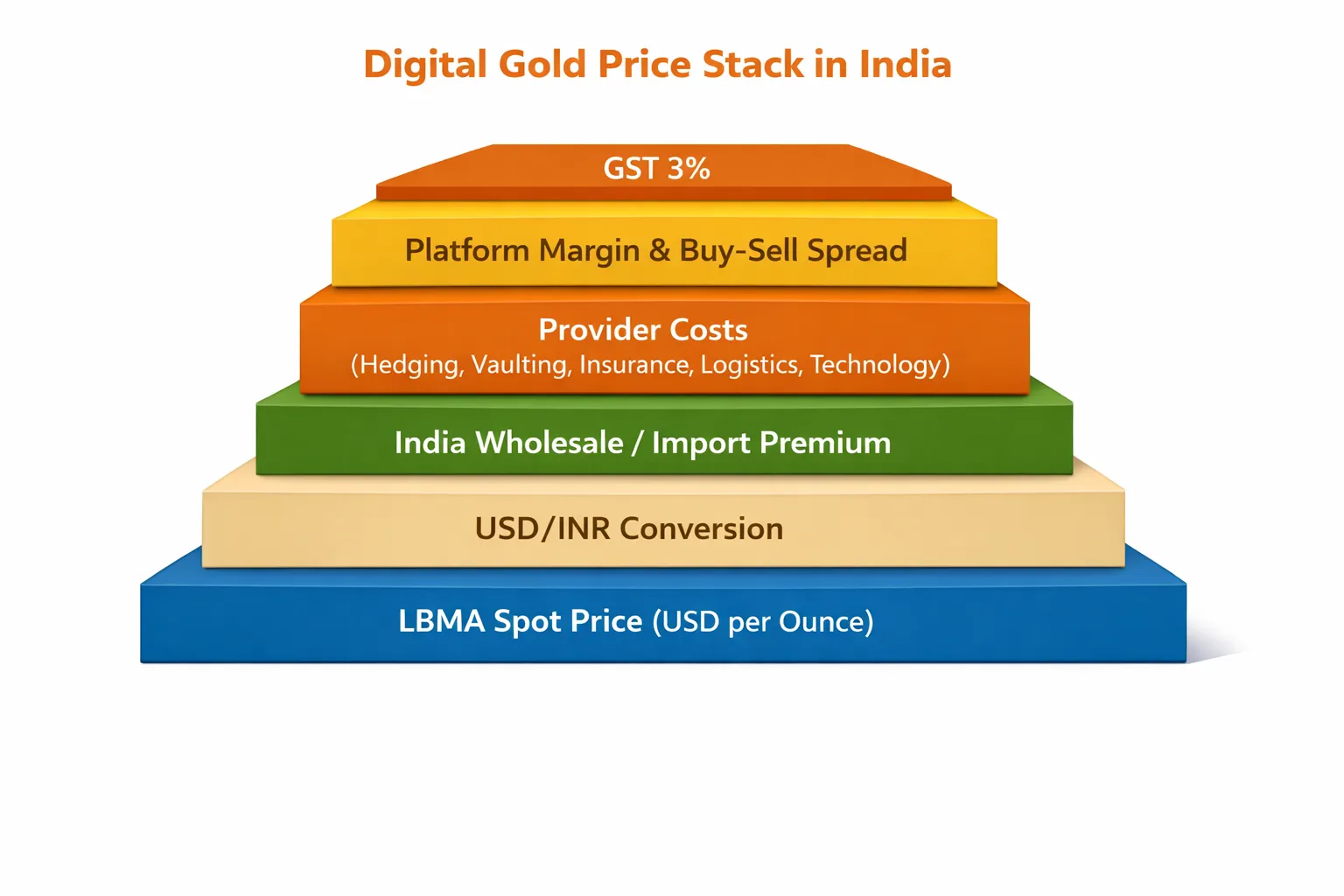
The price stack in plain English
-
Global reference: LBMA spot (USD/oz) vs futures
-
LBMA spot is the global benchmark for immediate delivery of gold, quoted in USD per troy ounce. It does not include local taxes or retail costs.
-
Futures quotes include expectations, carry costs, and exchange margins – useful for traders, not for retail “you-own-it” pricing.
-
-
FX conversion to INR and wholesale premiums in India
-
Apps convert USD/oz to INR/gram using the live USD/INR rate, then layer India’s wholesale/import premium to reflect local market realities.
-
-
Provider costs: hedging, vaulting, insurance, logistics, technology
-
Secure storage, insurance, hedging against price swings, and logistics/tech infrastructure are real costs that sit between raw spot and your final quote.
-
-
Platform margin and the buy–sell spread (your real friction)
-
The spread is the difference between the Buy and Sell price you see on the app. It covers carrying and operating costs and market risk.
-
-
GST (3%) on purchase and how it’s applied
-
A flat 3% GST applies on the purchase value of gold in India. There’s no GST when you sell back.
-
A simple working formula you can use
-
App Quote (Buy) ≈ [LBMA Spot in USD × USD/INR] + [wholesale premium] + [platform margin/spread share] + [applicable taxes/charges]
-
App Quote (Sell) ≈ Buy Quote − [spread] (varies by volatility/time of day)
What changes intraday
-
Spot and USDINR move constantly; platforms hedge and refresh quotes in near real time.
-
Spreads often widen during high volatility or off-market hours to cover risk.
-
Different apps can show slightly different prices at the same time due to:
-
Different hedging models and refresh frequencies
-
Varying wholesale sourcing and premiums
-
Platform-specific margins and fee policies
-
Components of the Price of Digital Gold
|
Component |
What it is |
Who collects it |
How it moves intraday |
|---|---|---|---|
|
Global spot (LBMA, USD/oz) |
International benchmark price for immediate delivery |
No one “collects”; it’s a market reference |
Moves with global trading (24/5), typically most during London/US hours |
|
USD/INR conversion |
Exchange rate used to convert USD to INR |
FX market makers/banks set rates |
Moves with FX market; can be volatile around macro news/RBI actions |
|
Wholesale/import premium |
Local India premium over spot due to demand, supply, duties |
Bullion wholesalers/importers |
Widens with demand spikes, tight supply, or duty changes; narrows in calm markets |
|
Provider carrying costs |
Hedging, vaulting, insurance, logistics, technology |
Digital gold provider and partners |
Mostly stable; hedging component can adjust with volatility |
|
Platform margin |
App/platform’s service margin |
Platform |
Generally stable; may adjust by time of day or campaign |
|
Buy–sell spread |
Gap between buy and sell quotes to cover risk/costs |
Provider/platform |
Widens in high volatility/off-hours; tightens in liquid hours |
|
GST (3% on buy) |
Statutory tax on purchase value |
Government of India |
Fixed on purchase; no GST on sell-back |
|
Payment processing |
UPI/payment gateway fees (if charged) |
Payment processor and/or platform |
Typically fixed per transaction or %; not market-driven |
“Buyback rates are lower than selling rates; the buy–sell spread covers costs like GST, payment gateway, trustee, insurance, and custodian fees.” – Source
Want transparent pricing with micro-buys and Bitcoin rewards on every purchase? Download OroPocket: https://oropocket.com/app
Premiums and Spreads: What You Really Pay (and When They Widen)
Definitions that matter
-
Premium: The extra you pay over global spot due to India-specific wholesale factors (import/wholesale premiums, duties, local demand–supply).
-
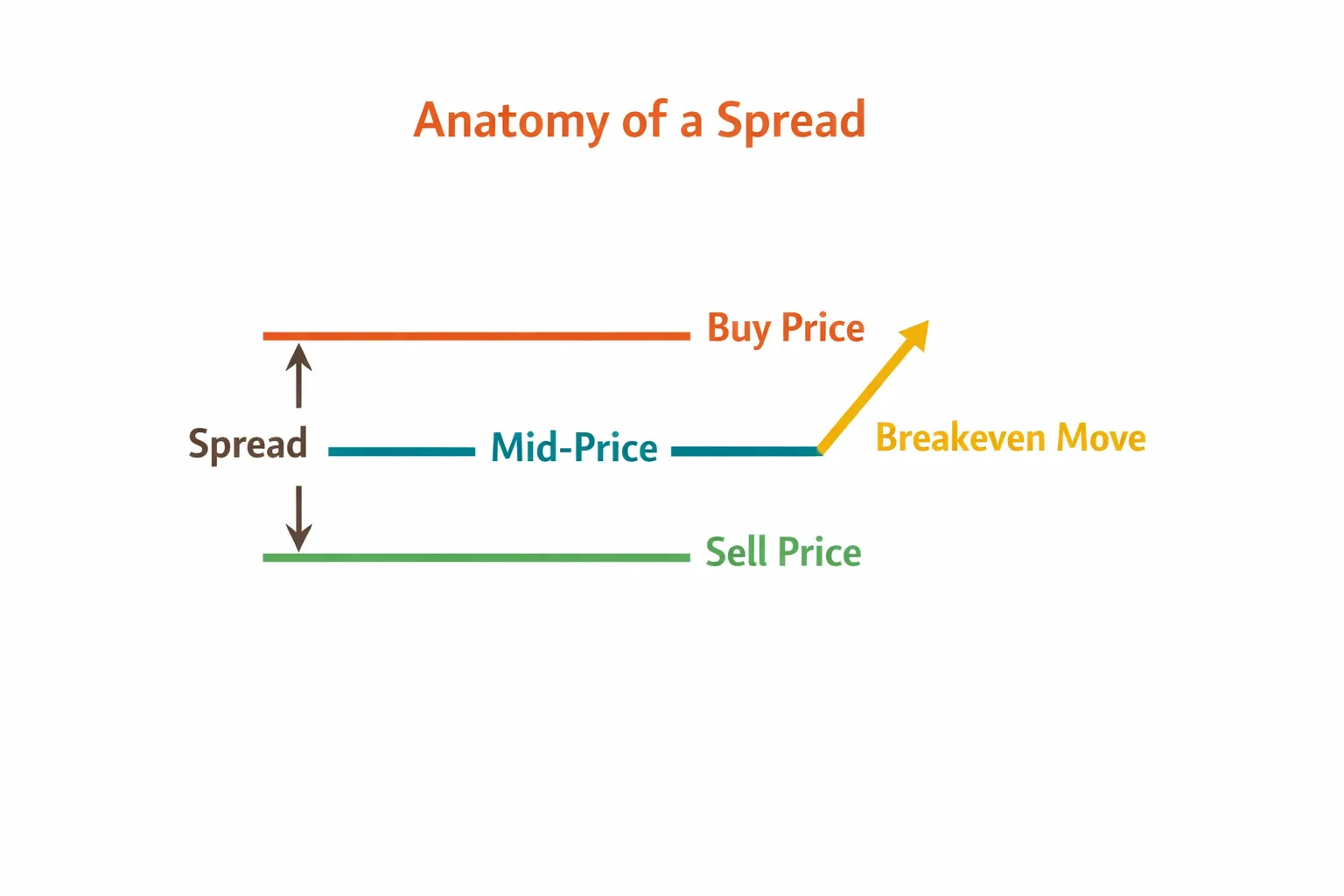
Spread: The gap between the Buy and Sell quotes on your app. This is your real friction – what you must “earn back” before you’re in profit.
Typical ranges and what drive them
-
Normal conditions vs. high-volatility days
-
Premiums: Often modest in calm markets, can jump during festival demand, import constraints, or sudden INR moves.
-
Spreads: Typical digital gold buy–sell spreads range roughly 2–6% provider-agnostic. Expect wider spreads when gold or USDINR whipsaw.
-
-
Off-hours quoting; effect of liquidity/hedging costs
-
Outside major market hours, hedging is costlier and quotes refresh less frequently, so spreads can widen.
-
-
Smaller ticket sizes vs. payment method fees
-
Micro-buys don’t always mean worse pricing – top platforms standardize spreads for everyone.
-
But payment method fees (e.g., card surcharges, certain gateway fees) can inflate your effective cost on tiny tickets. Prefer UPI when possible.
-
Your action checklist
-
Always check both Buy and Sell quotes before confirming – this is your effective spread.
-
Refresh quotes and avoid peak-volatility minutes (major data releases, sudden INR spikes).
-
Track your effective spread over time. Keep a quick note: date, buy, sell, spread %, and payment method.
Typical Costs by Channel (India)
|
Channel |
Typical Buy–Sell Spread |
GST on buy |
Other fees (making/delivery/brokerage) |
Liquidity |
|---|---|---|---|---|
|
Digital Gold (24×7) |
~2–6% |
3% |
Possible payment gateway fees; delivery/minting charges if you take coins/bars |
High (24×7 on most apps) |
|
Jeweller Coin/Bar |
~2–5% buyback discount vs sell; varies by jeweller |
3% |
Making/premium on coins/bars ~1–10%; delivery/valuation costs |
Medium (business hours, in-person) |
|
Gold ETF |
~0.05–0.50% market bid–ask |
0% (securities) |
Brokerage per trade; expense ratio ~0.5–1.0% p.a. |
High (market hours) |
|
SGB (Primary/Secondary) |
Primary issue: N/A; Secondary market can trade at discount/premium (~1–5% typical) |
0% |
None on primary; brokerage on secondary; early exit constraints |
Low–Medium (8-year maturity; 5-year early exit windows; thin secondary) |
Want transparent pricing, micro-buys from ₹1, and rewards that put more money on gold to work for you? Download the OroPocket app: https://oropocket.com/app.
Taxes, GST, and Hidden Fees You Shouldn’t Ignore
“GST on gold purchase (unwrought or semi‑manufactured forms) is 3% in India.” – Source
GST on purchase
-
3% GST applies when you buy gold – whether physical or digital. This is baked into the price you see on most apps showing the live price of digital gold.
-
No GST when you sell back to the platform. Your proceeds are based on the sell quote minus any platform-specific fees (if applicable).
Capital gains in brief
-
STCG (holding ≤ 3 years): Taxed as per your income slab.
-
LTCG (holding > 3 years): 20% with indexation for physical/digital gold (prevailing rules).
-
Note: Finance-law updates can affect how funds are taxed; verify the latest treatment for Gold ETFs/Gold Mutual Funds, which may differ from physical/digital gold.
Payment and redemption extras
-
Payment method fees:
-
Cards may attract surcharges or gateway fees; UPI is often zero-cost and helps you save money in gold, especially on micro-buys.
-
-
Physical redemption (if you convert digital to coins/bars):
-
Making/minting, packaging, and delivery fees apply. Only opt in if you explicitly want coins/bars; otherwise, it’s cheaper to stay digital for a safe gold price.
-
-
Platform/operational nuances:
-
Check for overnight/wallet transfer charges (if any), minimum redemption thresholds, or inactivity fees in the app T&Cs.
-
Some platforms bundle costs into the spread; others list them as separate line items – always review before confirming.
-
Bottom line: taxes and fees are part of the price stack that shapes the digital gold price in India. Know the 3% GST, track your holding period for capital gains, prefer UPI to minimize payment friction, and avoid unnecessary physical redemption costs. That’s how you keep more money on gold in a fast-moving digital gold market.
Ready to buy smarter and keep more of your returns? Download the OroPocket app: https://oropocket.com/app.
7 Proven Ways to Save Money on Digital Gold (Without Timing the Market)
-
Use micro-buys/SIPs to average price and reduce timing risk
-
Set a daily/weekly SIP (₹1–₹100). You’ll smooth out spikes in the digital gold price in India and avoid decision fatigue.
-
Prefer UPI to avoid card surcharges and failed-payment retries
-
UPI is instant and often zero-fee. Card payments can add gateway charges that quietly raise your effective cost.
-
Check spreads – buy when spread is within your target band; avoid extreme-volatility minutes
-
Keep a simple band (e.g., ≤3–4% for many apps). If spreads widen, refresh or wait a few minutes. Don’t chase quotes during macro-news spikes.
-
Skip physical redemption unless gifting (making + delivery fees)
-
Converting to coins/bars adds making, minting, and delivery costs. Stay digital to preserve returns unless you’re gifting.
-
Stack platform rewards/loyalty to offset spread (cashback, vouchers)
-
Apply promo credits and seasonal offers. Even 1–2% back meaningfully narrows your all-in cost of ownership.
-
Leverage OroPocket streaks and Spin-to-Win for bonus rewards and lower effective cost of ownership
-
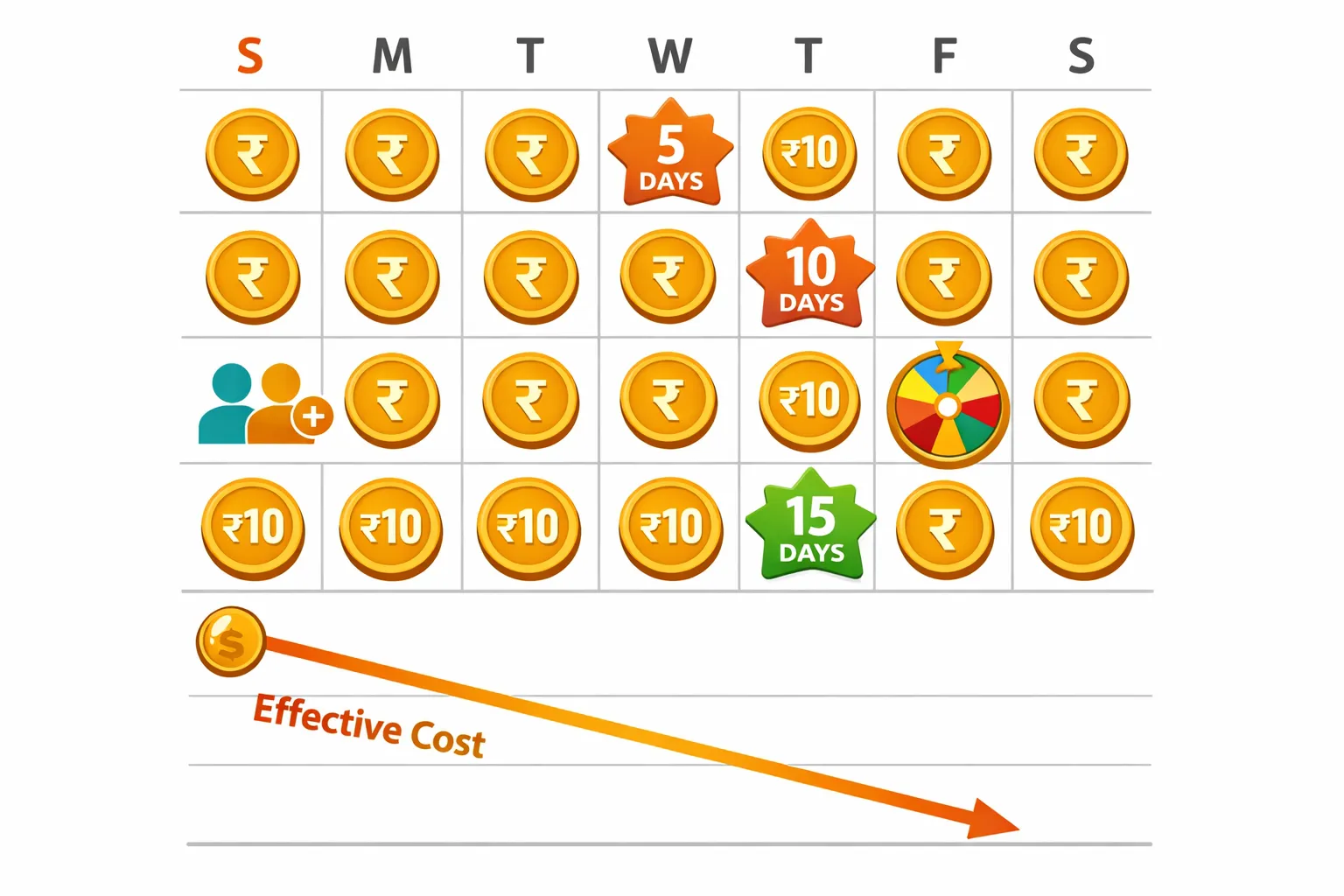
Build 5-day streaks for bonus rewards. Use daily spins to win extra gold or Bitcoin – compounding benefits on top of your savings habit.
-
Refer friends – use referral bonuses to subsidize future purchases
-
On OroPocket, both of you earn 100 Satoshi plus a free spin. Referral rewards can fund your next micro-buy and systematically reduce net cost.
Put these into practice today – start with a ₹1 SIP, pay via UPI, and stack rewards so your money on gold goes further. Download OroPocket: https://oropocket.com/app.
Track Price vs Spot Like a Pro (LBMA, MCX, and App Quotes)
Where to look
-
LBMA spot (global reference): A trusted global benchmark for bullion. It’s not the final price you’ll transact at in India because it excludes INR conversion, local premiums, and taxes.
-
MCX (domestic futures): India’s rupee-denominated reference for near-month and far-month gold contracts – useful to see local expectations versus spot.
-
App quotes (your execution price): This is what you actually pay/receive. It includes INR conversion, wholesale premiums, spread, and GST on buys.
A simple 3-step comparison
-
Step 1: Note LBMA spot (USD/oz) and USDINR
-
Example: Spot × USD/INR → base ₹/oz; divide by 31.1035 to get ₹/g.
-
-
Step 2: Add a reasonable premium band
-
Include wholesale/import premiums and expected platform spread share (e.g., a few percent depending on conditions).
-
-
Step 3: Compare to app buy/sell
-
If your app’s buy price is far above your band, refresh or wait a few minutes (especially during volatile or off-hours). If sell is unusually low, spreads may be widened – consider delaying.
-
Pro tips
-
Set app price alerts for both buy and sell to avoid anchoring to headlines.
-
Keep a simple personal log of:
-
Date/time
-
LBMA spot, USDINR
-
App buy/sell
-
Effective spread (%)
-
Your average buy price
-
-
Over time, you’ll learn each platform’s typical ranges and know when pricing is favorable.
Want transparent pricing, micro-buys from ₹1, and Bitcoin rewards that offset costs? Download OroPocket: https://oropocket.com/app.
Real-World Scenarios: Your Net Cost After Spreads, GST, and Rewards
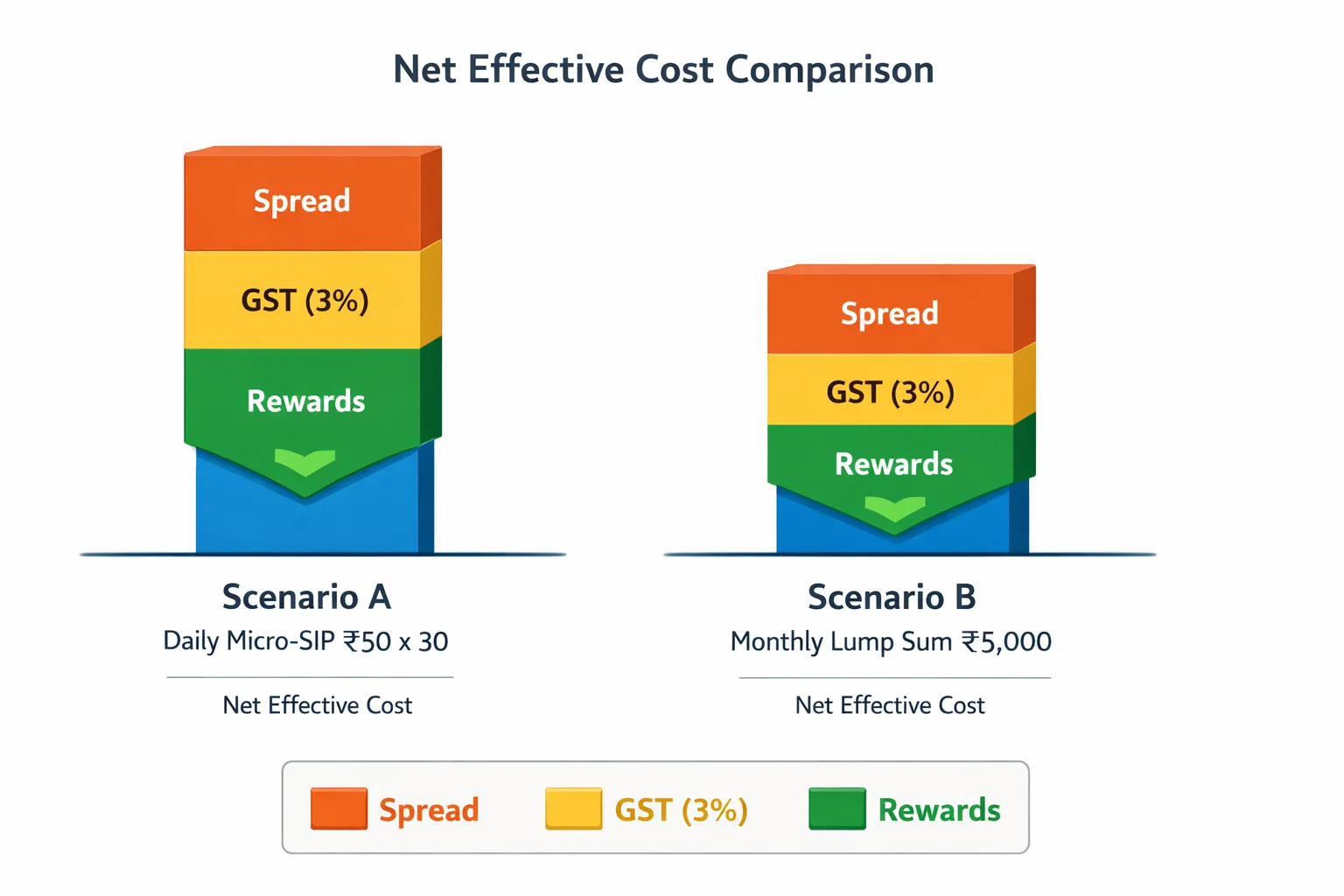
Scenario A: Daily micro-SIP (₹50 x 30 days)
-
Setup: ₹50 per day for 30 days = ₹1,500 total.
-
Friction you face:
-
GST: 3% on each daily buy.
-
Spread: the gap between buy/sell (assume a typical 3–4% range; example: 3.5% average in calm markets).
-
-
Illustration (assumptions for learning):
-
Gross friction ≈ GST (3.0%) + Spread (3.5%) = 6.5%.
-
Rewards offset: Bitcoin cashback + streaks + spins can reduce your effective cost. If combined rewards over the month total ~1.0–2.0% of purchase value, net friction ≈ 4.5–5.5%.
-
-
Why micro-SIP helps:
-
You average out volatile days in the digital gold market and avoid buying everything at a peak.
-
Daily streaks and Spin-to-Win can meaningfully chip away at costs over time.
-
Scenario B: Monthly lump sum (₹5,000 on the 5th)
-
Setup: One-shot ₹5,000 buy.
-
Friction you face:
-
GST: 3% (same).
-
Spread: can be tight on liquid hours or widen on volatile/off-hours.
-
-
Illustration (assumptions for learning):
-
If spread is 3.0% at purchase, gross friction ≈ 6.0%.
-
Rewards: With fewer transactions, you might get only base cashback (say ~0.5–1.0% illustrative), net friction ≈ 5.0–5.5%.
-
If you buy during a volatility spike and the spread widens to ~4–5%, gross friction can jump to ~7–8% before rewards – this is the “slippage” risk for lump sums.
-
-
Takeaway:
-
Lump sums are simpler but more exposed to one moment’s price/spread.
-
Micro-SIPs smooth timing and can unlock more streak-based rewards on OroPocket.
-
Your breakeven move
-
Quick mental math:
-
Breakeven % ≈ Spread % + 3% GST − Rewards %.
-
Example: If spread is 3.5% and you earn 1.5% rewards, breakeven ≈ 3.5 + 3.0 − 1.5 = 5.0%. Gold needs to rise ~5% from your buy price to break even on an immediate sell.
-
-
Why rewards matter:
-
Consistent streaks, daily spins, and referral bonuses accumulate – shrinking your breakeven over time and helping you save money in gold without timing the market.
-
Beat friction the smart way: use micro-buys, pay via UPI, and stack rewards so more of your money on gold compounds, not fees. Start now with OroPocket: https://oropocket.com/app.
Digital Gold vs Other Ways (When Cost and Liquidity Matter)
-
Short-term hedge: 24×7 liquidity you can actually use
-
Digital gold lets you buy/sell any day, any hour – useful when you want a quick hedge against a falling rupee or spiking volatility. Your execution price already reflects the live price of digital gold in India, including spread and GST.
-
Gold ETFs are efficient but restricted to market hours and exchange liquidity. You also need a demat, brokerage account, and you face bid–ask plus brokerage and potential slippage. For overnight moves or weekends, ETFs can’t match digital’s round-the-clock access.
-
-
Gifting/emergencies: instant transfer beats wait times
-
With digital gold, you can send gold instantly to family – no bank timings, no delivery delays. This is ideal for small emergency buffers or quick gifts.
-
ETFs/mutual funds settle post-trade (T+1/T+2), and selling requires a broker/app, market hours, and then a bank credit cycle. SGBs require a sale on the exchange or an early redemption window – neither is “instant.”
-
-
When SGBs win (and when they don’t)
-
Win: Long horizon + 2.5% interest. If you’re holding 5–8 years, SGBs add fixed interest on top of price appreciation, and maturity redemption is tax-efficient. For disciplined savers who don’t need short-term liquidity, SGBs are tough to beat.
-
Don’t: Early liquidity matters. There’s a 5-year lock-in before early exit windows, and secondary-market liquidity can be thin or at a discount. For emergency funds or tactical hedging, digital gold is usually a better fit.
-
-
Physical coins/jewellery: ceremonial, not cost-optimized
-
Great for gifting and tradition, but making/premium charges and resale discounts typically erode financial returns. Storage, purity checks, and buyback terms add friction. If your goal is saving gold efficiently, digital or SGB/ETF routes are usually cheaper over time.
-
Bottom line: If cost and liquidity matter today, digital gold shines – especially for micro-savers and quick hedges – while SGBs are the long-game champion. For ceremonial needs, go physical; for intraday liquidity and convenience, go digital. Want transparent pricing, instant UPI buys, and rewards that help you save money on gold? Download OroPocket: https://oropocket.com/app.
Why OroPocket Helps You Save More Over Time
Pay less, earn more (net-net)
-
Micro-investing from ₹1 keeps you consistent without overpaying on big one-shot buys
-
Average your cost over time and avoid buying at a single, unlucky peak in the digital gold market.
-
-
Bitcoin Rewards: earn free Satoshi on every gold/silver purchase (tiered)
-
Two assets for the price of one – your gold stack grows while Bitcoin rewards help offset spreads and fees.
-
-
Daily Streaks and Spin-to-Wwin: gamified bonuses that cumulatively offset spreads
-
Stay active, build streaks, use daily spins – small, regular rewards reduce your effective net cost on every gram.
-
Pro tip: Refer friends to stack extra Satoshi and spins, further lowering your average entry price.
-
Fast, compliant, secure
-
Instant UPI payments; buy in under 30 seconds
-
No card surcharges, no failed-payment drama – seamless UPI flows mean more of your money goes into gold.
-
-
24K pure gold, 100% insured vaults; RBI-compliant with authorized bullion partners
-
A safe gold price experience with real, securely vaulted assets you can buy/sell anytime.
-
-
Send Gold instantly – perfect for gifting or quick help to family
-
Move value in seconds, no bank timings, no logistics delays.
-
Why this combo matters
-
Stability of gold + upside potential of Bitcoin rewards
-
Gold protects your purchasing power; Bitcoin rewards add asymmetric upside – together they help you save money in gold without timing the market.
-
-
Builds the habit: progress you can see, every day
-
Micro-buys, streaks, and rewards make saving gold simple and sticky – ideal for first-time investors and cost-conscious savers watching the price of digital gold in India.
-
Ready to turn every rupee into more gold (and Bitcoin rewards)? Download OroPocket now: https://oropocket.com/app.
Conclusion: Start Saving Real Money on Every Gram – With OroPocket
-
You now know the price stack behind the price of digital gold in India – spot, USD/INR, wholesale premium, platform spread, and 3% GST – and exactly where costs sneak in.
-
Don’t overthink timing. Use micro-buys, pay via UPI, and stack rewards (Bitcoin cashback, streaks, spins, referrals) to lower your effective cost month after month.
-
Next step: get hands-on. Track your own effective spread and breakeven, keep a simple log, and let OroPocket’s rewards do the heavy lifting while you build real wealth in the digital gold market.
Call to action:
-
Download the OroPocket app (iOS/Android) and start with ₹1: https://oropocket.com/app