Does silver rise during war?

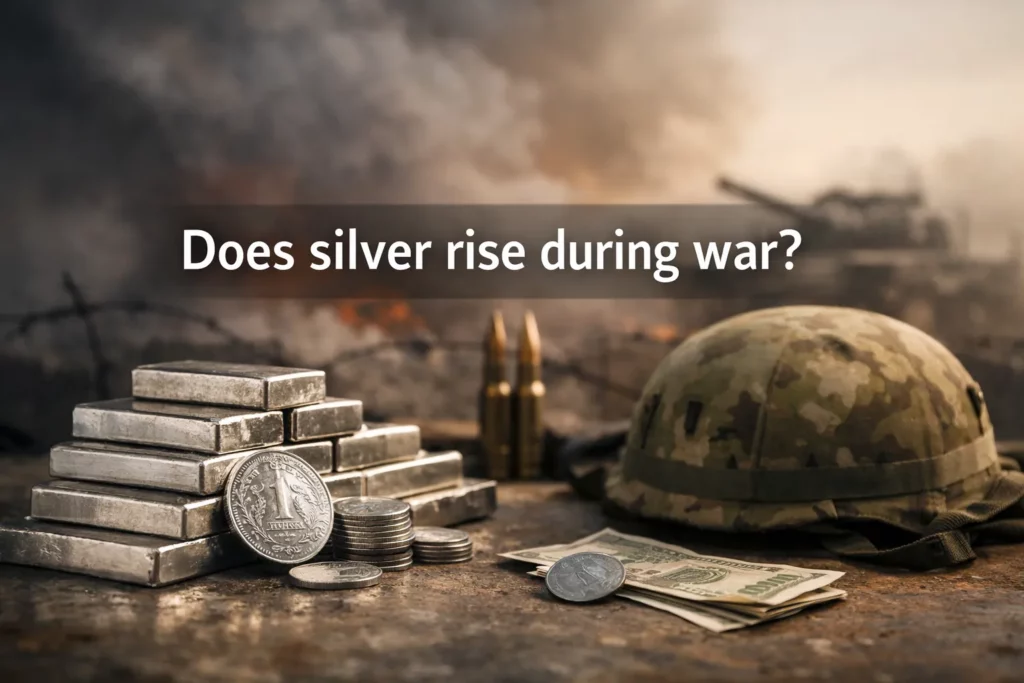
Does silver rise during war? The honest answer (and how to invest smartly in India)
War headlines make many investors assume silver will automatically shoot up – because “safe haven.” Reality is more nuanced:
-
Yes, silver can rise during war due to fear-driven safe-haven buying.
-
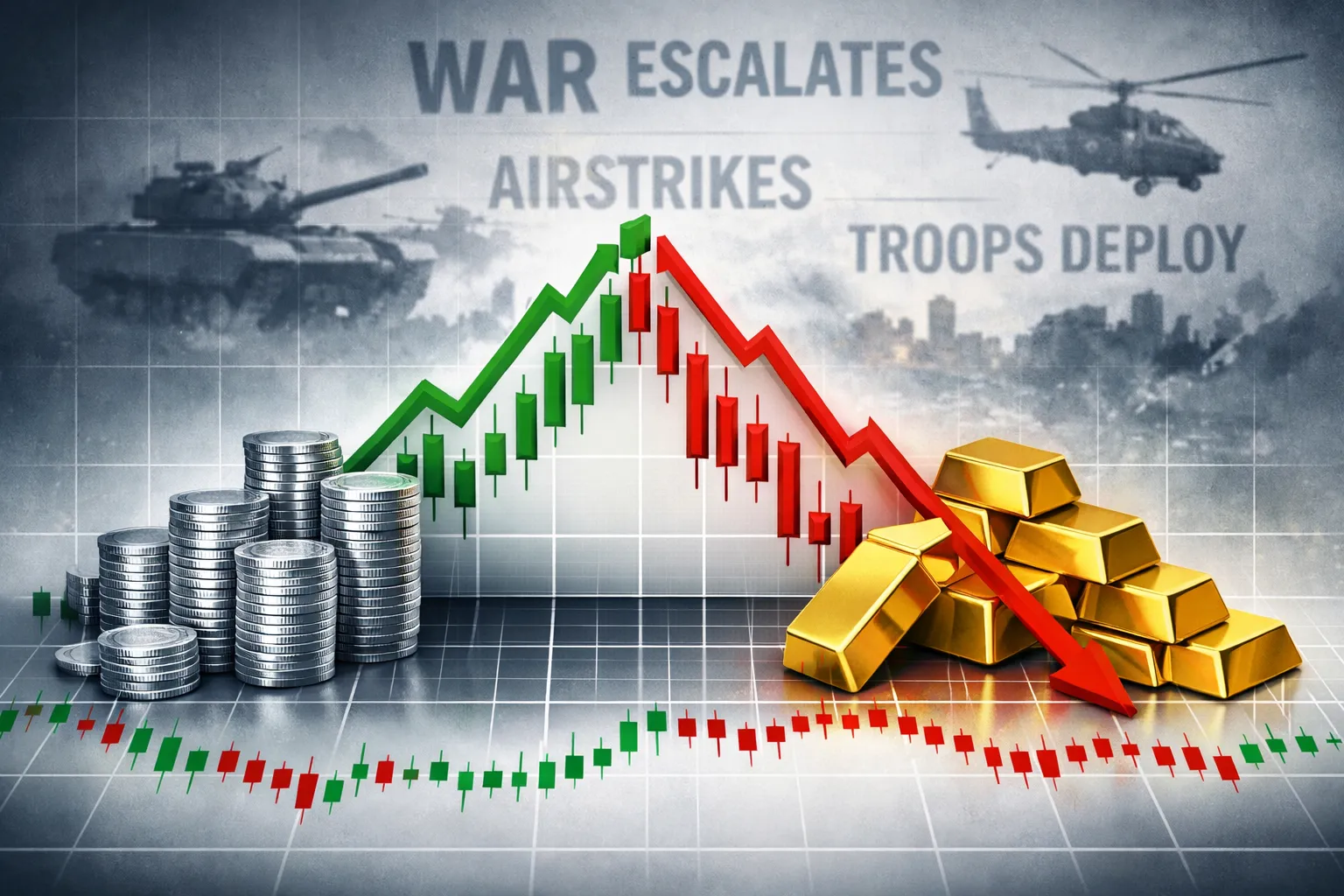
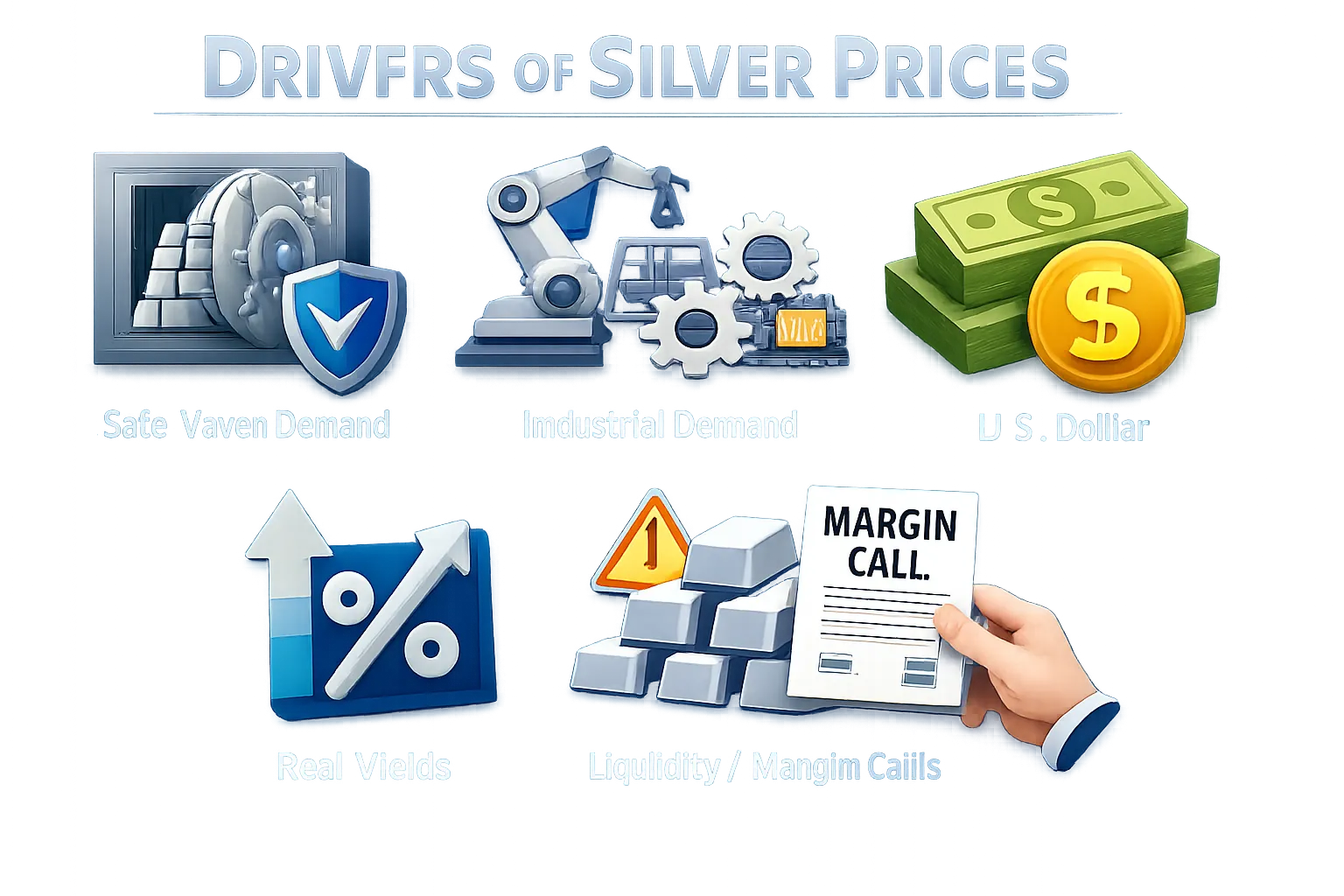
But silver can also fall sharply during war if the US dollar strengthens, real yields rise, or investors sell metals to meet margin calls.
-
Silver is a hybrid asset: part “safe haven,” part “industrial metal.” That dual nature makes it more volatile than gold in conflict periods.
If you want to track real-time moves before you invest, keep an eye on the live gold prices today (gold and silver often react together, but not always in the same direction).
What competitor articles get right (and what they miss)
What they get right
Most top-ranking articles agree on:
-
Safe-haven demand rises during wars and geopolitical shocks.
-
The US dollar and interest rate expectations strongly influence bullion prices.
-
Silver is more volatile than gold.
The content gaps (where this guide goes further)
Competitors often gloss over:
-
Why silver sometimes drops during war (liquidity stress + margin calls + stronger USD).
-
The gold–silver ratio as a simple signal for timing and relative value.
-
A practical, India-first action plan to invest in silver without large minimums, storage hassles, or confusion.
This post fills those gaps – so you can stop guessing and start building.
Why silver can rise during war (the upside case)
During war, markets hate uncertainty. That triggers risk-off behavior:
-
Investors move money from equities into defensive assets
-
Inflation fears rise (especially if energy supply routes are threatened)
-
Demand increases for hard assets like gold – and sometimes silver
Silver may benefit from:
-
Safe-haven flows (fear trade)
-
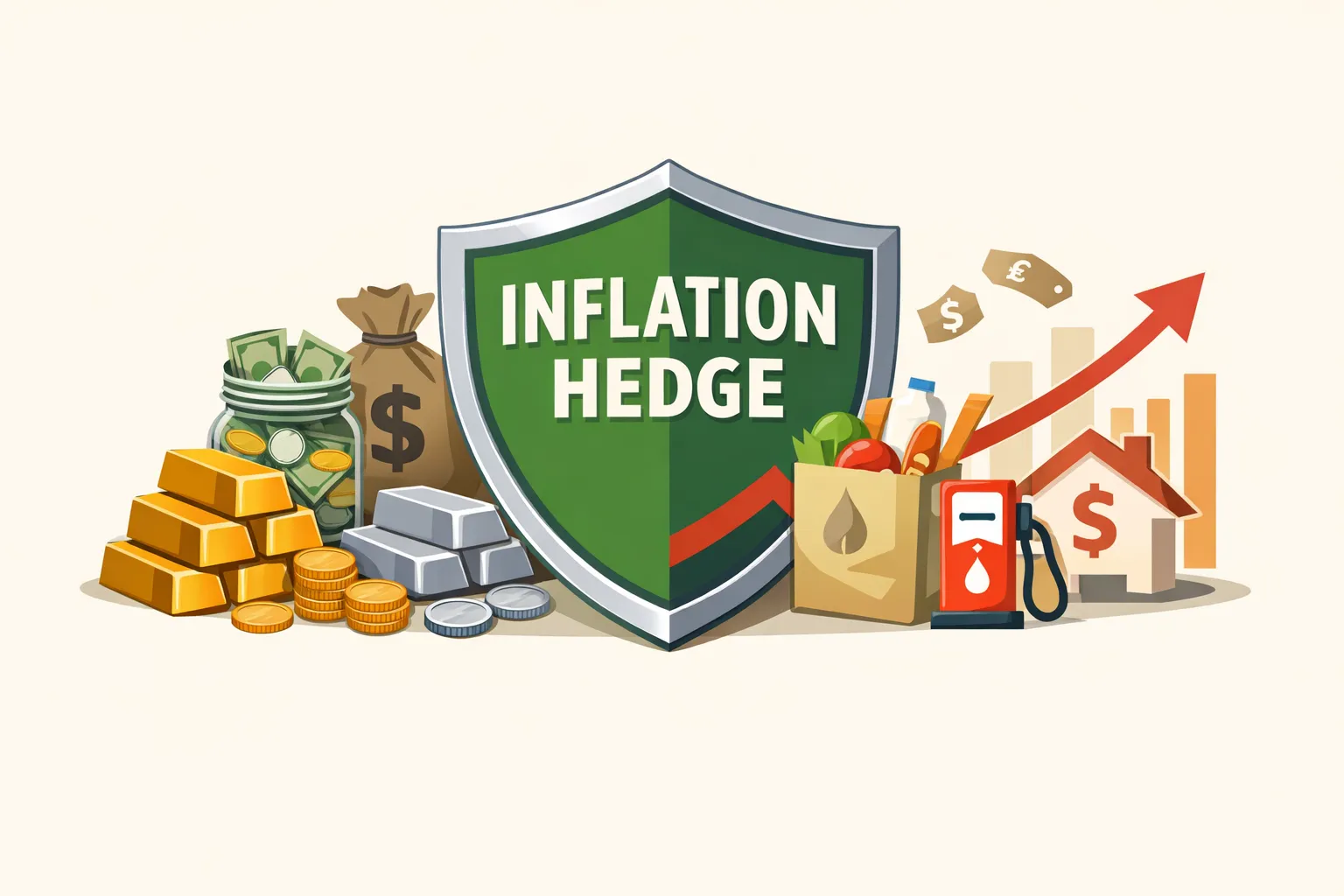
Inflation hedging (currency purchasing power concerns)
-
Speculative momentum (silver tends to “overreact” once it starts moving)
“During the Russia-Ukraine conflict, silver prices surged by 18.7%.” – AInvest
Why silver can also fall during war (the downside case)
Here’s the part most people miss: war can create forced selling.
Silver may drop when:
-
USD strengthens: commodities priced in USD become costlier for other currencies → demand weakens
-
Real yields rise: non-yielding assets like silver lose relative appeal
-
Margin calls hit: in broad market sell-offs, traders liquidate metals to raise cash fast
-
Industrial demand worries: if war threatens global growth, silver’s industrial side can drag it down
That’s why you sometimes see headlines like “war escalates” but silver still dips.
The “silver reality”: it’s not just a safe haven – it’s also an industrial metal
Gold is mainly monetary. Silver is monetary + industrial.
That means silver’s war performance depends on which force wins:
|
Force |
What it does to silver |
Why it matters in war |
|---|---|---|
|
Safe-haven demand |
Pushes up |
Investors seek protection |
|
USD strength |
Pushes down |
War can boost USD demand |
|
Real yields |
Pushes down |
Higher yields hurt non-yielding metals |
|
Industrial demand |
Can push down |
Growth fear reduces manufacturing outlook |
|
Inflation expectations |
Pushes up |
War-driven oil shocks feed inflation |
Translation: Silver can spike – but it can also whip-saw. If you’re investing, your edge is having a plan, not reacting to headlines.
The simplest indicator smart investors watch: the gold–silver ratio
The gold–silver ratio = gold price ÷ silver price.
It’s a quick way to judge whether silver is relatively cheap or expensive vs gold.
-
Higher ratio often means silver is lagging (sometimes opportunity)
-
Lower ratio often means silver has run up strongly (sometimes overheating)
You don’t need to be a pro trader – just use this as a sanity check before going all-in.
Silver as an investment in India: what actually works for retail investors
If you’re a student, salaried professional, or first-time investor, the goal is simple:
Get exposure. Stay consistent. Avoid storage stress.
Here are common options:
|
Method |
Pros |
Cons |
Best for |
|---|---|---|---|
|
Physical silver (coins/bars) |
Tangible |
Making charges, storage, purity risk |
Traditional buyers |
|
Silver ETFs/Mutual funds |
Regulated, easy |
Needs demat, market hours |
Market-linked investors |
|
Digital silver |
Small entry, instant buying, no storage |
Platform choice matters |
Mass-market savers |
War or no war, consistency beats timing. If you’re tracking gold rate today in India, pair it with a simple silver accumulation habit too – because the best hedge is one you actually stick with.
OroPocket approach: stability of metals + rewards that make you consistent
Most people don’t fail because they chose the “wrong asset.” They fail because they stop.
OroPocket is built to fix that behavior gap:
-
Start from ₹1: no minimum barrier, ever
-
Instant UPI buying: invest in under 30 seconds
-
Gold + Silver investing: diversify your hedge
-
Free Bitcoin on every purchase: you earn Satoshi cashback – two assets for the price of one
-
Gamified investing: streaks, spin-to-win, tier rewards that make consistency addictive
-
Secure & compliant: RBI-compliant setup, fully insured vault storage, authorized bullion partners

Stop watching. Start growing.
War-proofing your money: think “hedge + habit,” not hype
Silver can rise during war – but it’s not guaranteed. The smarter move is to build a system that survives volatility:
A simple retail strategy
-
Keep core safety in gold (lower volatility)
-
Add silver for higher-upside potential (higher volatility)
-
Accumulate in small amounts instead of trying to “buy the bottom”
Gold has historically outpaced inflation meaningfully over multi-year windows:
“In five years, 10g 24K gold in India rose from ~₹39,000 to ₹1,01,350 – about 160%.” – INDmoney
That’s why combining a long-term hedge (gold/silver) with a growth-style reward layer (Bitcoin cashback) is such a powerful modern portfolio habit.
Final verdict: does silver rise during war?
It can – but it doesn’t have to.
Silver reacts to war through multiple channels: safe-haven demand (up), USD/yields/liquidity stress (down), and industrial outlook (either way). That’s why the best “war strategy” isn’t prediction – it’s consistent accumulation with risk control.
If you want the easiest, most habit-friendly way to invest in silver (and gold) in India:
-
Start with ₹1
-
Pay instantly with UPI
-
Earn free Bitcoin on every buy
-
Build a streak-based investing habit
Track the current gold price, set your daily/weekly amount, and let your wealth compound quietly – while others argue about headlines.