Does the Iran war affect gold prices?

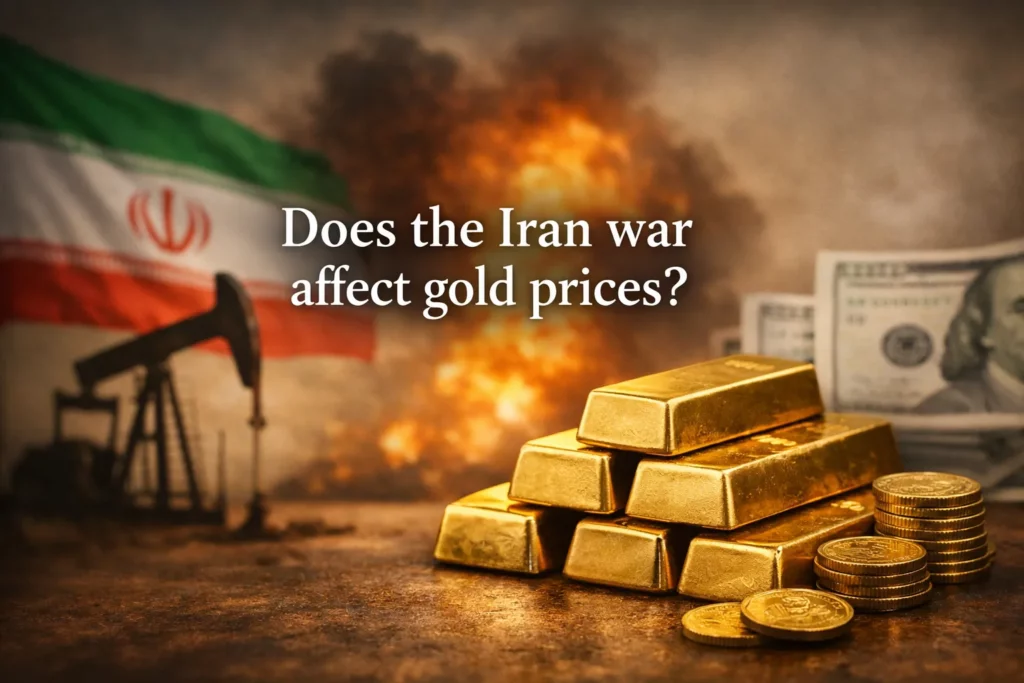
Does the Iran war affect gold prices? Yes – but not always the way you expect.
When headlines scream “war”, most Indians assume one thing: gold will shoot up. And historically, that’s often true – gold is the classic safe-haven asset.
But the Iran war (and the wider Middle East risk around it) impacts gold prices through multiple competing forces – oil prices, the US dollar, interest rates, ETF flows, central-bank buying, and even “profit booking” after big rallies. So gold can rise, fall, or stay flat during the same conflict depending on which force dominates.
If you’re a student, salaried professional, or first-time investor trying to protect savings from inflation, the real question is:
Do you wait and guess the “perfect time” – or build a habit and average in with tiny amounts?
That’s where digital gold starting at ₹1 becomes a superpower.

The short answer: Iran war affects gold – through fear, oil, and the Fed
Gold reacts to war uncertainty mainly because investors seek safety. But with Iran-related conflicts, there’s a specific extra driver: energy risk.
“The Strait of Hormuz is a critical maritime chokepoint through which approximately 20% of global oil consumption passes daily.” – U.S. EIA
So if the war threatens shipping routes, oil can spike – and that feeds into inflation expectations.
Here’s the twist: higher inflation doesn’t automatically mean higher gold in the short run, because it can also push interest rates and the US dollar up, which can pressure gold.
What gold prices usually do in wars (and why Iran can be different)
1) The “safe-haven bid” (gold goes up)
When uncertainty rises, investors buy gold because it’s:
-
globally recognized value
-
liquid
-
not tied to a single country’s credit risk
This is why many wars or crises show an initial jump in gold.
2) The “oil → inflation → rate expectations” chain (gold can go down)
If oil surges, markets often expect:
-
inflation stays higher
-
central banks (especially the US Fed) become less likely to cut rates (or might even hike)
When rates rise, cash and bonds start paying more, and gold (which pays no interest) becomes less attractive.
Result: gold can stall or fall even during war headlines.
3) The “strong dollar effect” (gold can go down)
Gold is priced in USD. When the dollar strengthens, gold can become more expensive in other currencies, reducing demand.
This matters for Indian investors too, because INR-USD moves can amplify local gold price swings.
Why gold sometimes stays flat despite “war panic”
If you’re watching prices daily and thinking “why is nothing happening?”, here are the most common reasons:
Gold already rallied before the war
If gold ran up ahead of the conflict (due to earlier inflation fears or risk-off flows), a lot of “fear buying” is already priced in.
Profit booking and leverage unwinds
When traders are heavily positioned long, even a small change in expectations can trigger selling.
Markets believe the conflict will be contained
If investors think it won’t spread or won’t last long, the safe-haven rush can fade quickly.
The real driver to watch: oil and interest rates
Iran conflict risk is uniquely linked to energy markets, so in many periods oil becomes the “lead domino.”
Here’s the simplified map:
|
If this happens… |
Then markets expect… |
Impact on gold |
|---|---|---|
|
War escalates + oil spikes |
Higher inflation |
Could lift gold or lift yields |
|
Fed seen as “higher-for-longer” |
Higher real rates |
Often negative for gold |
|
USD strengthens |
Risk-off into USD |
Often negative for gold |
|
Conflict de-escalates |
Less fear premium |
Gold may cool off |
What this means for Indian retail investors (students, salaried, first-time)
Trying to time gold based on war headlines is a trap because:
-
the market moves on expectations, not news
-
oil, rates, and USD can overpower the “safe-haven” narrative
-
the biggest gains often come from consistent accumulation, not perfect entries
That’s why long-term investors track trend + allocation, not daily drama.
If you want to monitor the market, keep it simple:
-
Track daily gold prices (spot + local rate)
-
Use a 5-year gold price chart to understand the bigger cycle
-
Decide a monthly (or weekly) amount and stick to it
You can follow daily gold prices anytime, without guessing.
Gold vs inflation: the “why” behind owning it at all
Gold’s core job in a portfolio is not entertainment. It’s protection.
“Over the past five years (2021–2025), gold has delivered a compounded annual growth rate (CAGR) of 23.2% in India.” – Business Standard
Inflation quietly erodes savings, especially when money sits in low-yield accounts. Gold historically helps you fight that erosion – particularly when uncertainty and inflation risks rise together.
To visualize that longer-term trend, use a 5 year gold price chart and stop overreacting to one-week volatility.
So… should you buy gold during the Iran war?
If your goal is long-term wealth building, the war is not the reason to buy.
The reason is: asset allocation + inflation protection + habit.
A smarter approach for most Indians:
-
accumulate in small amounts
-
average over time
-
avoid leverage
-
keep liquidity
That’s exactly what OroPocket is built for.
The OroPocket way: gold investing that fits real life (₹1, UPI, and free Bitcoin)
Most Indians don’t fail because they picked the wrong asset. They fail because they never start – or they start, stop, and restart.
OroPocket removes the friction:
What you get with OroPocket
-
₹1 entry point: start instantly, no “minimum invest” stress
-
Instant UPI payments: buy in under 30 seconds
-
100% secure & compliant: RBI-compliant, insured vault storage, authorized bullion partners
-
Gamified investing: streaks, spin-to-win, tiered rewards – build the habit
-
Free Bitcoin on every purchase: you earn Satoshi cashback on gold/silver buys
-
Referral rewards: both sides earn 100 Satoshi + free spin
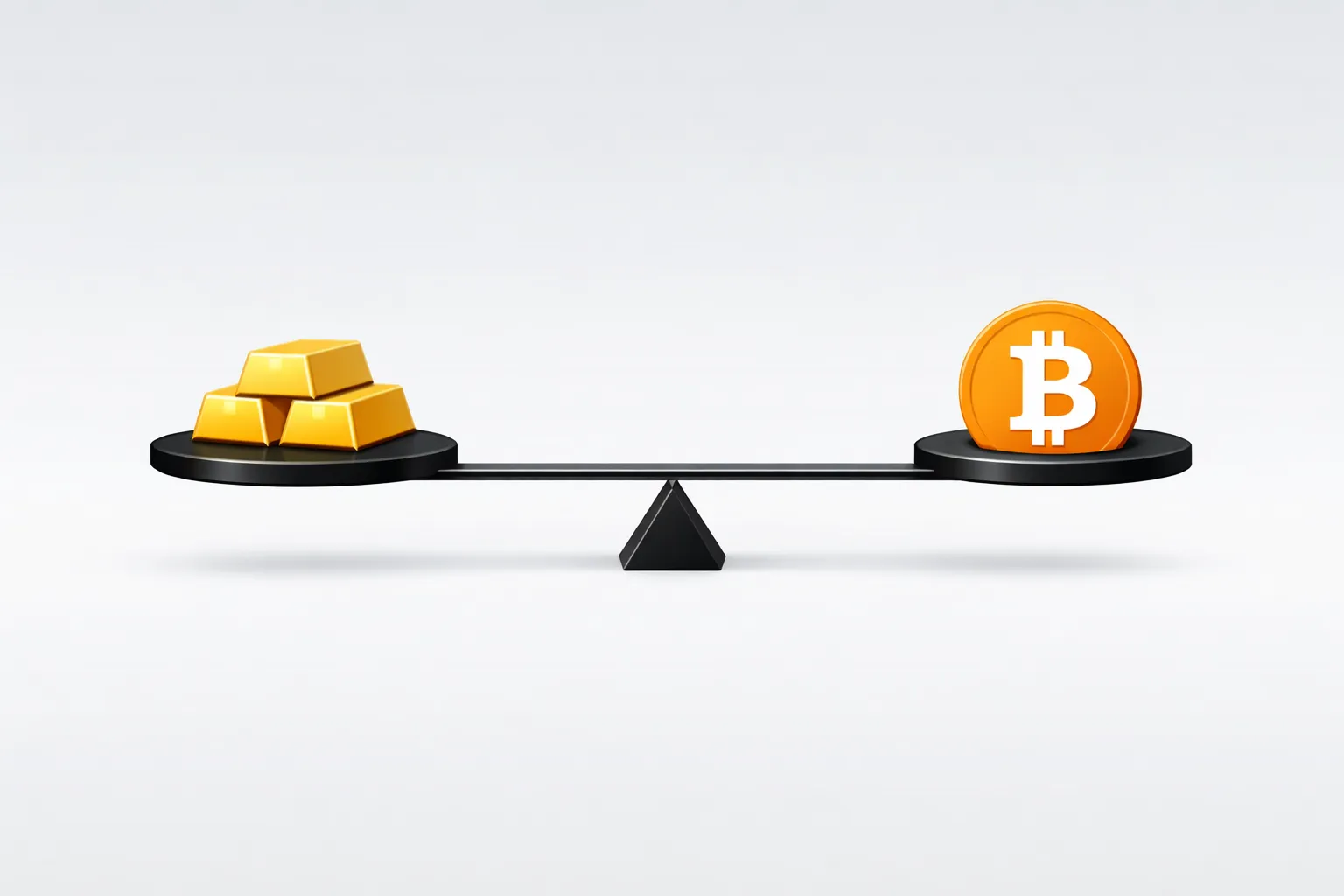
This is the modern barbell:
Gold for stability + Bitcoin rewards for upside – without you needing to “trade crypto” all day.
If you want to start right now, begin with the current gold price and invest a tiny amount to lock the habit.
Final verdict: the Iran war can move gold – but your strategy matters more than the news
Yes, the Iran war affects gold prices.
But the bigger truth is: gold reacts to the war’s impact on oil, inflation, the dollar, and interest rates – not just fear.
Don’t get stuck refreshing charts. Build an allocation. Build a streak. Get rewarded while you do it.
Stop watching. Start growing.
Download OroPocket, start from ₹1, pay via UPI, and earn free Bitcoin on every buy.