Gold Prices Over the Last 10 Years: Returns, Key Drivers & What It Means for 2026


Gold prices over the last 10 years: what actually happened (and why it matters for 2026)
If you’ve been tracking gold prices over the last 10 years, you’ve probably noticed one thing: gold doesn’t move in a straight line – but it does tend to reward patient investors, especially during inflation spikes, rate cycles, wars, and currency weakness.
For Indian retail investors (students, salaried pros, first-time savers), the big question isn’t “Can I time the perfect bottom?” It’s:
-
How volatile is gold normally?
-
What made gold rally (or fall) in each phase?
-
What return expectations make sense for 2026 and beyond?
-
What’s the simplest way to invest without stress – preferably with UPI, tiny amounts, and rewards?
Here’s the decade in review – clean, data-led, and actionable.
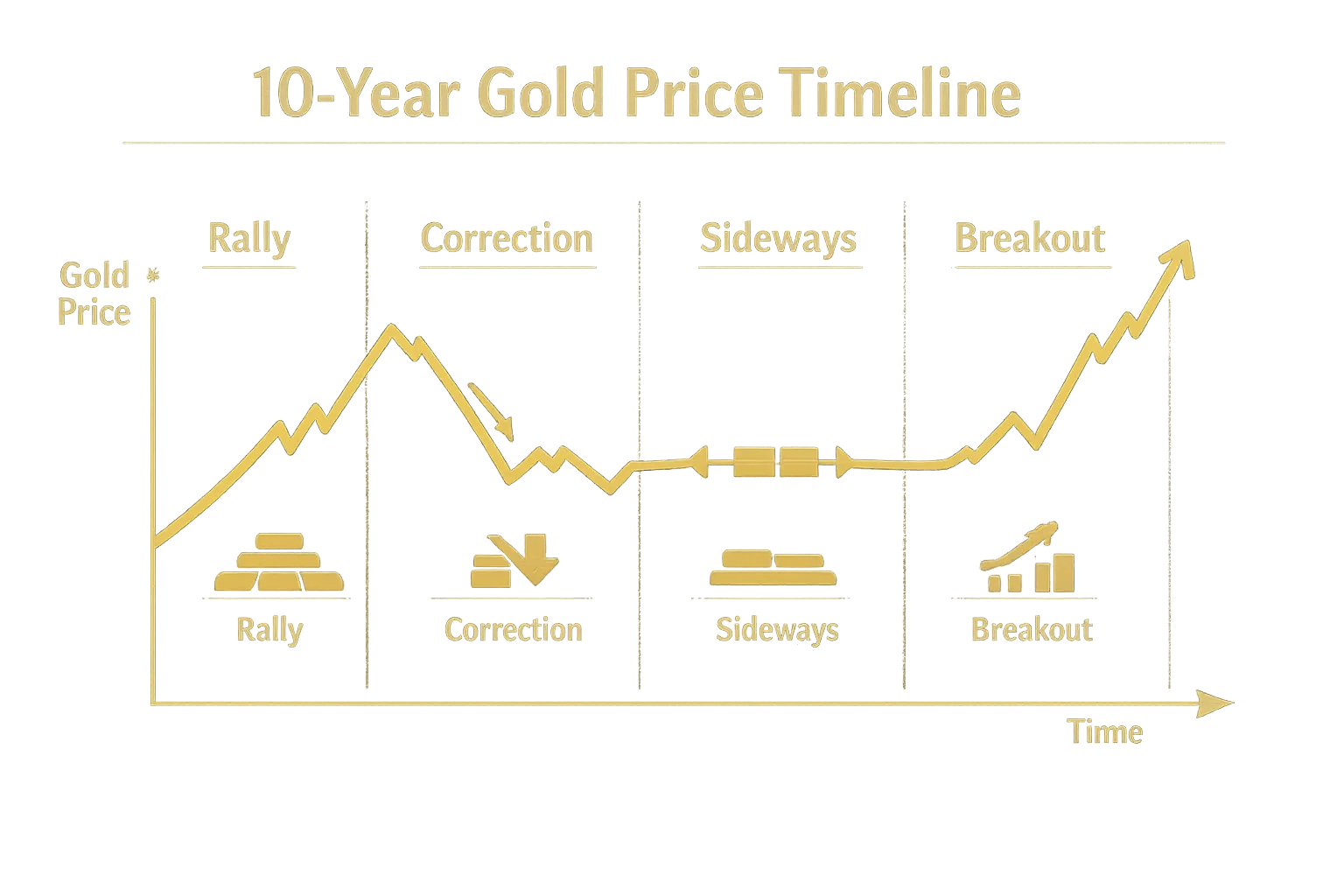
The 10-year gold story in one line: cycles, not magic
Gold’s last decade can be understood as four repeating forces:
-
US interest rates & real yields (gold hates high real yields)
-
US dollar strength/weakness (gold often moves opposite the dollar)
-
Geopolitical risk + recession fear (safe-haven demand)
-
Central bank + investor flows (ETFs + official reserve buying)
In India, there’s a fifth: USD-INR + import duties + seasonal demand.
If you’re investing digitally, it helps to learn the cycle once – and then stop reacting emotionally.
To go deeper on what drives prices and how to invest smarter, see our OroPocket breakdown on the gold market and 2026 drivers: gold market investment in 2026 and what drives gold prices.
The returns reality check (global): gold had weak years too – and still won
You’ll hear “gold always goes up.” Not true short-term. True long-term more often than people admit.
“Over the past decade (2016–2025), gold annual returns ranged from negative years (e.g., -3.65% in 2021) to huge up years (e.g., +64.29% in 2025).” – Source
Takeaway: Gold can dip even in a bull decade. That’s why SIP/staggered buying beats “all-in today”.
Gold in India: price growth is real (and the INR effect is a big deal)
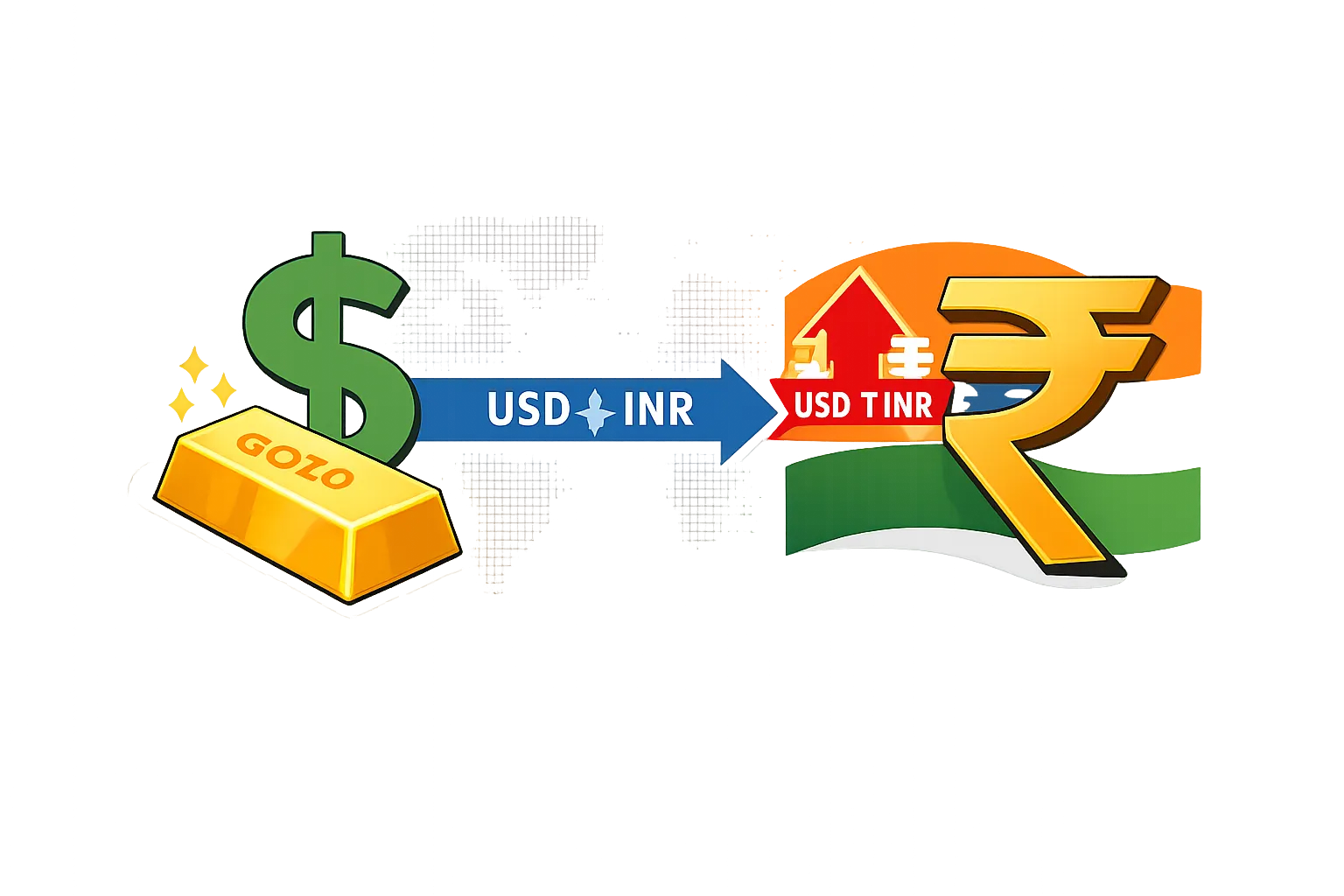
India doesn’t just track global gold – it tracks global gold plus currency.
“Average 24K gold price in India rose from ₹28,623/10g (2016) to ₹94,630/10g (Jan 2026).” – Source
This is why Indians often experience stronger “felt returns” in INR terms – especially during periods of rupee weakness.
Gold prices over the last 10 years: phase-by-phase (2016–2026)
Below is the simplest way to understand the decade: phases, not noise.
Phase 1 (2016–2018): “Risk on / rate hikes” kept gold contained
What happened
-
The Fed was normalizing policy and gradually hiking rates.
-
Equity markets had strong runs (risk-on mood).
-
Gold held up, but didn’t explode.
What moved the price
-
Real yields rising = pressure on gold
-
USD strength episodes = pressure on gold
-
Periodic geopolitical jitters = short rallies
Investor lesson Gold can be boring – and that’s fine. Boring phases are where disciplined accumulation starts.
Phase 2 (2019–2020): the breakout (trade war → COVID shock)
What happened
-
Trade tensions + growth fear started pushing flows into defensive assets.
-
COVID triggered global panic, stimulus, and a rush to safety.
What moved the price
-
Massive monetary easing and uncertainty
-
ETF and safe-haven demand surged
-
Real yields dropped sharply
Investor lesson You don’t need to predict crises. You need a position before the crisis.
Phase 3 (2021–2022): inflation shock + rate shock = choppy gold
What happened
-
Inflation spiked globally.
-
Central banks responded with aggressive rate hikes.
-
Gold had periods of strength, then pullbacks.
What moved the price
-
Inflation supports gold… but
-
High real yields and a strong USD can offset it
-
War/geopolitical risk (e.g., Russia–Ukraine) supported safe-haven demand
Investor lesson Gold’s relationship with inflation isn’t “up only.” It’s inflation vs real yields.
Phase 4 (2023–2026): “de-dollarization flows + central banks + volatility” tailwind
What happened
-
Persistent geopolitical uncertainty
-
Strong official-sector (central bank) buying narrative
-
Investor positioning stayed constructive
India overlay
-
INR weakness at times amplified local prices
-
Domestic demand rises during festival/wedding cycles
Investor lesson Gold’s 2023–2026 tone is about structural demand, not just panic buying.
What moved gold the most? (The 6 drivers that matter in 2026)
Here’s a practical scoreboard – what to watch, and why it matters.
|
Driver |
Why it matters for gold |
2026 watch-out |
|---|---|---|
|
US real yields |
Higher real yields raise the opportunity cost of holding gold |
If rates stay high longer, rallies may be choppy |
|
US dollar (DXY) |
Gold often moves opposite the USD |
USD weakness = support for gold |
|
Inflation expectations |
Gold is a long-term purchasing power hedge |
Sticky inflation keeps demand alive |
|
Geopolitical risk |
Safe-haven flows spike during uncertainty |
Uncertainty premium may persist |
|
Central bank buying |
Official reserves shifting into gold can lift the “floor” |
Any slowdown can cool momentum (not collapse it) |
|
INR & import dynamics (India) |
Imported commodity + currency effect |
INR volatility can override global moves locally |
If you want a simple ruleset to avoid timing mistakes, read: when is the best time to buy gold in India.
What “normal volatility” looks like (so you don’t panic-sell)
Gold’s normal behavior:
-
Short dips happen even in strong cycles
-
Sideways months are common
-
Big rallies usually come in bursts – often when fear spikes or yields drop
So what should you do instead of guessing tops?
-
Build a base allocation gradually (SIP/staggered buying)
-
Rebalance once or twice a year
-
Treat gold like portfolio insurance + long-term store of value, not a day trade
Realistic return expectations for 2026 (by time horizon)
Let’s be honest and useful.
If your horizon is 3–12 months
-
Expect volatility
-
Returns can be great or flat – even negative – depending on rate/FX moves
Best strategy: stagger buys; don’t bet your emergency fund on a short window.
If your horizon is 2–5 years
-
Gold tends to behave like a strong hedge + cycle-driven return asset
Best strategy: keep a steady allocation and add more during corrections.
If your horizon is 7–10+ years
-
Gold historically shines as purchasing power protection
Best strategy: consistent accumulation + disciplined rebalancing.
The easiest way to invest without timing stress: micro-SIP + UPI (and rewards)
This is where most investors lose the plot: they overcomplicate.
A simple plan that works for real people:
-
Pick a fixed day (salary day or Sunday)
-
Invest a small amount (even ₹10–₹100)
-
Do it every week/month via UPI
-
Ignore daily noise
Want to start tiny? Here’s our step-by-step: how to invest in gold with little money (start from ₹1).
Why OroPocket is built for 2026-style investors (not old-school gold buyers)
Most gold apps help you buy gold.
OroPocket helps you build a habit – and gives you extra upside while you do it.

What you get with OroPocket (built for mass-market India)
-
Start from ₹1: no “minimum investment” excuses
-
Instant UPI buys: invest in under 30 seconds
-
Free Bitcoin on every purchase: stack gold + Sats together
-
Gamified investing: streaks, spin-to-win, tiered rewards (habit > motivation)
-
Gold as an inflation hedge: because savings accounts don’t protect purchasing power
-
100% secure & compliant: RBI-compliant processes, insured vault storage, authorized partners
-
Referrals that pay: both people earn 100 Satoshi + free spin
The emotional edge (why people stick)
-
Control: you’re not waiting for “someday”
-
Progress: you can track growth daily
-
Smart: you’re building a hedge + upside combo
-
Rewarded: Bitcoin cashback turns investing into a win loop
Quick verdict: what the last 10 years teach you for 2026
If you remember only this:
-
Gold moves in cycles, not straight lines
-
The biggest drivers are rates, USD, geopolitics, and central banks
-
In India, INR amplifies everything
-
Trying to time peaks is a tax on your returns
-
Staggered buying + long horizon wins more often than prediction
Stop watching. Start growing.
Download OroPocket, start with ₹1, buy gold via UPI, and collect free Bitcoin on every purchase – so your portfolio gets stability + upside without complexity.