
Gold Stocks in 2026: Best Ways to Invest Without Buying Physical Gold


Gold Stocks in 2026: Best Ways to Invest Without Buying Physical Gold
Investing in gold doesn’t have to mean buying jewellery, paying making charges, or worrying about lockers and resale deductions. In 2026, most smart investors want gold exposure without physical gold – and that’s exactly where gold stocks, Gold ETFs, SGBs, and digital gold come in.
But here’s the part most “gold stocks” articles skip: gold stocks aren’t the same as gold. They’re businesses. Their returns can beat gold – or disappoint badly – even when gold prices rise.
This guide breaks it all down in simple language, with a clear decision framework at the end – so you stop guessing and start building a gold strategy that actually matches your goal.

What people mean by “gold stocks” (and what they should mean)
When someone searches gold stocks, they usually want one of these:
-
Companies that sell gold jewellery (brands & retailers)
-
Gold refiners/exporters/manufacturers (bullion-linked operations)
-
Gold financiers (gold-loan NBFCs – indirectly linked to gold demand and prices)
-
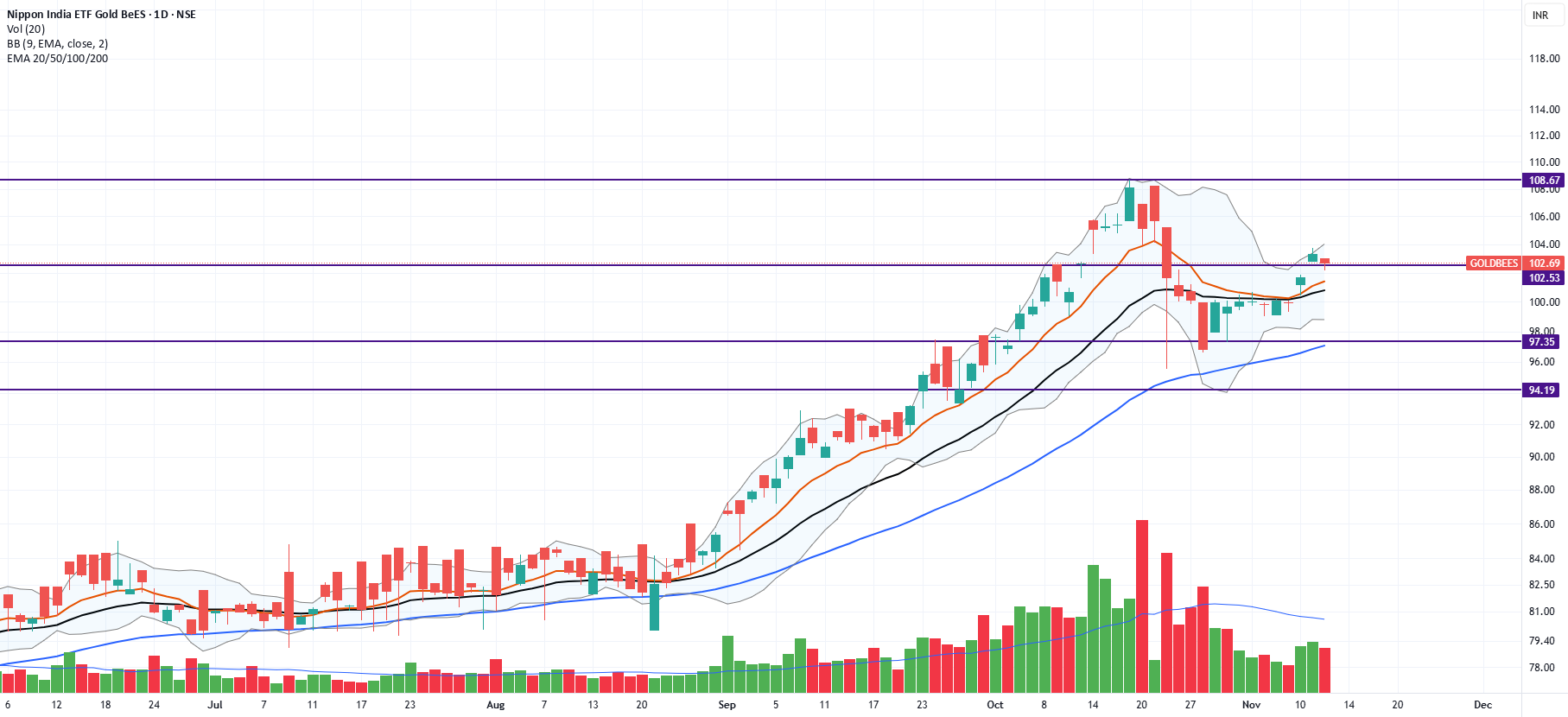
Gold “paper” products like Gold ETFs (not stocks, but traded like one)
-
Gold-linked portfolios (baskets/smallcases, thematic stock groups, etc.)
If your goal is “I want returns like gold,” then you must understand this:
Gold stocks = equity risk + company risk + gold-theme exposure.
Gold ETFs / SGBs / digital gold = direct gold price exposure (with different costs).
If you want to track price action, start by watching the live gold price in India and how it moves day-to-day: live gold prices today.
Competitor consensus (what the top articles get right)
Across competitor pieces (brokers, NBFCs, and listicle sites), the winning arguments repeat:
-
Gold ETFs are liquid, low-friction, and regulated compared to physical/digital gold.
-
Digital gold is convenient for small-ticket investing but spreads + GST can drag returns.
-
Physical gold has hidden costs (making charges, GST, resale deductions, storage).
-
Gold stocks can outperform but are not pure gold exposure.
-
Tax rules matter: listed vs unlisted treatment impacts when you qualify for LTCG.
Content gaps (what most competitor articles miss)
Here’s what we’ll add that most rankings don’t:
-
A simple model for why gold stocks don’t track gold reliably (and when they do).
-
A quick company evaluation checklist built for retail investors.
-
Clear portfolio sizing rules (so gold stocks don’t hijack your risk).
-
A practical “choose your weapon” framework: hedge vs growth kicker vs habit-building.
-
Where OroPocket fits if you want ₹1 entry, UPI speed, vaulted 24K, and free Bitcoin rewards (without trading complexity).
Do gold stocks actually track gold prices?
Sometimes. Often, not cleanly.
Gold stocks can move with gold only when the business has strong “operating leverage” to gold (profits rise faster than gold), and the market believes margins will expand.
But gold stocks are also driven by:
-
equity market sentiment (risk-on/risk-off)
-
interest rates and consumer demand
-
inventory cycles
-
hedging decisions (which can cap upside)
-
debt levels (higher rates = pressure)
-
execution quality (store expansion, same-store sales, working capital discipline)
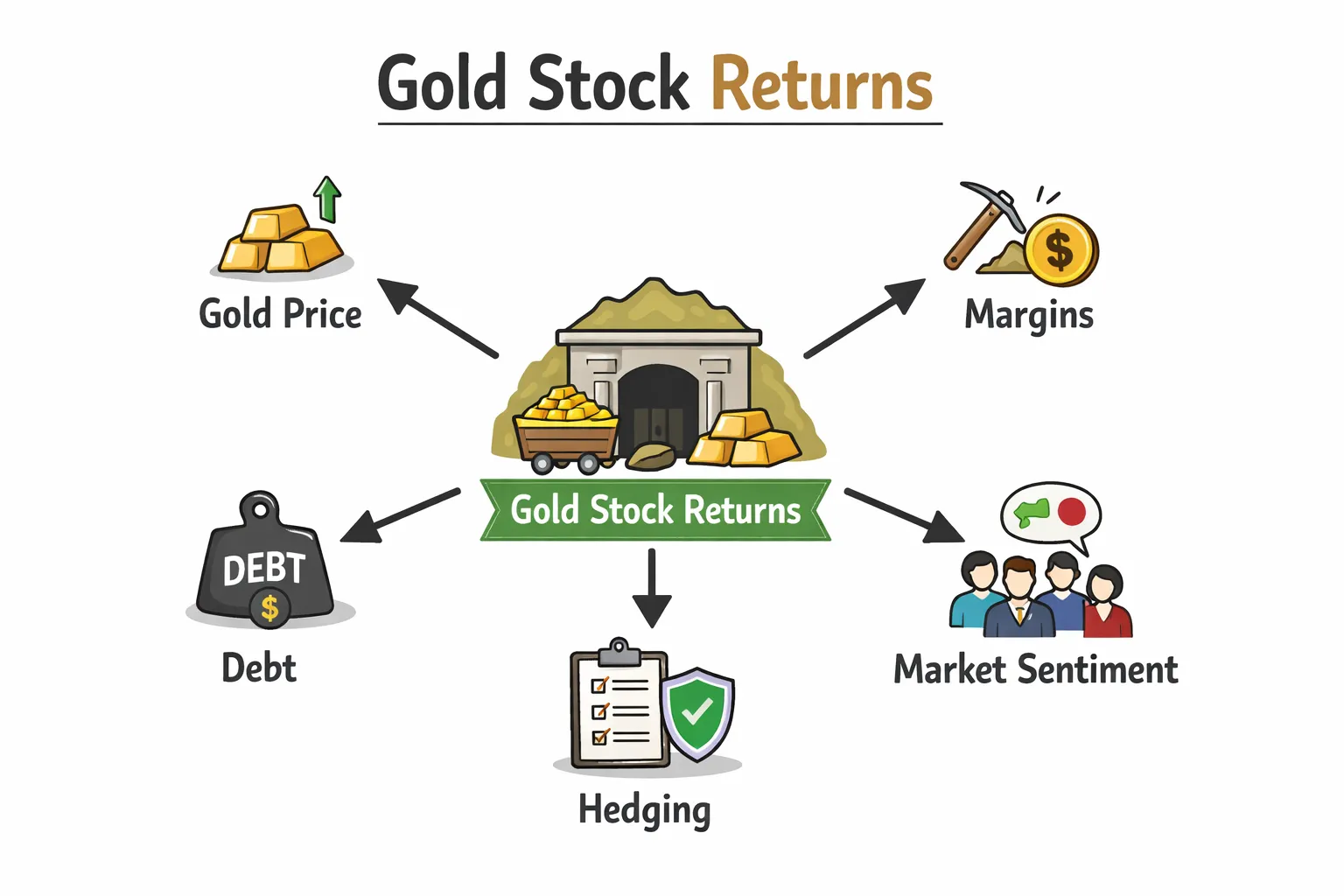
A quick mental model: “Gold price” is just the starting point
Think of a jewellery retailer:
-
Gold price rises → inventory value rises
-
But demand may fall (higher ticket size)
-
Margins may compress (discounting)
-
Working capital may spike
-
Stock could fall even as gold rises
So if your intent is pure gold exposure, gold stocks are not the cleanest instrument.
4 best ways to get gold exposure in 2026 (without buying physical gold)
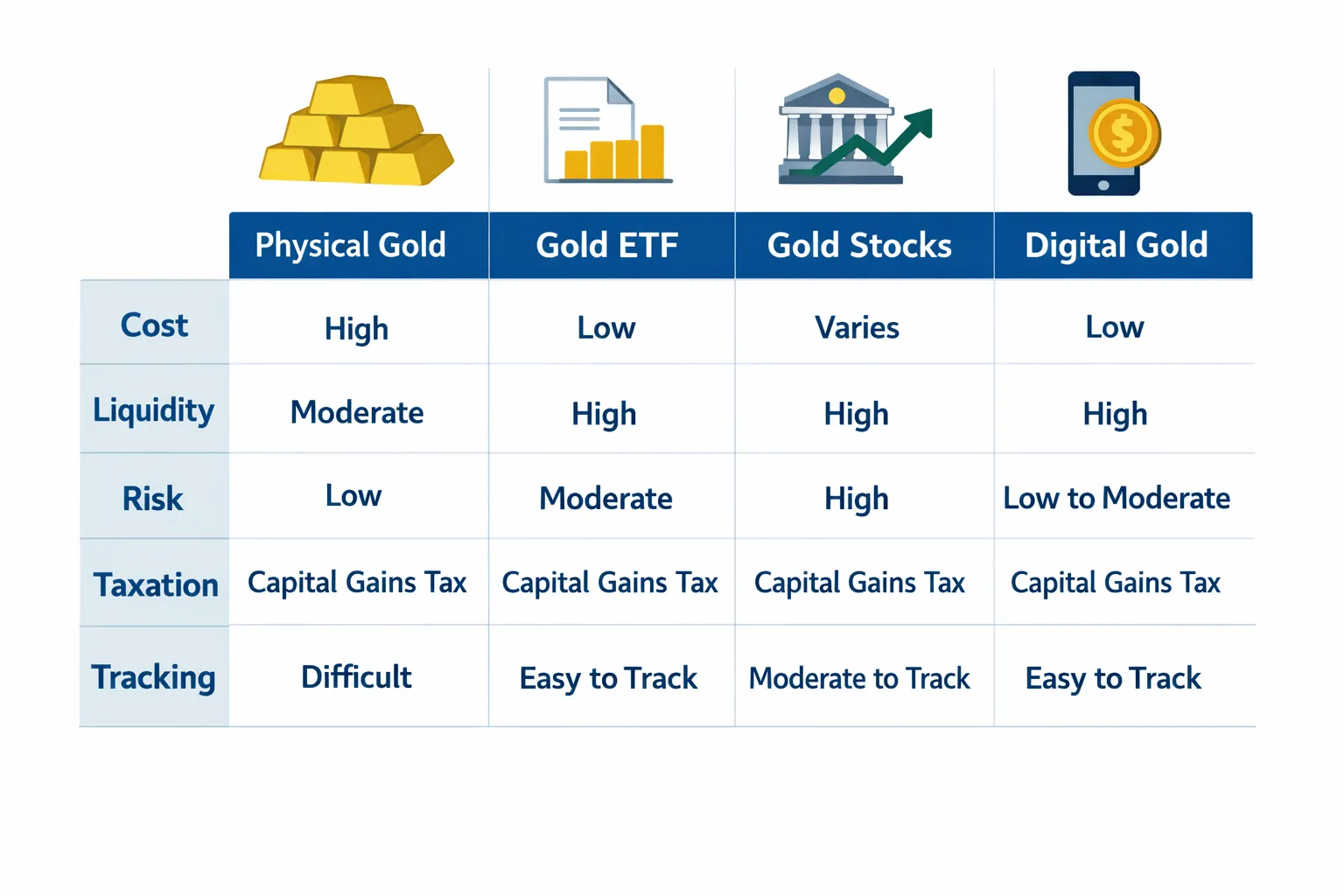
Comparison table (simple, investor-first)
|
Option |
What you’re buying |
Tracks gold price? |
Liquidity |
Key costs |
Best for |
|---|---|---|---|---|---|
|
Gold Stocks |
Equity shares of gold-linked businesses |
Sometimes |
High (market hours) |
Brokerage + market risk |
Growth kicker + thematic bets |
|
Gold ETFs |
Exchange-traded units backed by gold |
Yes (close) |
High (market hours) |
Expense ratio + tracking error |
Low-friction gold exposure |
|
SGBs |
Govt bond linked to gold + interest |
Yes (with structure) |
Moderate |
Lock-in/exit rules |
Long-term holders |
|
Digital Gold (OroPocket) |
Fractional 24K vaulted gold |
Yes (close) |
High (in-app) |
Platform spread (varies) |
Habit-building & micro-saving |
Gold ETFs: the cleanest “buy gold without gold” instrument for most investors
Gold ETFs are widely considered the most efficient way to get gold exposure with:
-
real-time exchange pricing
-
demat storage
-
transparent costs
-
regulated structure
And in 2026, they’re huge as a category:
“The top 10 AMCs collectively manage over ₹1.63 lakh crore in gold ETF assets (Jan 2026).” – Economic Times
When ETFs beat gold stocks
If your goal is:
-
hedge volatility
-
protect purchasing power
-
rebalance portfolio quickly
…ETFs usually do the job with fewer surprises.
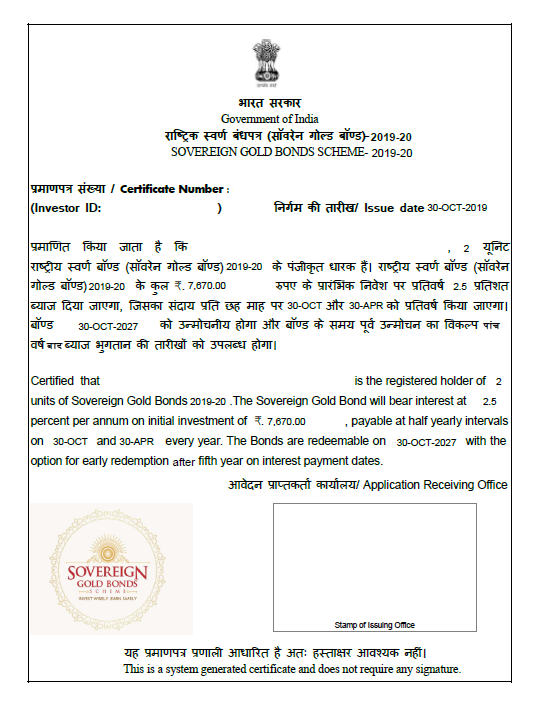
SGBs: best when you’re truly long-term (and can respect the rules)
SGBs are government securities linked to gold, typically built for long-term holding.
Who should choose SGBs?
-
You want gold exposure + interest-like benefit
-
You don’t need instant liquidity
-
You’re okay with holding period constraints
If you want fast entry/exit and small-ticket flexibility, you’ll likely prefer ETFs or digital gold.
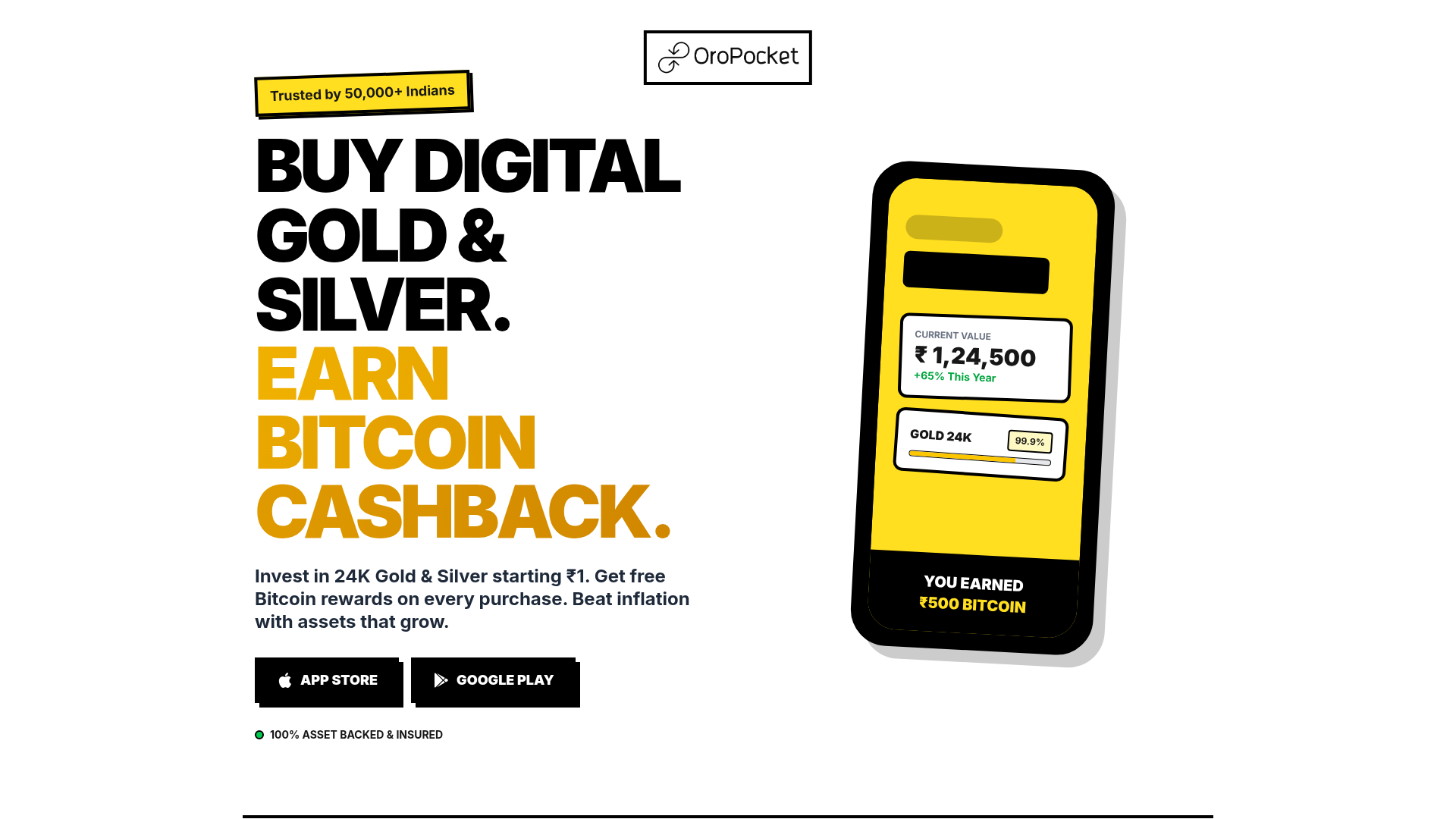
Digital gold (OroPocket): best for micro-investing + building the gold habit
If you’re a student, a new salaried professional, or a first-time investor, the biggest problem is not “which gold product is best.”
It’s this: you don’t start.
OroPocket is built for the mass-market saver who wants to invest like a pro – without needing a demat account, market hours, or large capital.

Why OroPocket is different (and why it matters in 2026)
-
₹1 entry point: start instantly. No “I’ll do it after salary day.”
-
Instant UPI buying: buy in under 30 seconds.
-
24K vaulted gold: real gold, stored securely.
-
Gamified investing: streaks + rewards that make discipline easier than motivation.
-
Free Bitcoin on every purchase: you stack gold + sats together – stability + upside.
-
Referral rewards: both sides earn 100 Satoshi + free spin.
If you’re tracking prices before buying, use OroPocket’s tools like gold price chart to spot trends and build a consistent plan.

What counts as a “good” gold stock in 2026?
Gold stocks are not one category. Split them into buckets:
1) Jewellery retailers (consumer demand + execution)
These companies win when:
-
festive/wedding demand is strong
-
store expansion is disciplined
-
brand trust improves
-
inventory + working capital is managed well
Examples you’ll see in lists: Titan, Kalyan, Senco, regional chains.
Titan (example of brand + scale)

Kalyan Jewellers (example of aggressive expansion + demand capture)

Senco Gold (example of regional brand scaling)

2) Refiners/exporters/manufacturers (margin + cycle risk)
These can be highly sensitive to:
-
global demand
-
export rules
-
input cost cycles
-
working capital swings
Rajesh Exports (example of gold-linked operations but business-driven returns)
3) Gold financiers (indirect gold theme via lending)
These don’t track gold price directly. They track:
-
credit growth
-
collection efficiency
-
funding costs
-
gold loan demand (which can rise in stress periods)
The 6 factors that actually drive gold stock returns (quick checklist)
Use this before buying any “gold stock”:
-
How does the company make money? Retail margin vs manufacturing vs lending spread
-
Is revenue growth real or inventory-driven? Watch working capital and cash flows
-
Debt + interest cost sensitivity: high leverage = fragile in rate spikes
-
Hedging policy: heavy hedging can limit upside in a gold rally
-
Same-store sales + expansion quality (for retailers): growth without profitability is a trap
-
Valuation sanity check: in hot themes, the market overpays fast
If you want exposure to the gold theme without company risk, consider staying closer to gold itself through ETFs, SGBs, or digital gold.
A simple “choose your instrument” framework (hedge vs growth kicker)
If you want a stability hedge
Choose: Gold ETFs / SGBs / Digital gold
Avoid: Concentrated gold stocks (too many moving parts)
If you want a growth kicker (and accept equity risk)
Choose: Gold stocks (but diversify across 2–4 names, not 1 “favorite”)
If you want to build an investing habit
Choose: Digital gold with micro-buys
-
because starting matters more than optimizing
-
and consistency beats “timing the dip”
To keep it practical, track your entry price and trend using gold price today in India and invest in small amounts regularly.
Beginner portfolio rules (so you don’t overdo the “gold” trade)
-
Position sizing: keep gold theme exposure reasonable (many investors stay within 5–15% depending on goals).
-
Diversify within the theme: don’t confuse one stock with the entire gold story.
-
Avoid FOMO entries: gold stocks can run up on sentiment – buying late is how retail gets trapped.
-
Have a time horizon: gold exposure works best as a strategy, not a mood.
Conclusion: The smartest way to invest in “gold stocks” starts with one question
Do you want to own gold – or do you want to own businesses linked to gold?
-
For clean gold exposure, Gold ETFs and SGBs are hard to beat.
-
For a growth kicker, gold stocks can work – but you must respect company risk.
-
For most Indians, the real win is building the habit early – without friction.
OroPocket is built for that exact mission: start from ₹1, buy instantly via UPI, store 24K gold securely, and get free Bitcoin rewards on every purchase.
Stop watching. Start growing.
Download the OroPocket app and make your first ₹1 gold buy today – then let the streaks and rewards do what motivation can’t.



Join the Conversation
Be the first to share your thoughts.