Gold vs Silver Investing (2026): Which Metal Is the Better Inflation Hedge?

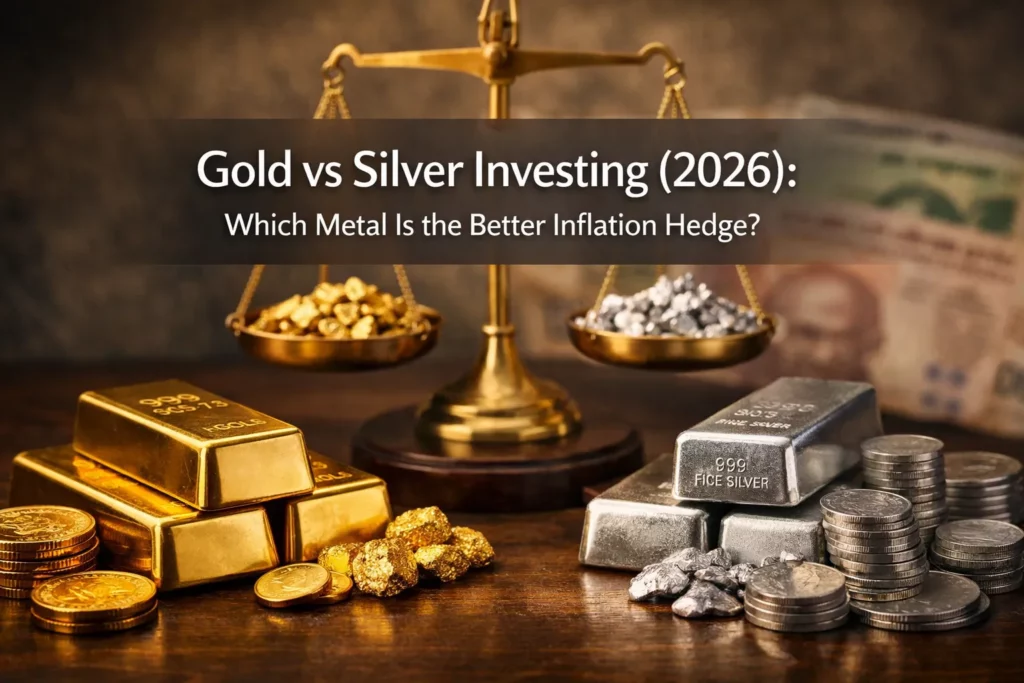
Gold vs Silver Investing (2026): Which Metal Is the Better Inflation Hedge?
If you’re an Indian retail investor searching “gold silver,” you’re probably trying to answer one thing: which metal protects your money better when prices rise and the rupee buys less?
Here’s the simple truth:
-
Gold is the calm, proven inflation hedge (the “sleep well” asset).
-
Silver is the faster, more volatile metal (the “higher upside, higher mood swings” asset).
And in 2026, with inflation uncertainty + global volatility + fast-moving tech demand, most smart investors aren’t choosing either/or – they’re choosing a blend, and investing in a way that’s:
-
low minimum (so you actually start),
-
easy to buy/sell (so you don’t quit),
-
and rewarding (so you build the habit).
That’s exactly where OroPocket fits: start from ₹1, pay via UPI in seconds, and earn free Bitcoin (Satoshi) cashback on every gold/silver buy. Stop watching. Start growing.
The 20-second answer: gold or silver for inflation?
Choose gold if you want:
-
lower volatility
-
stronger “crisis hedge” behavior
-
easier storage/value density
-
a core holding you can keep for years
Choose silver if you want:
-
higher volatility (bigger upswings and downswings)
-
exposure to industrial growth (solar, EVs, electronics)
-
a more “cycle-sensitive” metal
Choose both if you want:
-
better diversification inside precious metals
-
the ability to rebalance using the gold-silver cycle (more on this below)
If you’re building from scratch, don’t overthink it – start small, stay consistent. (That’s why micro-investing matters.)
Early reading that helps: how to invest in gold with little money in India (start from ₹1)
Why gold and silver still matter in 2026 (especially in India)
Indian investors don’t buy gold and silver just for tradition. We buy them because:
-
cash loses purchasing power during inflation
-
equities can be volatile and emotional
-
fixed deposits can feel “safe” but may not beat inflation after tax
Gold and silver are globally traded, rupee-denominated hedges that historically hold value when confidence in currencies and policies gets shaky.
“From 2021 to 2026, the compound annual growth rate (CAGR) of gold was approximately 23.10%, resulting in an absolute return of 183% over this period.” – Source
Gold vs silver: the investor-grade differences (not jewellery talk)
1) Price drivers: what actually moves gold and silver?
Gold is driven mainly by:
-
inflation expectations
-
real interest rates
-
USD strength/weakness
-
central bank buying
-
geopolitical risk (“safe haven” flows)
Silver is driven by:
-
everything above plus industrial demand (manufacturing + clean energy)
-
supply constraints (it’s often mined as a byproduct)
In plain words: silver has an extra engine (industry) – which also means it can stall during slowdowns.
“In 2024, global industrial demand for silver reached a record 680.5 million ounces (Moz), accounting for approximately 58.6% of the total silver demand of 1.16 billion ounces.” – Source
2) Volatility: silver moves harder
Silver typically swings more than gold. That’s great when prices are rising… and painful when markets cool.
Rule of thumb for beginners:
-
If a 10–15% drop will make you panic-sell, lean gold-heavy.
-
If you can hold through volatility for potential upside, add silver.
3) Liquidity: both are liquid, but gold is smoother
You can sell both, but in the real world:
-
gold has deeper, more consistent liquidity
-
physical silver can involve wider spreads (especially in smaller cities or smaller formats)
Digital formats simplify this – which is why many investors now prefer app-based buying/selling over physical dealing.
4) Storage: gold is “value dense,” silver is “space hungry”
If you invest meaningful amounts physically:
-
gold stores high value in small space
-
silver becomes bulky fast (and can tarnish, though purity remains)
Digital metals remove storage headaches if the platform uses insured vaulting.
Gold vs silver comparison table (2026-ready)
|
Factor |
Gold |
Silver |
|---|---|---|
|
Main role |
Stability + hedge |
Growth potential + hedge |
|
Volatility |
Lower |
Higher |
|
Key demand |
Investment, jewellery, central banks |
Industrial + investment + jewellery |
|
Best during |
Crisis / uncertainty |
Expansion / industrial booms |
|
Storage |
Easy (compact) |
Bulky for same value |
|
Beginner friendliness |
Higher |
Medium (needs stomach for swings) |
What’s the better inflation hedge in 2026?
Gold: the cleaner inflation hedge
Gold is typically the more “direct” inflation hedge because it behaves more like money and less like a raw industrial input.
If your goal is protecting purchasing power and building a stable long-term allocation, gold usually wins.
Silver: an inflation hedge with a growth kicker (and growth risk)
Silver can hedge inflation too – but because it’s so tied to industry, it may react to:
-
manufacturing slowdowns,
-
substitution,
-
changes in solar/EV demand,
-
or business cycles.
Silver can outperform in strong cycles. But it’s less “pure hedge” than gold.
How to choose: a simple allocation framework for Indians
If you’re a conservative saver (FD mindset, new to markets)
-
80% Gold / 20% Silver
-
Objective: stability + a small growth turbo
If you’re balanced (SIP + some risk tolerance)
-
70% Gold / 30% Silver
-
Objective: hedge + upside participation
If you’re aggressive (you can handle swings)
-
60% Gold / 40% Silver
-
Objective: higher volatility, higher potential upside
Already planning a dual allocation? Use this guide: investing in gold and silver together: allocation strategies, rebalancing and risk control
Ways to invest in gold and silver (India): what works best in 2026?
1) Physical (coins/bars)
Best for: gifting, traditional holding
Watch-outs: making charges/premiums, purity verification, storage risk, resale spreads
2) ETFs / exchange products
Best for: demat-friendly investors, transparent market pricing
Watch-outs: demat setup, brokerage, tracking error, market-hour liquidity
3) Digital gold & digital silver (app-based)
Best for: beginners, SIP-style accumulation, instant liquidity, low-ticket investing
Watch-outs: provider credibility, vaulting, partner transparency, fees/spreads
If you want the practical checklist: digital silver in India – how to buy, store and sell safely
Why OroPocket is built for “gold silver” investors in India (not just metal buyers)
Most people don’t fail because they chose the wrong metal. They fail because they:
-
waited for the “perfect price,”
-
bought once and stopped,
-
or found investing boring and dropped the habit.
OroPocket flips that.
What you get with OroPocket
-
Start from ₹1: zero barrier. Build the habit today.
-
Instant UPI payments: buy gold/silver in under 30 seconds.
-
Free Bitcoin on every purchase: earn Satoshi cashback every time you buy gold/silver.
-
Gold + Bitcoin combination: stability (gold) + upside potential (Bitcoin) without the complexity of crypto trading.
-
Gamified investing: daily streaks + spin-to-win + tiered rewards to keep you consistent.
-
100% secure & compliant: RBI-compliant setup, authorized bullion partners, insured vaults.
-
Referral rewards: both sides earn 100 Satoshi + free spin.
This is investing that feels like progress every day – because it is.
Common mistakes to avoid (that cost investors real money)
1) Trying to “time” the market perfectly
Inflation hedging works best through consistent accumulation (micro-buys) + rebalancing.
2) Buying jewellery as “investment”
Jewellery is lifestyle + emotion. For investing, prioritize investment-grade formats.
3) Going 100% into silver after a big rally
Silver can spike fast. Don’t chase. Allocate, don’t gamble.
4) Ignoring spreads and fees
Physical premiums, ETF costs, or digital spreads matter – especially for short holding periods.
Final verdict: which metal wins in 2026?
If your single goal is inflation protection, gold is the better primary hedge.
But if you want a smarter precious-metals strategy for 2026:
-
use gold as the foundation
-
add silver for industrial upside
-
invest through a low-minimum, easy, habit-building platform
Stop watching. Start growing with OroPocket.
Start from ₹1, buy via UPI, and earn free Bitcoin cashback on every gold/silver purchase – so your money works in two assets at once.