
Gold vs Silver: Which Is Better for Indian Investors in 2026?


Gold vs Silver in 2026: The 30‑second answer (and why you might want both)
Global uncertainty isn’t slowing down. Inflation eats into the rupee, FDs barely keep up, and market swings are exhausting. That’s why Indians still trust precious metals: they’re simple, tangible, and time-tested.
TL;DR:
-
Gold = stability, liquidity, and a reliable hedge.
-
Silver = higher upside with sharper swings, driven by industry.
-
Most investors should blend both to smooth risk and capture growth.
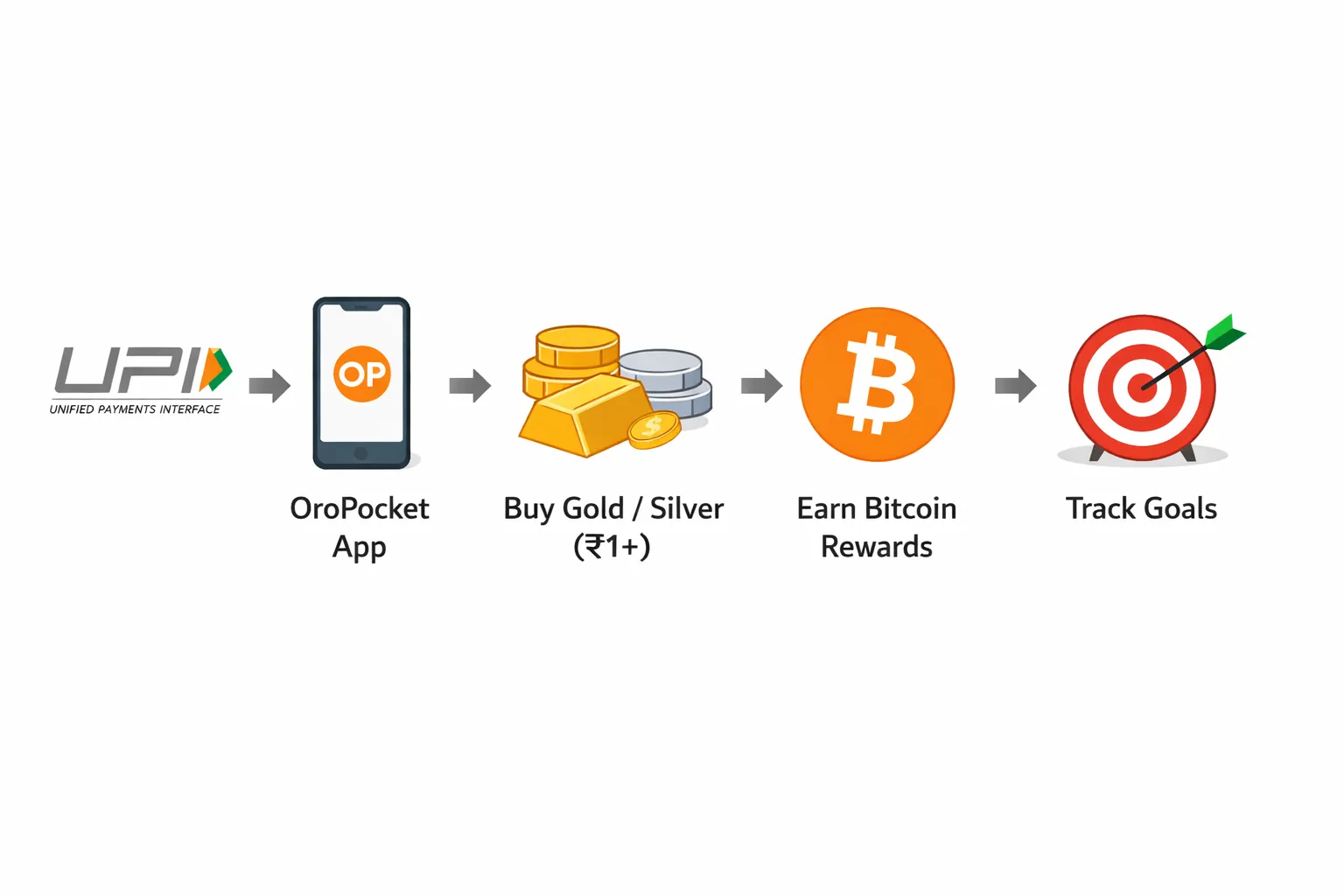
Where OroPocket fits: Start with ₹1, split your allocation between digital gold and silver in-app, and earn Bitcoin rewards (Satoshis) on every purchase. Seamless UPI payments, 24K insured gold, and gamified streaks help you build a habit without overthinking.
Who should choose what:
-
Conservative: 80–90% gold, 10–20% silver
-
Balanced: 60–70% gold, 30–40% silver
-
Aggressive: 40–50% gold, 50–60% silver
Pro move: Don’t try to time metals. Automate micro‑SIPs (₹1+) to average your costs month after month.
Comparison at a glance (fast facts)
|
Feature |
Gold |
Silver |
|---|---|---|
|
Role |
Wealth protection, core stabiliser |
Growth kicker, tactical booster |
|
Volatility |
Lower, steadier moves |
Higher, amplified swings |
|
Demand Drivers |
Investment, central banks, jewellery |
Industry: solar, EVs, electronics + investor sentiment |
|
Liquidity (India) |
Very high; deep resale and loan markets |
High; bulkier to sell in large quantities |
|
Practicality |
Compact storage; easy to safeguard |
Needs more space per ₹ invested |
|
Strategic Use (2026) |
Core allocation for stability |
Tactical allocation for upside |
|
Best For |
Conservative and balanced investors; emergency liquidity |
Aggressive investors; green-tech believers |
Why this guide is different
-
India-first, action-focused, and practical: covers tax, purity (BIS), and digital vs physical choices
-
Clear allocation playbooks you can execute today – starting at just ₹1 on OroPocket
Ready to start small and smart? Download OroPocket and set up your first ₹1 micro‑SIP today: https://oropocket.com/app
How each metal makes money for you (drivers that actually move prices)
Gold demand drivers:
-
Safe-haven flows during market stress and geopolitical shocks
-
Central bank purchases adding a structural “floor” to demand
-
Currency weakness (INR): imported gold gets pricier, lifting domestic prices
-
Real interest rates: lower or negative real yields tend to support gold
-
Import duties: changes can affect local premiums and buying patterns
Silver demand drivers:
-
Industrial cycles: solar PV buildout, EVs, and consumer electronics
-
Fabrication demand in electricals, solder, medical and industrial uses
-
Supply dynamics: significant portion comes as a by‑product of base metals (zinc, lead, copper), so supply doesn’t always respond quickly to price
India lens:
-
Festive/jewellery seasonality (Dhanteras–Diwali, wedding cycles) boosts gold buying
-
Rural income sensitivity (monsoons, MSPs, harvests) influences jewellery demand
-
Weddings drive consistent baseline demand for gold ornaments and coins
What this means for returns in 2026:
-
Gold’s steady bid: supported by safe‑haven flows, central bank buying, and INR trends
-
Silver’s surges: more cycle‑linked upside as solar/EV electronics demand accelerates – along with sharper drawdowns when industry cools
Practical takeaway:
-
Anchor with gold for stability and liquidity; add silver as a satellite bet to ride industrial momentum. Rebalance periodically to lock in gains.
“In 2025, central banks bought 863 tonnes of gold – well above the 2010–2021 average of 473 tonnes – underscoring sustained official-sector demand heading into 2026.” – Source
Risk and volatility: why silver swings harder (and how to handle it)
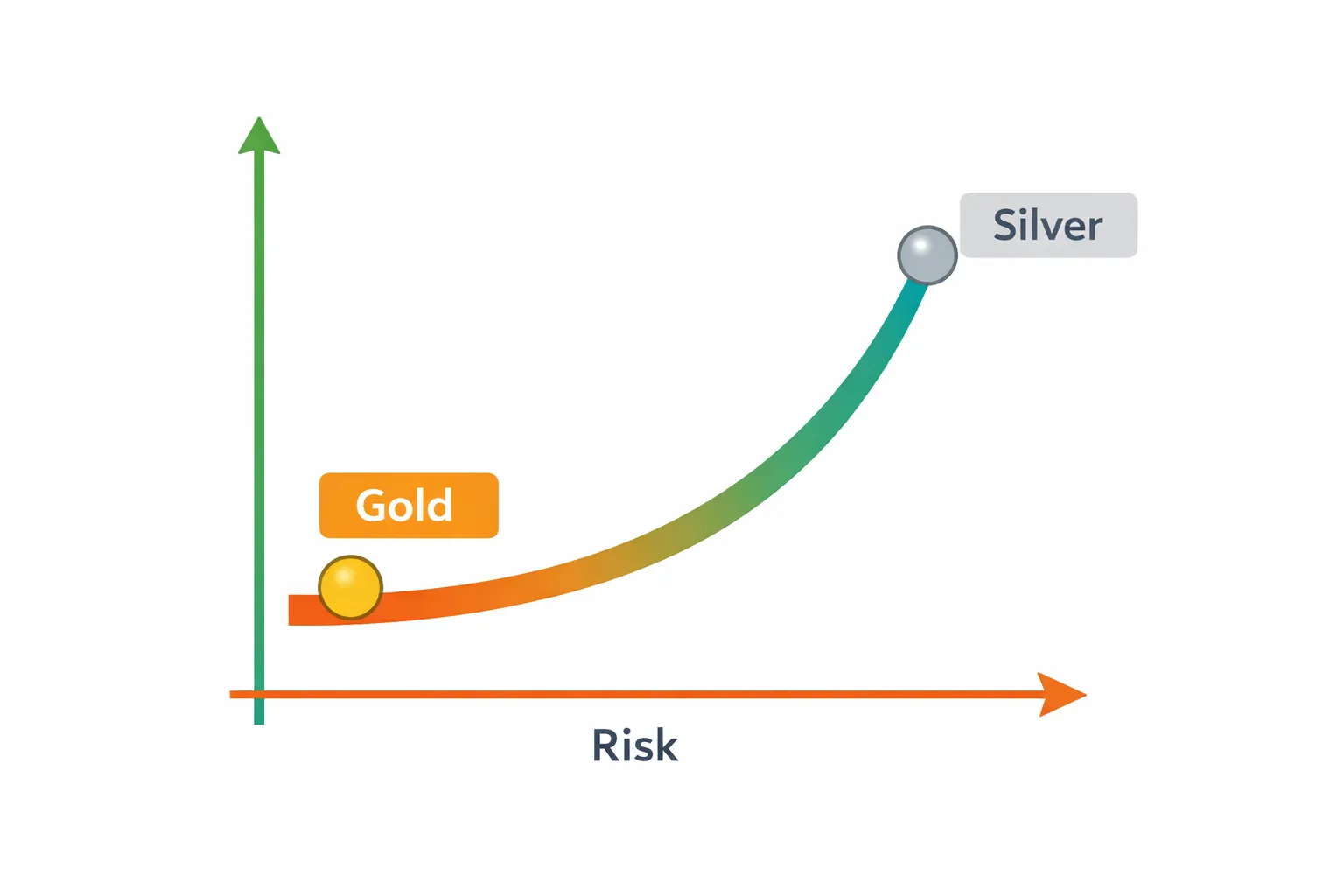
Three reasons silver moves more:
-
Smaller market cap: fewer deep-pocketed buyers/sellers means bigger price moves
-
Industrial dependency: demand tied to solar PV, EVs, and electronics
-
Speculative flows: traders treat silver like “gold with leverage,” amplifying swings
Typical drawdowns and snap-backs:
-
Silver magnifies both rallies and selloffs; sharp intraday spikes and rapid reversals are common
-
Gold tends to trend in steadier steps, cushioning portfolio volatility
Time-in-market beats timing:
-
Use SIPs/micro-purchases to average volatility instead of guessing tops/bottoms
-
Automate buys and let compounding plus rupee-cost averaging do the heavy lifting
How to size positions:
-
Core (gold), satellite (silver): think 60–90% gold as your stabiliser, 10–40% silver for upside
-
Set range bands (e.g., silver 20–35% for aggressive profiles) and rebalance when out of band
Stress test your plan:
-
Recession hit: industrial demand cools; silver likely underperforms, gold supports the portfolio
-
Clean‑energy capex boom: solar/EV buildout accelerates; silver can outperform meaningfully
“In 2024, industrial demand for silver hit 680.5 Moz – about 58.6% of total demand – driven by solar PV, EVs and electronics.” – Source

Liquidity, purity, and loanability in India (practical money stuff)
Liquidity on the ground:
-
Coins/bars vs jewellery: Coins and bars are simpler to price and sell; you’re paid for pure metal weight. Jewellery resale is messy – buyers deduct for stones, design, and purity doubts.
-
Making/wastage charges hurt resale: You rarely recover these costs. Many jewellers also apply melt-loss deductions, so investment-focused buyers should avoid heavy designs.
Purity basics:
-
Gold hallmarking: Look for BIS hallmark + HUID on jewellery. Common purities: 22K (916) and 18K (750). Investment-grade coins/bars are typically 24K (999/999.9).
-
Silver fineness: For investment, 999 (99.9% pure) coins/bars are standard. Verify fineness on the invoice and packaging.
Loanability:
-
Why lenders prefer gold: Higher value density, transparent pricing, and established collateral norms make gold the default for retail loans.
-
Typical norms historically: Banks have worked with LTV caps around 75% against eligible gold jewellery, subject to RBI rules and periodic changes.
-
What to confirm with your lender today: Accepted purity (often 18K+), valuation source (IBJA-linked), LTV slab, fees, loan tenor, auction policy, and whether bullet/EMI structures are allowed.
Action steps:
-
Always ask for BIS hallmark + HUID on jewellery; verify via the BIS Care app
-
Get itemized invoices separating metal value, making charges, wastage, and GST
-
Prefer 24K coins/bars for investment to maximize resale clarity and reduce losses to charges
OroPocket angle:
-
24K pure gold stored in insured vaults, with no making charges
-
Instant UPI liquidity and the ability to sell back in‑app, plus Bitcoin rewards on every purchase
“As of July 1, 2021, all gold jewellery must bear a Hallmark Unique Identification (HUID) number for traceability and consumer verification.” – Source
Taxes Indians care about in 2026 (and how to keep more of your gains)
The moving pieces:
-
Physical gold/silver, ETFs, and bonds can be taxed differently because the law classifies them differently (goods vs securities vs government bonds). Rules have changed in recent years, and may change again – so always check the latest.
-
Broadly, physical gold/silver is treated as a capital asset; ETFs track the metal and are taxed as market-linked products; government bonds (like SGBs, when available) have their own rules.
Short vs long holding periods:
-
Short-term: If you sell within a short holding period (typically under 12 months), gains are usually added to your income and taxed per your slab.
-
Long-term: If you hold beyond the threshold (often 12 months for market-linked products), a separate long-term capital gains (LTCG) rate generally applies. The exact rate, indexation benefits (if any), and surcharge/cess can vary – verify current rules before you transact.
GST and charges:
-
Jewellery attracts GST on metal value and on making charges; wastage and design costs are embedded and not recovered at resale. This inflates your entry price and increases the break-even point.
-
Pure investment forms (coins/bars from reputable sources) avoid making/wastage charges, helping you keep more of your upside. ETFs/bonds don’t have GST like physical goods, but they do have expense ratios or broking costs.
-
Digital gold and silver pricing is typically clearer (no making charges), though platform spreads and storage fees may apply – read fee disclosures.
Practical tips to keep more of your gains:
-
Hold for the right horizon: Aim to qualify for long-term tax treatment where applicable.
-
Keep documents: Invoices, contract notes, and platform statements to establish cost, date, and purity.
-
Prefer transparent, low‑friction products: 24K coins/bars or trusted digital platforms with clear pricing, or ETFs if you already use a demat.
-
Be mindful of “hidden” costs: Making/wastage charges on jewellery, high spreads, and frequent churn can quietly eat returns.
-
Plan exits: Use systematic selling or rebalance windows to manage tax incidence and lock in gains.
Compliance note:
-
Tax treatment can change. Always verify current rules on official portals or consult a qualified tax advisor before buying or selling.
The Gold–Silver Ratio: a simple tool for when to tilt
What it is:
-
The Gold–Silver Ratio is simply gold’s price divided by silver’s price. It shows how many units of silver equal one unit of gold.
Why it matters:
-
When the ratio is extremely high, silver may be relatively cheap versus gold.
-
When the ratio is unusually low, gold may offer better relative value.
India-friendly way to use it:
-
Set simple guardrails: on big swings, add 1–2% to the laggard (the metal that’s become relatively cheaper).
-
Automate small, periodic top-ups via micro‑SIPs so you’re not guessing peaks and bottoms.
Don’ts:
-
Never go all‑in on ratio signals. Use the ratio to tweak allocations, not to bet the house.
-
Keep your core allocation intact and only tilt at the margins.

Digital vs physical: the best way to own each metal in 2026
Physical:
-
Jewellery: great for sentiment and gifting, but making/wastage charges inflate cost and reduce resale value.
-
Coins/bars: investment‑grade purity (24K gold; 999 silver) with clearer resale pricing; consider safe storage and insurance.
-
Storage/insurance: lockers add cost; transporting large silver quantities can be cumbersome.
Financial products:
-
ETFs: market-hours liquidity via demat; track spot prices with some tracking error and expense ratios.
-
Bonds (when available): government-backed exposure to gold; interest plus price linkage; limited windows and caps.
-
SIP options: automate small, regular buys to average costs.
Digital gold/silver on mobile:
-
Start from ₹1, buy/sell instantly via UPI, and own fractional amounts stored in secure, insured vaults.
-
Transparent pricing and no making charges; easy to gift or transfer digitally.
OroPocket advantage:
-
Buy both metals from ₹1 with instant UPI.
-
Daily streaks, spin‑to‑win, and referral rewards keep you motivated.
-
Earn Bitcoin cashback (Satoshis) on every purchase – two assets for the price of one.
Execution tip:
-
Set weekly auto-buys in small amounts to smooth prices.
-
Use in‑app goal tags (wedding, education, emergency) to track progress and stay disciplined.
Costs and hidden fees: where investors lose money (and how to avoid it)
Jewellery:
-
Making + wastage + buyback deductions can wipe out years of returns
-
Designs/stones rarely fetch value at resale; you’re paid mainly for melt weight
Coins/bars:
-
Small premium over spot; compare across sellers and weights (bigger bars usually cheaper per gram)
-
No making/wastage charges; but consider storage and insurance
ETFs:
-
Expense ratio + brokerage + demat/AMC charges
-
Tracks spot with some tracking error; market-hours liquidity only
Digital gold/silver:
-
Platform spread and storage/custody costs baked into pricing – check transparency and vaulting partners
-
No making charges; instant buy/sell, fractional units
Pro move:
-
Prioritize transparent pricing and documented purity; avoid complex products you don’t fully understand
|
Format |
Typical Costs |
Liquidity |
Best Use‑Case |
|---|---|---|---|
|
Jewellery |
Making + wastage charges; GST on total; buyback deductions; design/stones not recovered |
Medium (jeweller dependent; potential haircut) |
Consumption, gifting, tradition – not optimal for pure investing |
|
Coins/Bars |
Premium over spot (varies by seller/weight); GST on metal; storage/insurance if needed |
High (bullion dealers, banks, reputed sellers) |
Long‑term holding with clear purity/pricing; physical control |
|
ETFs |
Expense ratio; brokerage; demat/AMC; tracking error |
High during market hours via demat |
Market-linked exposure, SIP via broker; low friction if you already use demat |
|
Digital Gold/Silver |
Platform spread; custody/storage embedded; minimal transaction fees |
Very high (instant in‑app buy/sell; fractional) |
Micro‑investing, SIPs, goal-based stacking without making charges |
How much to buy: 3 allocation playbooks you can copy
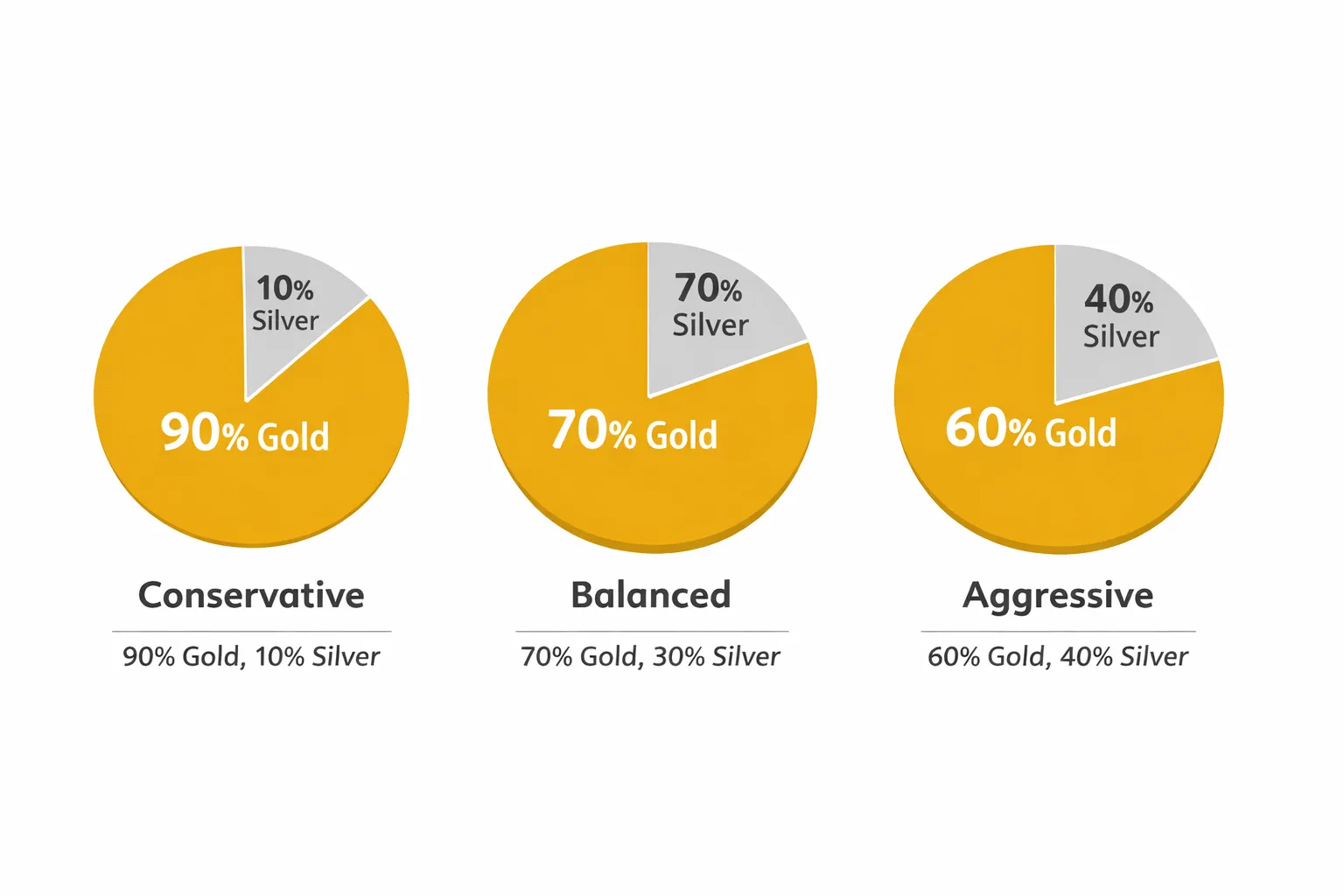
First‑time saver (low risk):
-
Allocate 10–12% of your portfolio to metals
-
Split: 90% gold, 10% silver
-
Execution: automate ₹1–₹500 weekly buys; keep it hands‑off
Balanced salaried pro:
-
Allocate 12–15% to metals
-
Split: 70% gold, 30% silver
-
Rebalance annually or when the Gold–Silver Ratio swings to extremes
Aggressive growth seeker:
-
Allocate 15–20% to metals
-
Split: 60% gold, 40% silver
-
Add extra on market dips; cap single‑day buys to avoid chasing momentum
Guardrails for everyone:
-
Don’t borrow to buy metals
-
Avoid trying to time tops/bottoms
-
Rebalance back to targets when allocations drift
OroPocket implementation:
-
Set two auto-buys (gold + silver), track daily streaks
-
Stack Satoshis (Bitcoin rewards) while you build metal wealth
-
Start at ₹1 and scale as your income grows
Final verdict: Which should you choose in 2026? (+ the 5‑minute action plan)
-
Clear takeaway: Gold is the dependable stabilizer; Silver is the tactical accelerator. Most Indians should own both – gold as the core, silver as the booster.
-
If you hate volatility: Go heavier on gold and keep silver small.
-
If you can stomach swings for upside: Add more silver, but cap position sizes and rebalance to targets.
5‑minute action plan on OroPocket:
-
Download the app and complete KYC
-
Set two auto-buys (gold + silver) to run weekly – start at ₹1 and scale up
-
Enable streaks to build the habit and unlock bonuses
-
Invite a friend to earn extra Satoshis (Bitcoin rewards) as you stack metals
Reminders:
-
Verify the latest tax and RBI rules before you buy or sell
-
Stick to BIS purity standards for any physical purchases
CTA:
-
Build your gold + silver stack from ₹1 and earn free Bitcoin rewards on every purchase. Start now: https://oropocket.com/app


Join the Conversation
Be the first to share your thoughts.