
How to make 1 crore in 5 years in SIP?


How to Make ₹1 Crore in 5 Years With SIP (India): The Real Math + a Smarter Plan
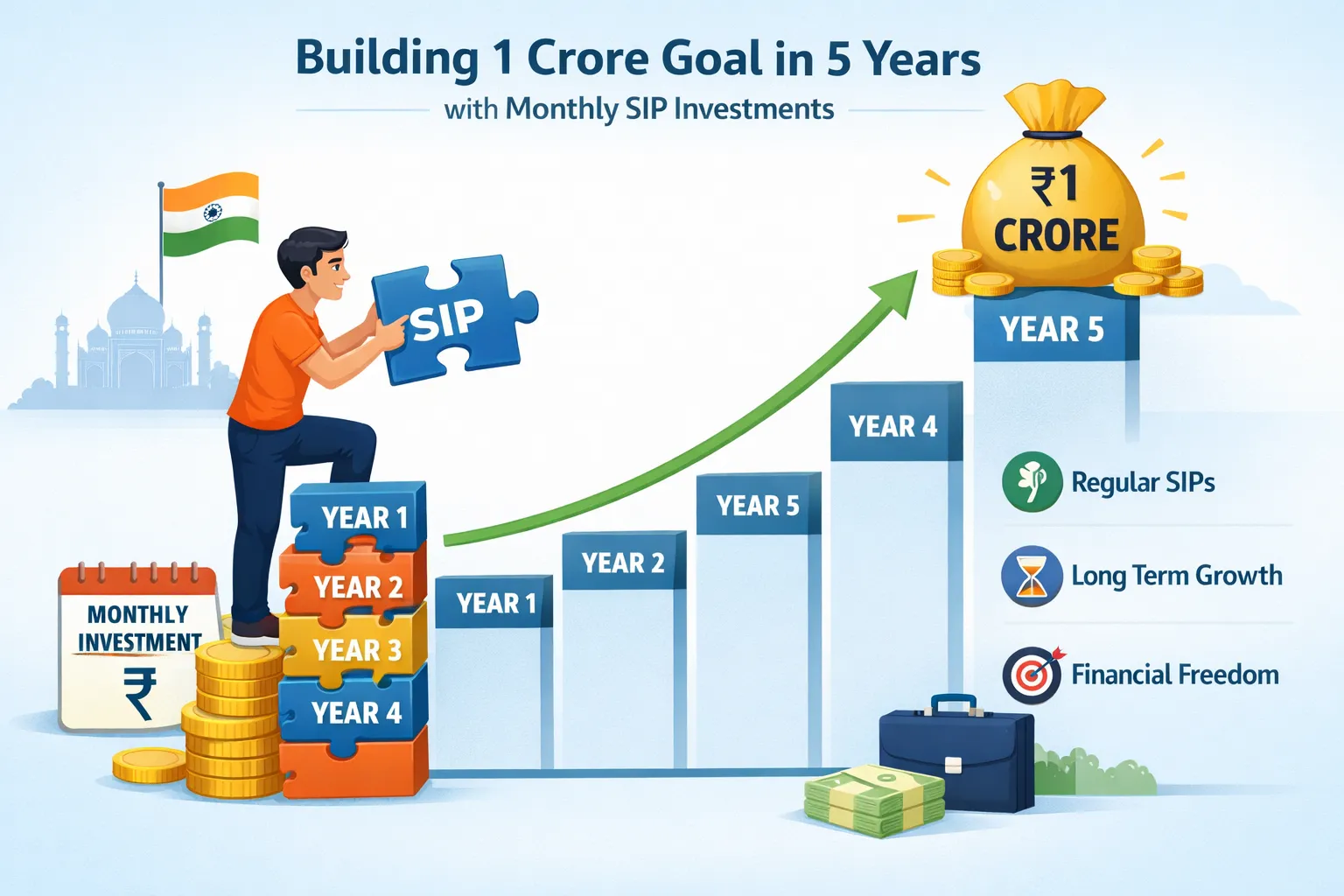
Making ₹1 crore in 5 years is possible – but it’s not “easy” and it’s not “guaranteed.” What it is is a math + behavior game:
-
Math: you need aggressive monthly investing (or a big lumpsum) and strong returns.
-
Behavior: you must stay consistent through market ups/downs, avoid panic-selling, and keep adding.
If you’re serious, this guide gives you the exact SIP numbers, the realistic return ranges, the mistakes most people make, and how OroPocket helps you build the habit (starting from just ₹1, with rewards that keep you consistent).
Competitor synthesis (what they all say) + the gaps we’ll fix
What top-ranking competitors agree on
Across the best-performing articles (SBI Securities, Groww, Bajaj Finserv style content), the winning structure is consistent:
-
Define SIP + compounding + rupee-cost averaging
-
Give example SIP amounts for “₹1 crore in 5 years”
-
Mention alternatives (lumpsum, step-up SIP)
-
Add basic diversification and risk disclaimers
Content gaps (what they don’t do well)
Most competitor posts miss the real-world execution layer. This article fixes that by adding:
-
Return sensitivity table (because 9% vs 15% changes everything)
-
Step-up SIP reality (best for salaried investors; less strain early)
-
Behavioral risk management (what to do during a crash)
-
A habit engine (how OroPocket turns investing into daily momentum)
-
Gold as a stabilizer inside a 5-year plan – plus Bitcoin cashback to boost motivation and upside without “trading crypto”
First: what SIP amount do you need for ₹1 crore in 5 years?
Your SIP depends on expected return. Below is the approximate monthly SIP required to reach ₹1,00,00,000 in 5 years (60 months).
Rule of thumb: 5 years is short for equity-heavy goals. The SIP required is high unless returns are exceptional.
Required SIP to reach ₹1 crore (5 years)
|
Expected return (p.a.) |
Monthly SIP needed (approx.) |
|---|---|
|
9% |
₹1,31,000 – ₹1,33,000 |
|
12% |
₹1,18,000 – ₹1,21,000 |
|
15% |
₹1,06,000 – ₹1,09,000 |
|
18% |
₹95,000 – ₹98,000 |
What this means in plain English:
-
If you can invest only ₹20k–₹50k/month, ₹1 crore in 5 years is unrealistic via SIP alone – unless you add a lumpsum, increase income rapidly, or extend the timeline.
-
If you can invest ₹1L+/month, SIP becomes a powerful, structured way to get there.
Why SIP works (and why it fails for most people)
SIP works because it removes decision fatigue
You don’t “feel smart” every month. You just keep investing.
SIP fails because humans panic at the worst time
Most people stop SIPs or redeem during falls – exactly when they should keep buying.
This is why rupee-cost averaging is powerful:
“Rupee Cost Averaging cancels out market volatility… you get more units when the market goes down and fewer units when the market goes up – averaging your cost over time.” – ICICI Bank
SIP vs Lumpsum vs Step-up SIP (for the ₹1 crore goal)
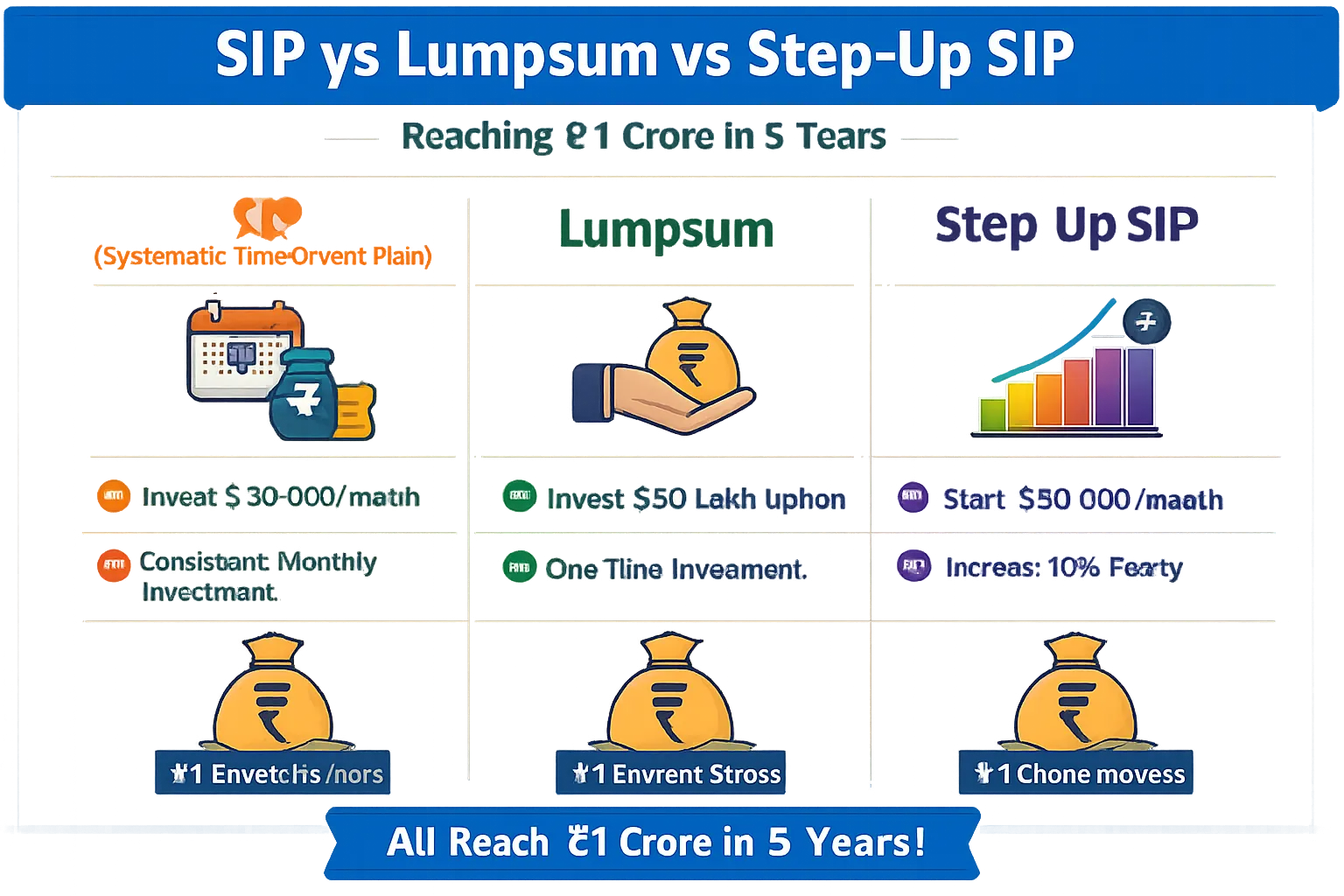
Option A: Standard SIP (best for discipline)
-
Fixed investment amount monthly.
-
Great if your cashflows are stable.
Option B: Lumpsum (best if you already have capital)
If you expect ~12% p.a., you may need roughly ₹56–₹58 lakh lumpsum today to reach ~₹1 crore in 5 years.
(Still market-linked. Timing risk is higher than SIP.)
Option C: Step-up SIP (best for salaried growth)
Start lower, increase every year (10–20%).
This is how real people actually hit big targets without choking their monthly budget early.
Example: Start ₹75,000/month and step-up 10% yearly (returns assumed 12% p.a.) – you get closer to ₹1 crore with less pressure in Year 1.
The “5-year challenge” nobody tells you: sequence risk
In a short 5-year horizon, the order of returns matters. A bad year early or mid-way can create stress and cause:
-
stopping SIP
-
redeeming at loss
-
switching funds repeatedly
How to reduce sequence risk (simple rules)
-
Don’t chase last year’s top fund.
-
Use 2–3 diversified equity funds (not 7).
-
Keep a safety bucket (liquid fund/FD) so you don’t touch investments in emergencies.
-
Add gold as a stabilizer (more on this below).
A smarter “₹1 crore in 5 years” portfolio approach (not just SIP math)
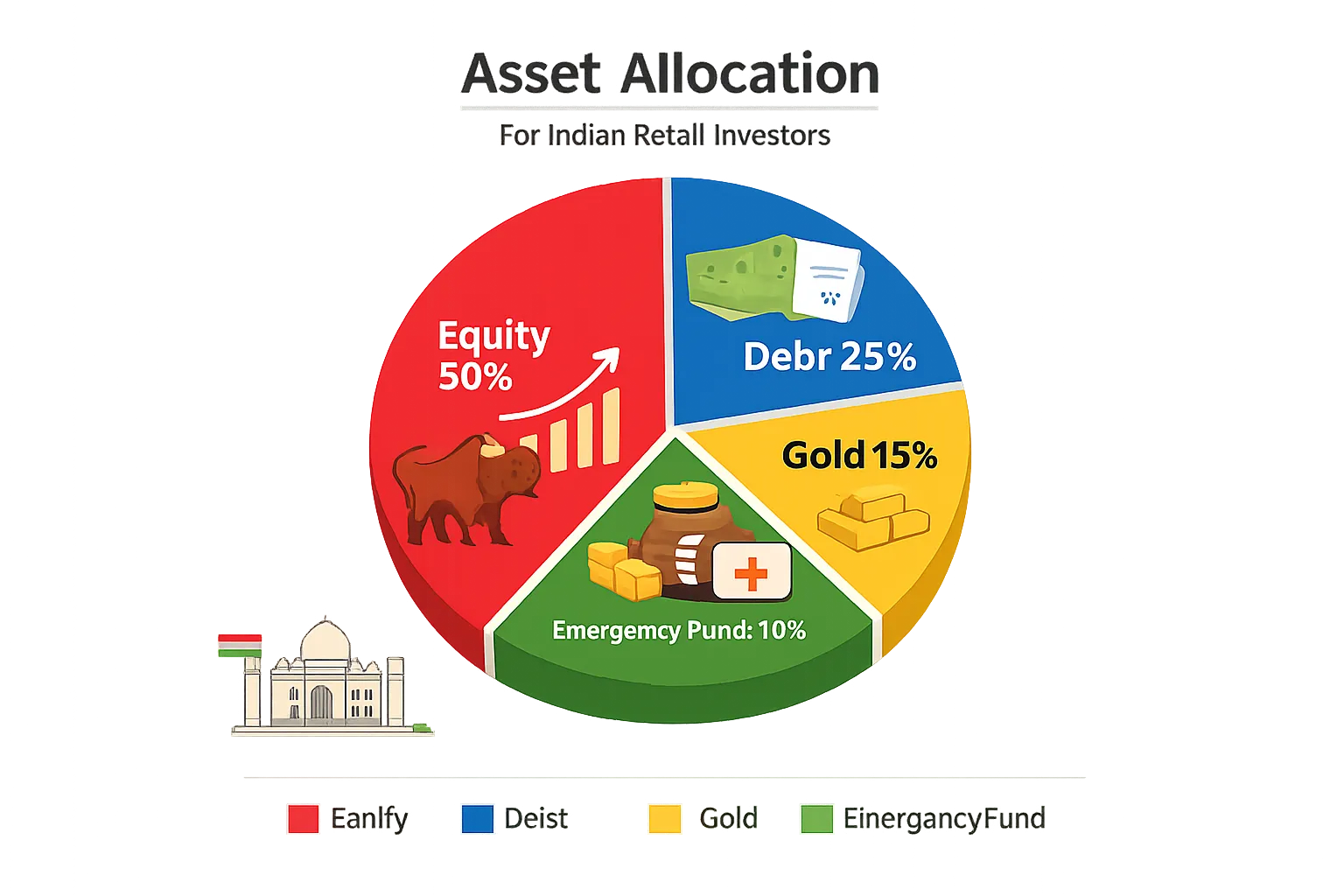
If you want a plan that survives volatility, think like this:
Suggested structure (illustrative, not advice)
|
Bucket |
Goal |
Typical instruments |
|---|---|---|
|
Growth engine |
Reach ₹1 crore |
Equity mutual funds (SIP), index funds |
|
Shock absorber |
Reduce panic + volatility |
Digital gold / gold ETFs |
|
Stability |
Near-term safety |
Liquid funds/FD/short-duration debt |
|
Emergency fund |
Avoid forced selling |
Bank / liquid fund |
If your goal is hard-deadline (5 years), this balance matters more than “max returns” theories.
Why gold belongs in your 5-year wealth plan (especially in India)
Gold isn’t just tradition – it’s portfolio insurance.
“As of April 22, 2025, the price for 10 grams of 24K gold reached ₹1,01,350… from ₹48,099 in 2021 – an approximate return of 110.8%.” – Forbes India
Gold can help reduce drawdowns when equities are volatile – so you stay invested and keep your SIP running.
If you want to track gold before you buy, use OroPocket’s live pricing pages like:
Where OroPocket fits: build wealth habits daily (₹1 entry + rewards)
Here’s the truth: most people don’t fail because they lack knowledge. They fail because they can’t stay consistent.
OroPocket is built to fix that.

Why OroPocket is different (and why it matters for your ₹1 crore mission)
-
Start from ₹1: no “I’ll start next month” excuses. Start immediately.
-
Instant UPI buying: buy gold/silver in under 30 seconds.
-
Free Bitcoin on every purchase: you earn Satoshi cashback every time you buy gold/silver – two assets, one habit.
-
Gold + Bitcoin combination: gold brings stability; Bitcoin rewards bring growth potential without you needing to trade.
-
Gamified investing: streaks, spin-to-win, tiered rewards – your investing becomes a daily win loop.
-
Referral rewards: both people earn 100 Satoshi + free spin, so saving becomes social.
-
Secure & compliant: RBI-compliant setup, insured vaulting, authorized bullion partners.
If you’re aiming for ₹1 crore in 5 years, your biggest edge is not a “secret fund.”
It’s consistency at scale.
Download and start: OroPocket app.
Practical action plan (do this today)
Step 1: Decide your target method
Choose one:
-
High SIP (₹1L+/month) for 60 months
-
Lower SIP + lumpsum
-
Step-up SIP if you expect income growth
Step 2: Automate everything
-
SIP auto-debit
-
Monthly review date (once a month – not daily checking)
Step 3: Add a “habit SIP” with OroPocket (even if small)
Even ₹10/day builds identity: “I’m an investor.”
And with OroPocket, you get Bitcoin cashback on those buys – so you’re rewarded for showing up.
Step 4: Track, don’t obsess
Watch your progress monthly. Your goal is staying in the game.
Final verdict: Can SIP make you a crorepati in 5 years?
Yes – if you can invest aggressively (typically ₹1L+ per month) and can tolerate volatility without quitting.
But the smarter play is building a system that:
-
grows through equity SIPs,
-
stays stable via gold,
-
and stays consistent through rewards + habit loops.
Most people keep “watching” markets. Winners keep “buying” consistently.
Stop watching. Start growing.
Track live gold prices, start from ₹1, and earn free Bitcoin as you build your gold stack – only on OroPocket.