Is Silver a Good Investment in 2026? Pros, Cons, and Smart Ways to Invest

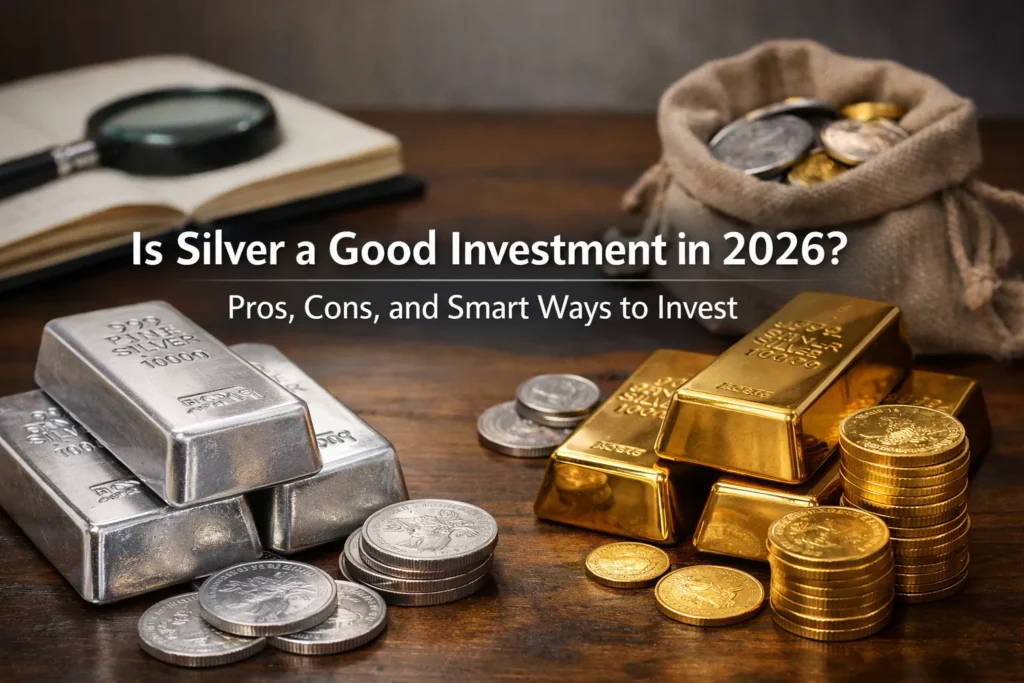
Is Silver a Good Investment in 2026? Pros, Cons, and Smart Ways to Invest
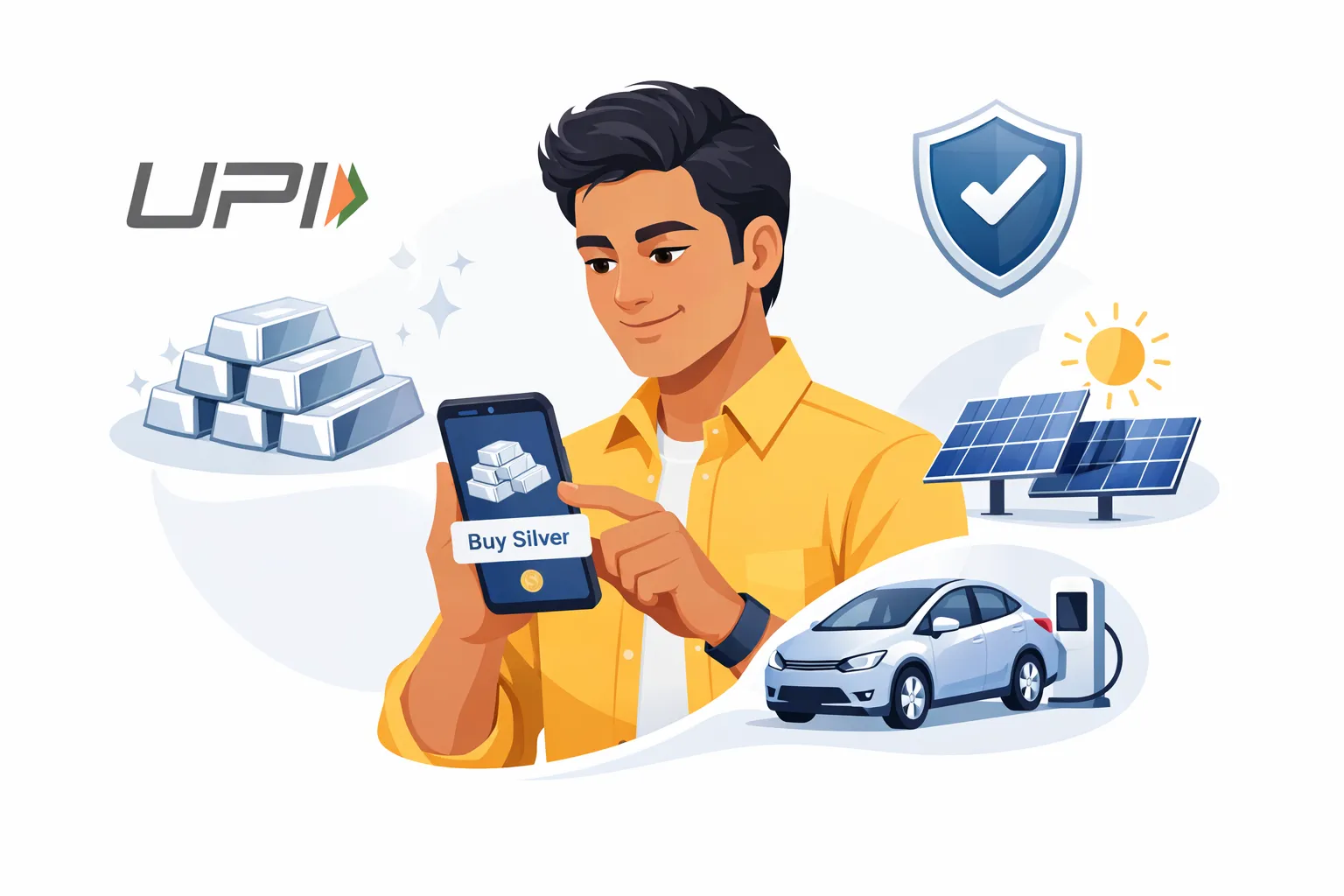
Silver in 2026 isn’t “just another metal.” It’s one of the few assets that sits at the intersection of wealth protection (like gold) and real-world industrial demand (solar, electronics, EVs, data centers). That mix can create big upside – and sharp volatility.
So, is silver a good investment in 2026?
Yes – if you treat it like a smart portfolio diversifier, not a lottery ticket. The winning move for most Indians is to invest small, consistently, and with the right format so fees don’t eat your returns.
If you also want investing to be easy, UPI-fast, and rewarding, OroPocket gives you a modern edge: start from ₹1 and earn free Bitcoin (Satoshi) cashback on every gold/silver buy – so you build two assets at once.
What’s Driving Silver in 2026 (And Why It’s Not Just Hype)
Competitors broadly agree on three big drivers: inflation hedging, industrial demand, and affordability vs gold. What they often gloss over is the real investor experience: spreads, storage friction, and entry strategy matter more than predictions.
Here’s the cleaner reality:
1) Silver is being pulled by “the real economy”
Silver isn’t only a store of value. It’s an input metal – meaning demand rises when production and tech adoption rise.
That demand is sticky because silver is used in:
-
solar PV and electrification
-
electronics and semiconductors
-
medical applications
-
EV components and sensors
2) Structural supply tightness adds pressure
When demand grows faster than supply for years, price floors tend to strengthen.
“The global silver market has experienced a structural supply deficit for five consecutive years, from 2021 through 2025.” – Silver Institute
3) Retail investors love silver because it’s “reachable”
Gold can feel expensive. Silver lets first-time investors build a precious metals allocation without needing big lumpsums – especially through digital and SIP-like buying.
If you’re comparing metals, track both silver and the live gold price today so you understand relative value cycles and entry points. (That’s also why OroPocket focuses on micro-investing – small moves done consistently.)
Silver vs Gold in 2026: What’s Better for You?
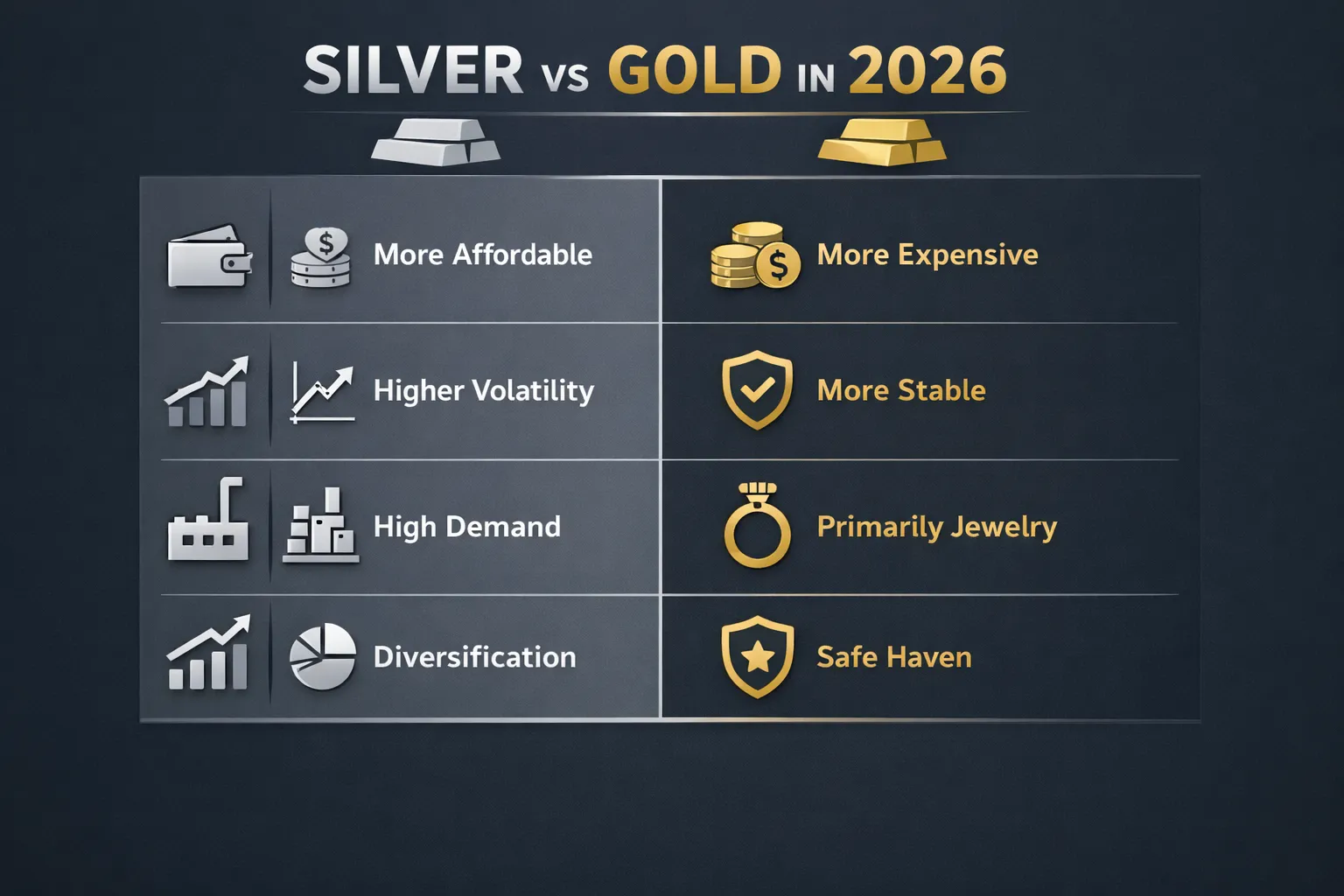
Silver and gold aren’t enemies. They’re teammates with different jobs.
|
Factor |
Gold |
Silver |
|---|---|---|
|
Primary role |
Stability + hedge |
Diversifier + higher-beta metal |
|
Volatility |
Lower |
Higher (bigger swings) |
|
Industrial demand |
Limited |
High (solar, electronics, EVs) |
|
Affordability |
Higher entry |
More accessible |
|
Best for |
Core safety allocation |
Growth-tilted metals allocation |
Simple rule:
-
Want stability? Gold is the anchor.
-
Want more upside (and can handle swings)? Silver can outperform in strong cycles.
To keep it grounded, follow the gold price chart and silver trends together; silver often “catches up” with sharper percentage moves after gold rallies.
Pros of Investing in Silver in 2026
1) Strong demand story beyond investors
Unlike purely “sentiment” assets, silver has built-in utility demand.
“In 2025, the United States installed 43.2 gigawatts (GW) of new solar capacity.” – PV Magazine
2) Lower entry point than gold (great for beginners)
You can start small and still build meaningful exposure over time – especially if you invest regularly instead of trying to time tops and bottoms.
3) Works well as a portfolio diversifier
Silver tends to behave differently from equities and fixed deposits during certain macro cycles – helpful when markets are unpredictable.
4) You can invest without lockers, storage, or purity anxiety
Digital formats and regulated partners remove common retail pain points:
-
storage and insurance
-
verification
-
liquidity at selling time
Cons (The “Hidden Costs” Competitors Don’t Explain Clearly)
Silver can punish impatient investors. Here’s what usually goes wrong:
1) Volatility is real (and fast)
Silver can drop hard in risk-off markets or industrial slowdowns. If you panic-sell, you lock in losses.
2) Physical silver spreads can destroy returns
Physical coins/bars may include:
-
GST and fabrication/making premiums
-
buyback spread (sell price lower than buy)
-
storage/locker costs
If you’re buying for investment returns (not gifting), spreads matter more than headlines.
3) Timing traps: “chasing the rally”
Many people buy silver after it goes viral. Better approach: average in via a weekly/monthly plan.
Smart Ways to Invest in Silver in India (2026 Edition)
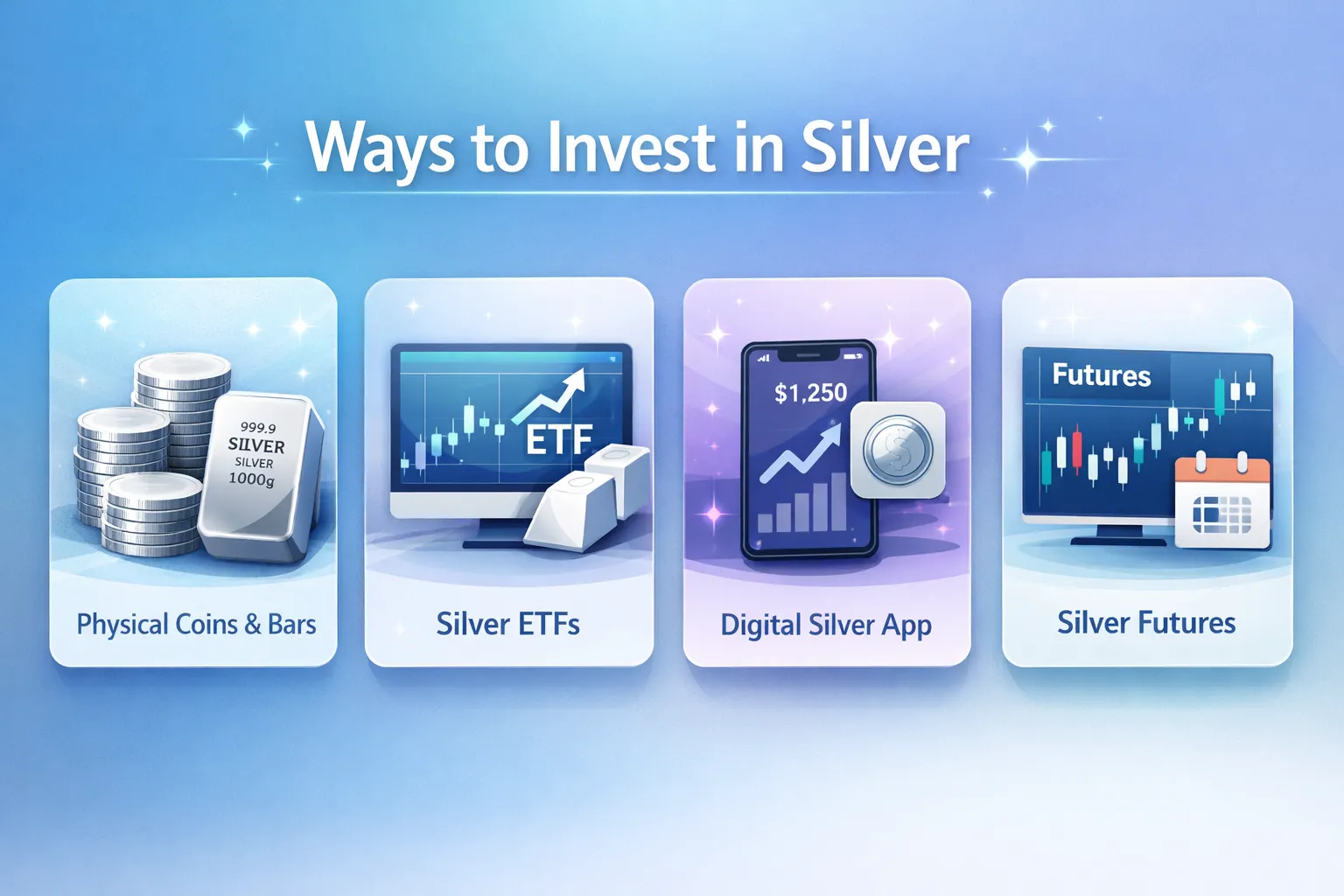
Below are the main routes, with when each makes sense.
|
Route |
Best for |
Watch-outs |
|---|---|---|
|
Physical silver (coins/bars) |
Gifting, traditional holding, personal possession |
Premiums, storage, resale spread |
|
Silver ETFs |
Market-linked exposure in Demat |
Brokerage, tracking/expense ratios |
|
Digital silver |
Micro-buying, convenience, quick liquidity |
Platform credibility, redemption rules |
|
Futures |
Experienced traders only |
Leverage risk, margin calls |
The OroPocket-style approach (built for real life)
Most Indians don’t want complexity. They want:
-
small, frequent investing
-
instant UPI payments
-
safety + transparency
-
extra rewards that make the habit stick
That’s exactly why OroPocket is built around:
-
₹1 entry point (start immediately)
-
Instant UPI buys
-
Fully insured, secure storage with authorized partners
-
Free Bitcoin cashback (Satoshi) on every gold/silver purchase
-
Gamified investing (streaks, spin-to-win, tiered rewards)
-
Referral rewards (both sides earn 100 Satoshi + free spin)
Stop watching. Start growing.
How Much Silver Should You Own? (Practical Allocation Framework)
Most competitor posts say “don’t overdo it” but don’t give a usable system. Here’s a clean one:
A simple allocation model (for most retail investors)
-
Precious metals total: 5%–15% of your financial portfolio
-
Silver inside that metals bucket: 20%–50% (based on risk comfort)
Example:
-
Portfolio ₹5,00,000
-
Metals 10% = ₹50,000
-
Silver at 40% of metals = ₹20,000
This keeps silver meaningful but not dangerous.
A Simple Decision Checklist (Yes/No in 60 Seconds)
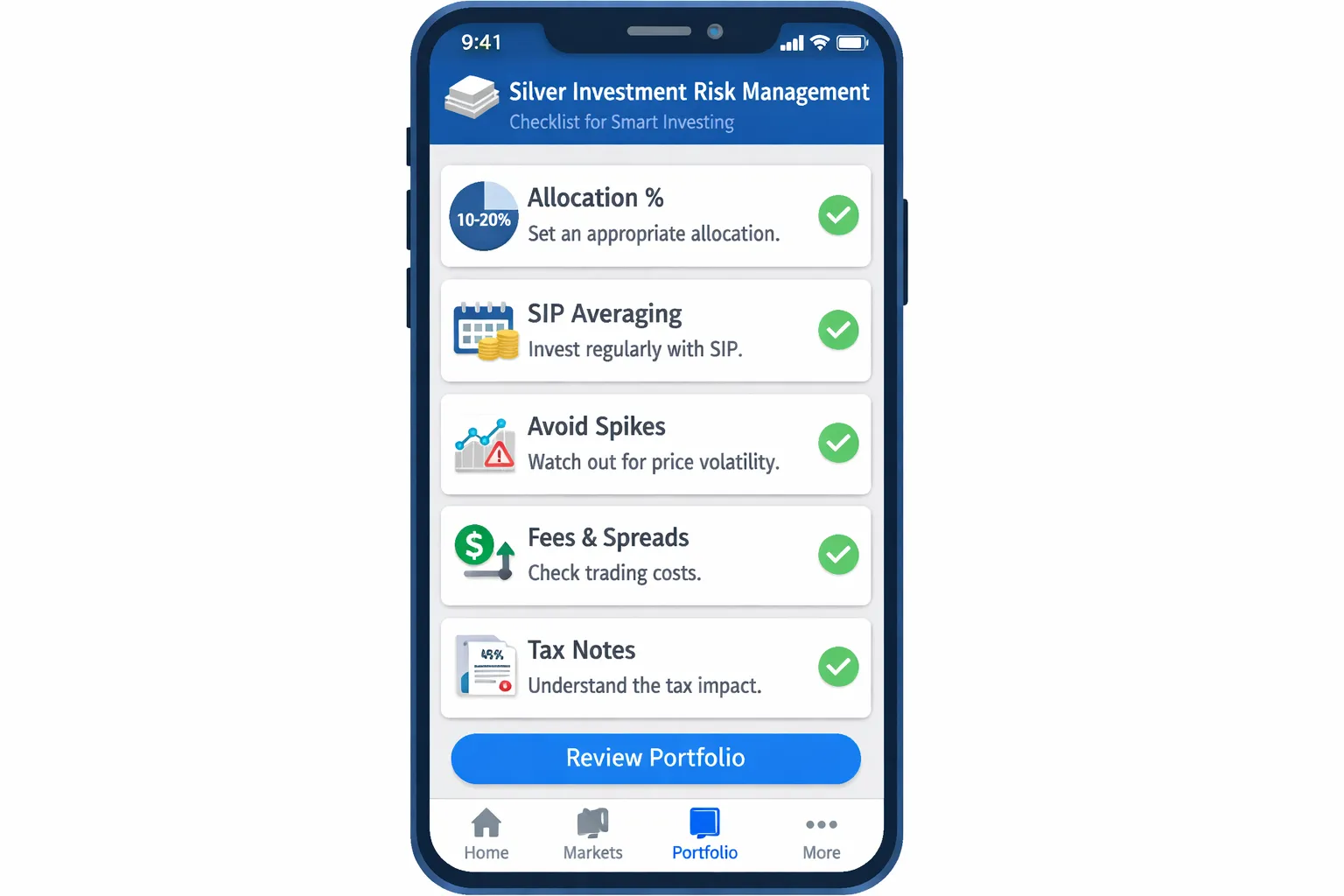
Silver is a yes for you in 2026 if:
-
you want diversification beyond FD + equity
-
you can hold through volatility (12–36 months+)
-
you’re willing to invest via averaging (not all at once)
-
you’re choosing a route with low friction (ETFs/digital)
Silver is a no (for now) if:
-
you need stable monthly income (silver doesn’t pay interest)
-
you’ll panic-sell during a 15–25% dip
-
you’re buying physical without checking spreads and buyback terms
Conclusion: Is Silver a Good Investment in 2026?
Silver in 2026 is a strong diversifier with real industrial demand, but it’s not a “safe, smooth ride” asset. The smartest approach is small allocation + consistent buying + low-cost format.
If you want the easiest way to start – without waiting, without minimums, and without complexity – start building silver the modern way with OroPocket:
-
Start from ₹1
-
Buy in seconds via UPI
-
Store it securely and insured
-
Earn free Bitcoin (Satoshi) cashback on every purchase
-
Turn investing into a habit with streaks, spins, and rewards
Track your entries, stay consistent, and let time do the heavy lifting. For extra context while planning your metals mix, monitor the gold price today in India and zoom out on the gold price chart to understand cycles – then build your silver position with discipline.
Download OroPocket, start with ₹1, and get rewarded for doing the right thing – starting.