
Should I invest in gold or silver in 2026?

Should I invest in gold or silver in 2026? (India guide for smart, mobile-first investors)
You’re not alone if you’re confused right now: gold and silver have both been on a wild ride, headlines keep flipping between “new highs” and “sharp corrections,” and equity returns have looked patchy. The real question isn’t gold vs silver – it’s how to use both without betting your future on one metal.
This guide will help you decide what to buy in 2026, how much to allocate, and how to invest safely from ₹1 – without getting trapped in high making charges, storage headaches, or panic buys.

The 2026 reality: gold and silver are not the same investment
Gold’s core job: protect your money
Gold is the portfolio stabiliser. It tends to do well when:
-
inflation stays sticky
-
currencies weaken
-
geopolitical risk rises
-
markets get nervous
Gold won’t usually “100x” your money – but it’s a powerful sleep-well asset.
Silver’s core job: amplify your upside (with more volatility)
Silver is part precious metal, part industrial metal. It can surge hard when:
-
industrial demand (solar, EVs, electronics) accelerates
-
retail/investor frenzy kicks in
-
gold rallies and silver catches up
But silver also falls fast. If you can’t handle sharp drawdowns, silver-heavy portfolios can feel brutal.
What top research and data says (so you don’t invest on vibes)
“J.P. Morgan Global Research forecasts that silver prices will average $81 per ounce in 2026.” – Source
That bullish case exists – but even J.P. Morgan highlights the key risk: high prices can trigger substitution/thrifting in solar and industrial usage, increasing volatility.
Now here’s the other perspective investors ignore: time horizon changes everything.
“Over the past decade (2016–2026), gold CAGR is ~14.5% vs Nifty 50 CAGR ~11.5%.” – Source
Translation: gold has been a strong wealth builder recently – but that doesn’t mean you chase it blindly after a rally. Leadership rotates.
Gold vs Silver in 2026: the decision framework (simple, practical)
Choose more gold if you are:
-
building an emergency fund mindset (stability first)
-
investing for 1–3 years
-
nervous about volatility
-
buying for “financial insurance” against uncertainty
If this is you, don’t guess timing – use a process. Read: is it a good time to buy gold now in India?
Choose more silver if you are:
-
comfortable with big swings
-
investing for 5+ years
-
want higher upside and can rebalance
-
already have debt + emergency buffer covered
If you’re serious about silver, you need to understand what you’re buying and how it’s stored/sold. Start here: digital silver in India: how to buy, store and sell safely
The smarter answer for most Indians: invest in both, then rebalance
Most competitor posts push a binary choice. That’s the trap.
A better approach is:
-
Own gold for stability
-
Own silver for growth potential
-
Rebalance with discipline (instead of chasing the winner)

The gold-to-silver ratio strategy (80/50 rule) – worth it in 2026?
The gold-to-silver ratio = Gold price ÷ Silver price.
It’s a “relative value” signal: which metal is cheaper compared to the other.
A popular version (seen across market commentary) is the 80/50 rule:
-
Above 80 → silver is relatively undervalued (silver-buy zone)
-
Below 50 → gold is relatively undervalued (gold-buy zone)
-
Between 50–80 → hold and accumulate steadily
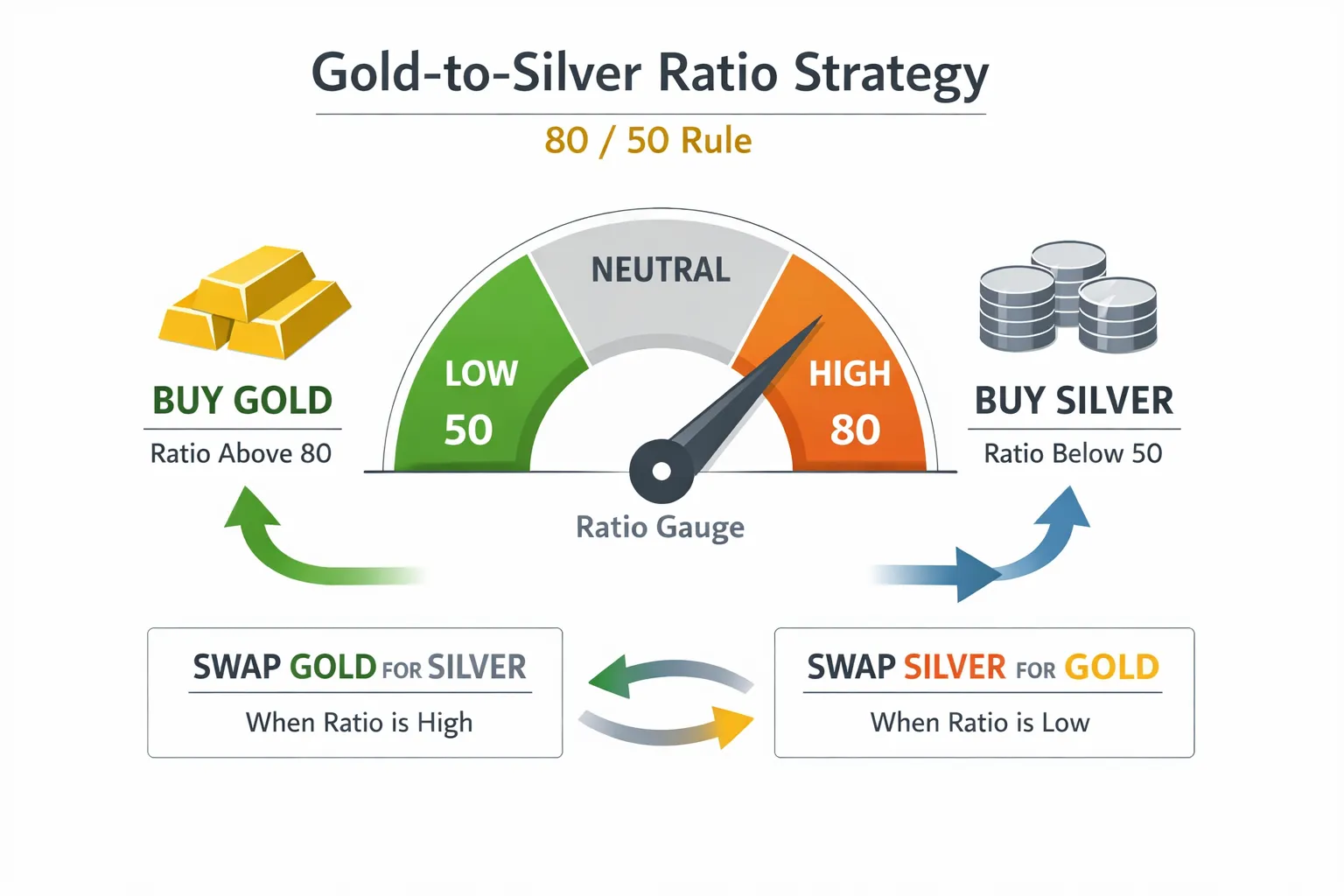
This strategy works best when you:
-
don’t go all-in at one level
-
accumulate gradually
-
rebalance annually/half-yearly
-
avoid leverage and “all-or-nothing” trades
Want a deeper, step-by-step version you can actually follow? Use: gold-to-silver ratio strategy: rebalance and grow your precious metals stack
Recommended allocation (2026) for retail investors (not traders)
Here’s a practical allocation matrix that fits most Indian investors:
|
Investor type |
Gold |
Silver |
Why it fits |
|---|---|---|---|
|
Conservative (1–3 yr goals) |
80–90% |
10–20% |
Gold smooths volatility |
|
Balanced (3–7 yr goals) |
65–80% |
20–35% |
Stability + upside |
|
Aggressive (7+ yr, high risk tolerance) |
50–70% |
30–50% |
Silver can outperform in upcycles |
Rule: If a 15–25% drop in silver will make you sell, you’re overallocated.
Best way to invest in gold and silver in 2026 (India): avoid the old traps
What to avoid (most people lose money here)
-
Jewellery for investment (making charges + buyback losses)
-
“Hot tip” lump-sum buys after a 1-year rally
-
Unclear storage/insurance terms
-
Platforms that hide spreads and charges
What to do instead
-
Micro-invest weekly/monthly
-
Use digital gold & silver with transparent pricing
-
Keep it liquid (ability to sell instantly)
-
Rebalance using rules (ratio or allocation bands)
Why OroPocket is built for 2026 investors (not 2016 investors)
Most people want to invest – but they don’t want complexity. OroPocket is designed to make gold + silver investing:
-
instant
-
habit-based
-
rewarding
-
safe
The OroPocket advantage (you won’t get this combo elsewhere)
-
Start from ₹1: no “minimum investment” anxiety
-
Buy in under 30 seconds via UPI: no friction, no waiting
-
100% secure & compliant: insured vault storage + authorised bullion partners
-
Free Bitcoin on every purchase: you stack gold/silver and earn Satoshi cashback
-
Gamified investing: streaks + spin-to-win rewards that build consistency
-
Referral rewards: you and your friend earn 100 Satoshi + free spin
This is the modern investor’s edge: build wealth daily, not occasionally.
Stop watching. Start growing.
Conclusion: gold or silver in 2026? Here’s the verdict
-
If you want stability and protection, lean gold.
-
If you want higher upside and can handle volatility, add silver.
-
If you want the smartest long-term outcome: own both, invest consistently, rebalance calmly.
If you’ve been waiting for the “perfect time,” you’ll keep missing the only thing that matters: time in the market + disciplined accumulation.
Start with ₹1 on OroPocket today – buy digital gold or silver via UPI and earn free Bitcoin cashback while you build real wealth.