
What are the pros and cons of buying gold?


Why this comparison now
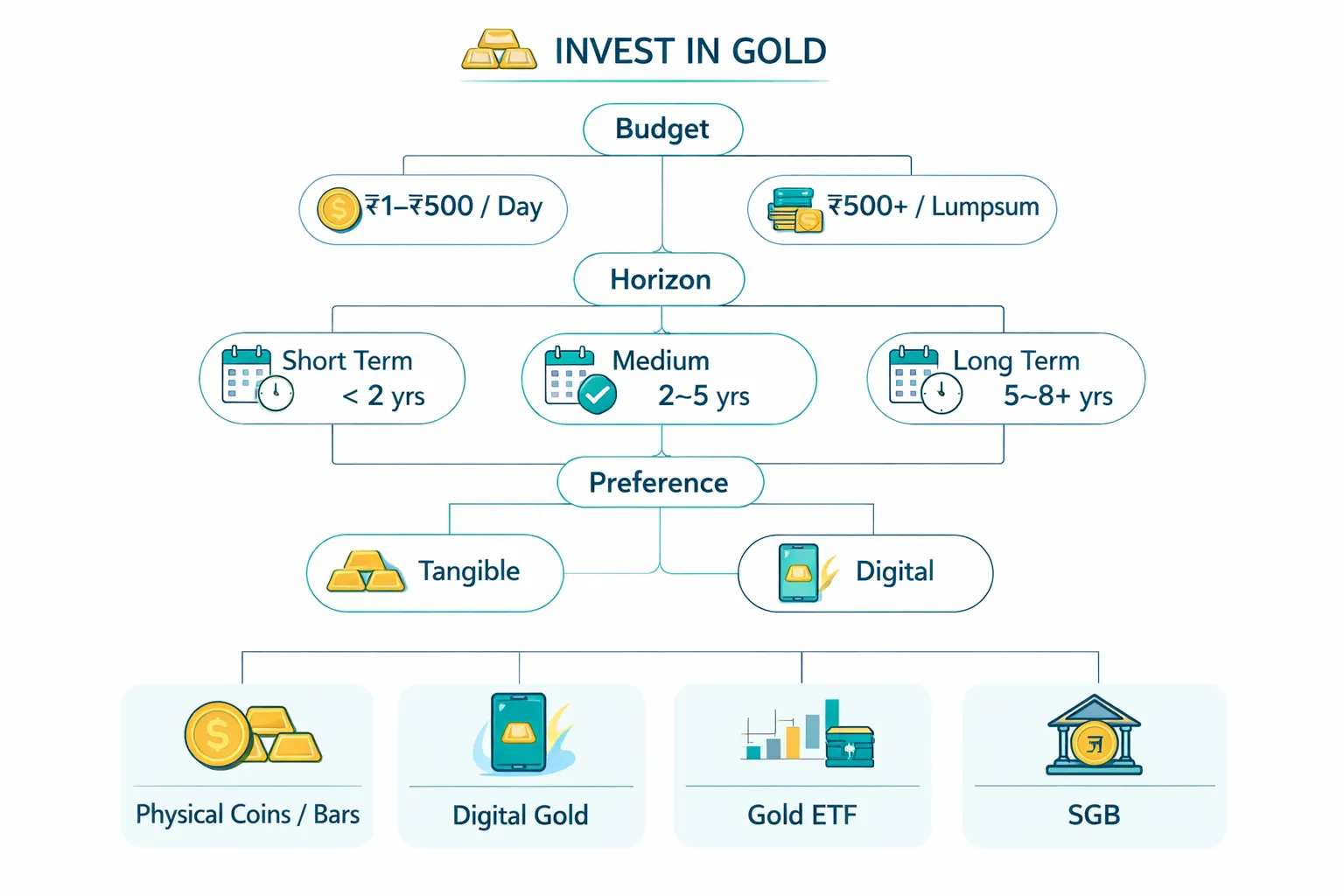
Inflation eats cash. Savings accounts struggle to keep up. Meanwhile, gold tends to hold its ground across cycles – and the way Indians buy gold is changing fast: from jewellery counters to apps, ETFs, and government bonds. If you’re deciding where your next ₹500–₹50,000 should go, understanding the trade-offs between Physical Gold, Digital Gold, Gold ETFs, and Sovereign Gold Bonds (SGBs) will help you choose smarter.
“In India, gold has delivered
10.2% CAGR over two decades – comfortably above average CPI (5–6%) and typical small-savings rates (~7–8%).” – Source
“Gold has historically improved portfolio risk-adjusted returns and acted as a long-term inflation hedge.” – Source
Who this guide is for (22–35, India, UPI-first, first-time investors)
-
You’re starting small (₹1–₹5,000 at a time) and want instant, app-based investing.
-
You want a safe place for emergency money but don’t want to lock it up.
-
You like simplicity (no paperwork), transparency, and quick liquidity via UPI/broker apps.
-
You’re okay with gold’s price swings but want clarity on costs, taxes, and exit options.
The 4 ways to own gold we’ll compare
-
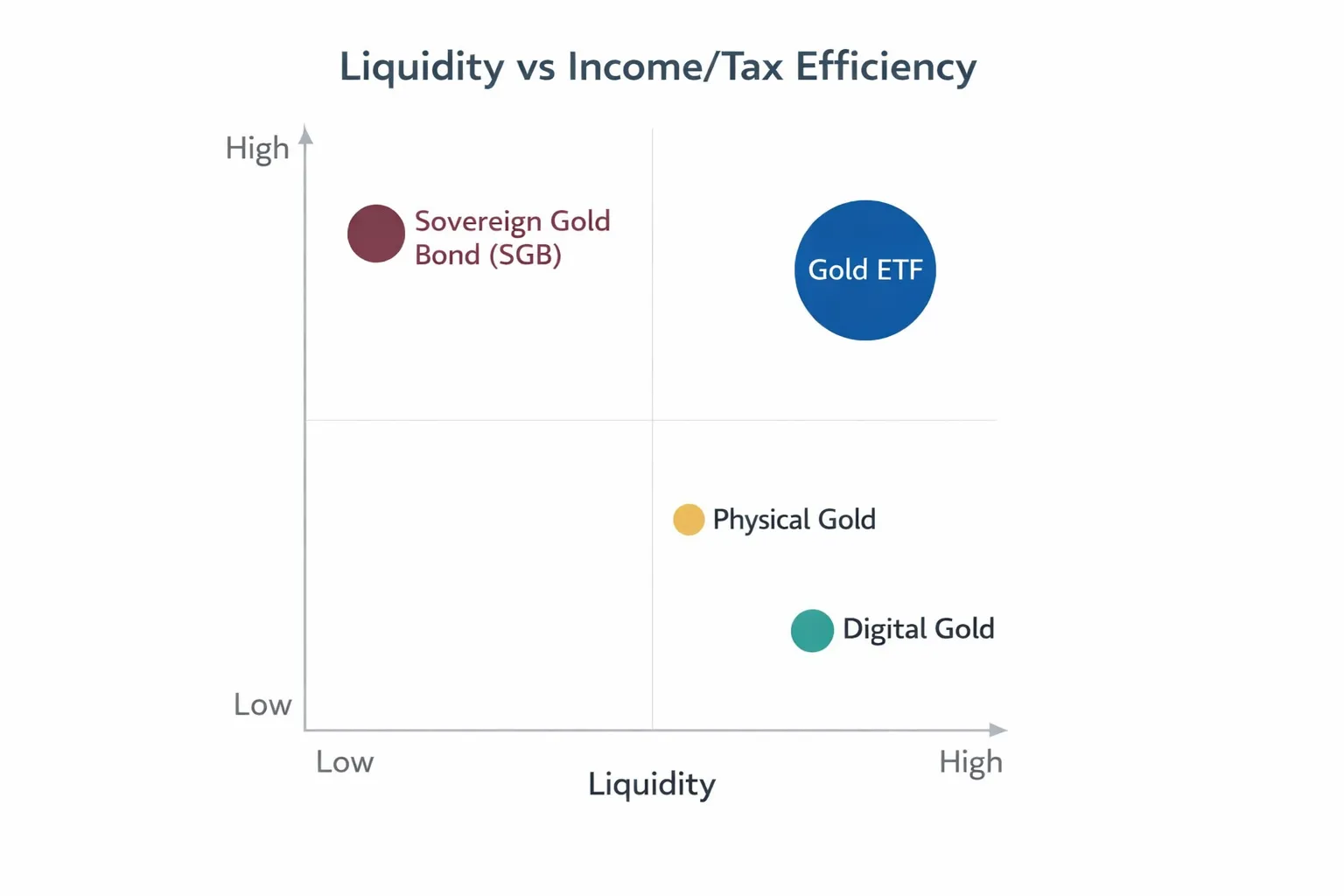
Physical Gold: Jewellery/coins/bars you can hold; best for gifting/tradition but higher spreads and storage hassle.
-
Digital Gold: Buy/sell 24K gold on apps; micro-investing, instant UPI, insured vaults, optional doorstep delivery.
-
Gold ETF: Exchange-traded fund that tracks domestic gold prices; SEBI-regulated, needs Demat/broker.
-
Sovereign Gold Bond (SGB): RBI/GoI-backed; 2.5% annual interest plus gold price exposure; best for 5–8+ year holding.
TL;DR: When each option wins (1–2 lines each)
-
Physical Gold: You want something tangible for gifting/rituals and plan to hold long term despite making charges.
-
Digital Gold: You value ₹1 entry, UPI ease, and insured vaulting with quick sell/buy flexibility.
-
Gold ETF: You already invest via Demat, want SEBI-regulated exposure, and don’t need physical delivery.
-
SGB: You’re a long-term saver aiming for gold exposure + 2.5% interest with tax-free gains at maturity.
|
Factor |
Physical Gold |
Digital Gold |
Gold ETF |
Sovereign Gold Bond (SGB) |
|---|---|---|---|---|
|
Liquidity |
High locally but may face buyback/making-charge cuts |
High; buy/sell in-app, instant UPI (platform-dependent) |
High market liquidity during trading hours |
Moderate; subscription windows; secondary market liquidity varies; early exit from year 5 |
|
Regulation |
Hallmarking standards (BIS) for purity; otherwise unregulated investment |
Not directly RBI/SEBI-regulated; relies on partner vaults/trustees |
SEBI-regulated mutual fund/ETF structure |
RBI/GoI-backed issuance |
|
Costs |
Making charges/spreads (often 3–15%); locker/storage costs |
Platform spread; no storage by you; delivery/conversion fees if you take coins/bars |
Expense ratio (~0.5–1%); brokerage; tracking error |
No expense ratio; no GST; possible secondary market spread |
|
Income |
None |
None |
None |
2.5% p.a. interest (taxable) plus gold price return |
|
Min investment |
Typically ₹5,000+ (varies by product) |
As low as ₹1 |
1 unit (few hundred to a few thousand ₹) |
1 gram (issue price set per tranche) |
|
Purity |
Varies; prefer BIS-hallmarked |
24K (typically 99.5–99.9) stored in insured vaults |
Backed by standard gold via custodian |
Denominated in grams; purity not a retail concern |
|
Taxes |
Capital gains as per prevailing rules; GST on purchase of jewellery/coins |
Capital gains as per prevailing rules |
Capital gains as per prevailing rules for ETFs |
Interest taxed at slab; capital gains tax exempt on redemption at maturity |
|
Best for |
Gifting, tradition, long holding despite higher spreads |
Micro-investing, habit building, quick UPI liquidity |
Demat-first investors wanting SEBI-regulated exposure |
Long-term savers seeking gold + 2.5% interest and tax-free maturity gains |
What gold actually does (and doesn’t do)
Gold’s superpower is protection, not paychecks. It helps cushion portfolios when equities wobble, but it won’t pay dividends or rent. Think of it as a stabiliser and long-term inflation hedge rather than a growth engine.
Diversification: low correlation vs stocks/bonds
Gold tends to move differently from equities and often has a low – or even negative – correlation during stress. That zig-when-stocks-zag behaviour can lift risk-adjusted returns and reduce drawdowns when markets get choppy.
Inflation: good long-term hedge, noisy short-term
Over multi-year horizons, gold has historically kept up with or beaten inflation, preserving purchasing power. Month-to-month, though, it can disconnect from CPI as rates, USD, and risk sentiment push prices around.
Volatility: why timing gold is hard
Gold reacts to many forces at once – real rates, currency moves, geopolitical risk, liquidity. Short-term spikes and slumps are common, so trying to “trade every twist” often backfires. A steady, rules-based allocation works better than chasing headlines.
Sensible allocation ranges (e.g., 5–15%) – not advice, just guardrails
-
Core portfolios: 5–10% gold exposure for diversification and crisis insurance.
-
Higher caution or shorter equity horizon: up to ~15% to dampen portfolio swings.
-
Keep the mix simple: choose the wrapper (Physical, Digital, ETF, SGB) that fits your liquidity, cost, and tax needs.
Pros
-
Tangibility and cultural utility: You can see, touch, gift, and wear it – perfect for weddings and festivals.
-
Easy to gift/pledge: Universally accepted; can be pledged for quick loans in a pinch.
-
No platform risk: You hold the asset directly, independent of any app or intermediary.
Cons
-
Making charges/spreads: Jewellery can carry 3–15%+ making charges; resale often deducts these.
-
GST on purchase: Applicable on jewellery/coins/bars, adding to your acquisition cost.
-
Storage/theft risk: Requires lockers or safes; adds cost and responsibility.
-
Purity risk without hallmarking: Non-hallmarked items may have lower purity than claimed.
How to buy smart
-
Prefer BIS hallmark: Look for the BIS logo, purity, and HUID for authenticity.
-
Understand 24K vs 22K: 24K is purest (investment-grade coins/bars); 22K is common for jewellery durability.
-
Coins/bars over jewellery: Lower making charges, better for investment resale value.
Taxes and costs
-
Capital gains: STCG if sold within 3 years (taxed per slab); LTCG after 3 years at 20% with indexation.
-
GST on purchase: Payable on jewellery/coins/bars at purchase; not creditable for individuals.
-
Typical spreads: Making charges, wastage, and buyback deductions reduce effective returns.
Best for
-
Gifting, weddings, long-term keepsakes, and anyone who values the comfort of a tangible asset.

Pros
-
Start from ₹1 via UPI for true micro-investing.
-
24K purity, securely vaulted; instant buy/sell with transparent live pricing.
-
Redeemable as coins/bars for doorstep delivery.
-
No Demat or trading account required.
Cons
-
Not directly SEBI/RBI regulated as an investment product.
-
Platform limits (often around ₹2 lakh).
-
Delivery/locker fees if you convert to physical coins/bars.
-
Some platforms have storage timelines requiring sell/redeem after a period.
Platform risk and how to reduce it
-
Choose reputed vaulting/assaying partners with independent trustees and insured, bank-grade vaults.
-
Review buy–sell spreads, delivery/conversion charges, and any storage timelines.
-
Look for regular third-party audits and clear redemption/buyback policies.
Where OroPocket stands out (fair but strategic)
-
Micro-investing from ₹1, UPI-native experience for 30-second purchases.
-
Bitcoin rewards (Satoshi cashback) on every gold/silver purchase.
-
Gamified habits: daily streaks, spin-to-win; easy gifting of gold to friends/family.
-
RBI-compliant partners with fully insured 24K vaulting.
Best for
-
Beginners building a habit, Bitcoin-curious users, and goal-based micro-savers who want liquidity and rewards with minimal friction.

Pros
-
SEBI-regulated structure with gold held by a custodian; units held in your Demat.
-
Liquidity on exchanges with transparent, intraday pricing and published NAV.
-
Easy to set up SIPs via broker; integrates with rebalancing and portfolio tools.
-
No physical storage hassles; clean exposure to domestic gold prices.
Cons
-
Requires Demat and trading account setup.
-
Ongoing expense ratio plus brokerage, STT/SEBI/Stamp charges; bid–ask spreads apply.
-
Tracking error versus spot gold due to fees, cash components, and operational frictions.
-
No practical physical delivery option for small investors.
Taxes and costs
-
Capital gains: STCG as per slab if sold within 3 years; LTCG at 20% with indexation after 3 years.
-
Costs: Expense ratios typically ~0.5–1% p.a.; brokerage plus exchange/regulatory levies; market impact/bid–ask.
-
SIP-friendly but factor total cost of ownership when comparing with SGBs/digital gold.
Best for
-
Investors already using brokers who want SEBI-regulated, Demat-held gold exposure.
-
SIP-friendly accumulators and disciplined portfolio rebalancers.
Pros
-
2.5% annual interest (taxable) plus gold price exposure.
-
Capital gains tax exempt on redemption at the 8-year maturity for individuals.
-
Sovereign guarantee; can be held in Demat; acceptable as collateral by many lenders.
Cons
-
8-year tenor with early exit windows (from year 5 on interest dates); secondary market liquidity can be thin and trade at discount/premium.
-
Interest is taxable; new subscriptions open in periodic tranches only.
Who should consider SGBs
-
Long-term savers targeting 5–8+ years.
-
Tax-aware investors who can benefit from the maturity CGT exemption.
-
Goal-based planners matching timelines like education funds or house down payments.
“SGBs pay 2.5% per annum (semi-annual) and carry an 8-year tenor with early redemption from the 5th year; capital gains on redemption for individuals are exempt.” – Source
What really impacts your returns
One-time costs (GST, making charges, brokerage)
-
Physical: making/wastage charges + GST inflate entry price.
-
Digital: platform spread; GST typically embedded in buy price; delivery fees if you take coins/bars.
-
ETF: brokerage, exchange/SEBI/stamp levies on each trade.
-
SGB: no GST; issue price decided per tranche.
Ongoing costs (vaulting/expiry rules, ETF expense ratio)
-
Physical: locker/insurance.
-
Digital: no personal storage cost; check any platform storage timelines and conversion fees.
-
ETF: annual expense ratio; Demat/AMC charges (small) may apply.
-
SGB: no fund expenses; interest credited semi-annually.
Liquidity and price discovery
-
Physical: easy to sell locally but buyback terms vary.
-
Digital: instant in-app buy/sell at live quotes.
-
ETF: intraday liquidity at market prices; NAV published daily.
-
SGB: secondary market can be thin; early redemption only from year 5 on interest dates.
Counterparty/regulatory risk
-
Physical: purity/assay risk if not hallmarked.
-
Digital: relies on vaulting partners/trustees; not SEBI/RBI-regulated as an investment product.
-
ETF: SEBI-regulated mutual fund structure with custodian.
-
SGB: RBI/GoI sovereign issuance.
Taxes that matter (high level, India)
-
STCG: sold within 3 years – taxed at slab rate (Physical/Digital/ETF).
-
LTCG: after 3 years – 20% with indexation (Physical/Digital/ETF).
-
SGB: 2.5% interest taxable at slab; capital gains on redemption at maturity exempt for individuals; secondary-market sale taxed per STCG/LTCG rules.
-
Delivery-related charges: if Digital is converted to coins/bars, delivery/printing/locker costs don’t reduce tax but impact net returns.
|
Option |
Purchase cost |
Ongoing cost |
Liquidity |
Regulation |
Income |
Tax treatment |
Typical holding period |
|---|---|---|---|---|---|---|---|
|
Physical Gold (Jewellery/Coins/Bars) |
Making/wastage charges; GST at purchase; jeweller spread |
Locker/insurance |
High locally; resale terms vary; potential deductions |
BIS hallmarking for purity; no market regulator |
None |
STCG ≤3 yrs at slab; LTCG >3 yrs at 20% with indexation; GST on purchase |
3+ years if investing; longer for keepsakes |
|
Digital Gold (Vaulted 24K) |
Platform spread; GST typically embedded; delivery fees if redeemed physically |
Usually none to store; check platform timelines and conversion fees |
High – instant in-app buy/sell |
Not SEBI/RBI-regulated; relies on trustees/vault partners |
None (platforms may offer rewards, not interest) |
STCG/LTCG rules like physical; taxes on gains when sold; fees not tax credits |
Flexible – days to years |
|
Gold ETF |
Brokerage + exchange/SEBI/stamp charges; no GST |
Expense ratio (~0.5–1% p.a. typical); Demat/AMC charges |
High during market hours; NAV transparency |
SEBI-regulated MF/ETF with custodian |
None |
STCG ≤3 yrs at slab; LTCG >3 yrs at 20% with indexation |
Flexible; SIP/rebalance friendly |
|
Sovereign Gold Bond (SGB) |
Issue price (no GST) |
None (no fund fee); Demat charges minimal if held in Demat |
Moderate; secondary liquidity varies; early exit from year 5 on interest dates |
RBI/GoI sovereign issuance |
2.5% p.a. interest (taxable) |
Interest taxable; capital gains on redemption at 8-year maturity exempt for individuals; secondary sale taxed per STCG/LTCG |
Best held 8 years; 5–8+ years for goals |
If you’re starting with ₹1–₹500 per day
-
Digital Gold + UPI for habit-building and instant liquidity.
-
Consider periodic SGB lumpsums for long-term goals when tranches open.
If you already invest via a broker
-
Set up a Gold ETF SIP and rebalance annually with your equity/debt mix.
If you’re saving for a festival or wedding
-
Prefer physical coins/bars over jewellery to avoid heavy making charges; buy gradually.
If you want tax efficiency and can wait
-
Prioritise SGBs for an 8-year horizon to benefit from the maturity CGT exemption.
Bitcoin-curious but cautious about crypto
-
Choose Digital Gold via OroPocket to pair gold’s stability with Bitcoin rewards on every purchase – build a habit, get Satoshis, and keep liquidity via UPI.
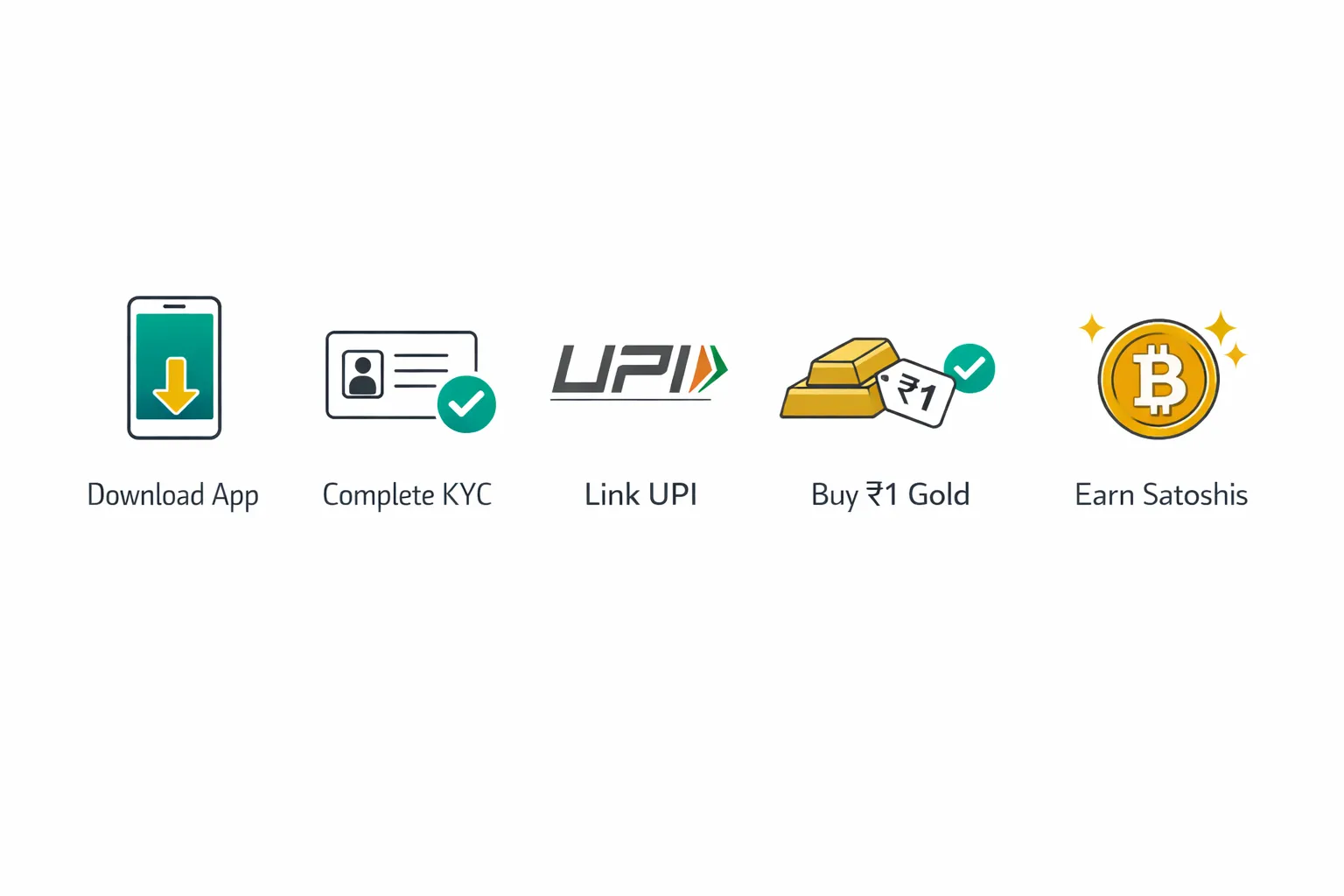
30-second setup
-
Download the OroPocket app on iOS or Android.
-
Complete a quick KYC to unlock buys and withdrawals.
-
Link your UPI ID for instant, seamless payments.
Your first buy
-
Start with just ₹1 and purchase 24K digital gold in seconds.
-
Watch your grams balance update in real time at live prices.
Boost rewards
-
Earn Satoshi (Bitcoin) cashback on every gold/silver purchase.
-
Hit daily streaks (bonus every 5 consecutive days) and spin-to-win for extra rewards.
-
Refer friends: both of you get 100 Satoshi + a free spin.
Build a habit
-
Set reminders or auto-add rules to invest small amounts regularly.
-
Gift gold to friends and family instantly.
-
Convert to coins/bars for doorstep delivery when needed.
Safety first
-
RBI-compliant partners, 24K pure gold, fully insured vaults.
-
Transparent pricing, quick UPI settlements, and easy redemption.
Ready to begin? Download the OroPocket app: https://oropocket.com/app
Quick FAQs
-
Is digital gold regulated? No. It’s not directly regulated by SEBI/RBI as an investment product. Choose reputed platforms with independent trustees, insured vaults, and published audits.
-
What are the taxes on each option? High level only (not advice):
-
Physical/Digital/ETF: STCG within 3 years taxed at slab; LTCG after 3 years at 20% with indexation.
-
SGB: 2.5% interest taxable; capital gains on redemption at 8-year maturity exempt for individuals; secondary market sale follows STCG/LTCG rules. Always consult a tax advisor.
-
-
Can I convert digital gold to coins? Yes. Most platforms offer doorstep delivery of 24K coins/bars; delivery and minting fees apply.
-
Are Bitcoin rewards taxable? Treat as income as per your slab. Keep records and consult a tax professional.
“Gold’s negative correlation to equities tends to intensify during market sell-offs, enhancing diversification when it’s needed most.” – Source
“In India, gold has delivered roughly 10–12% CAGR over long periods, generally outpacing average CPI and typical savings returns.” – Source
Final verdict
-
Physical: Best for culture/gifting and long-term keepsakes – prefer coins/bars over heavy-making-charge jewellery.
-
Digital: Best for getting started and habit-building with UPI ease; OroPocket adds Bitcoin rewards on every buy.
-
ETF: Best for broker-savvy SIP investors who want SEBI-regulated, Demat-held exposure and easy rebalancing.
-
SGB: Best for long-term, tax-efficient gold exposure (8-year horizon) with 2.5% interest plus gold price participation.
Call to action
-
Download OroPocket, start with ₹1, and earn Bitcoin rewards on every gold buy. Get the app: https://oropocket.com/app



Join the Conversation
Be the first to share your thoughts.