
What is the silver rule 7?


What Is the Silver Rule 7? (The Rule That Triggered “Silver Thursday”)
If you’ve ever wondered how one exchange rule could crash a global commodity market, Silver Rule 7 is the textbook example.
Back in 1980, the Hunt brothers built massive leveraged positions in silver – so large that regulators feared a broken silver market could spill into banks and brokerages. COMEX responded with Silver Rule 7, which tightened the game overnight by restricting leverage and forcing position reductions. The result: a violent selloff, margin calls, and the event now remembered as Silver Thursday.
Before you invest in silver – digitally or physically – it’s worth knowing what happened, because it teaches one big lesson: markets don’t just move on price – they move on rules, leverage, and liquidity.
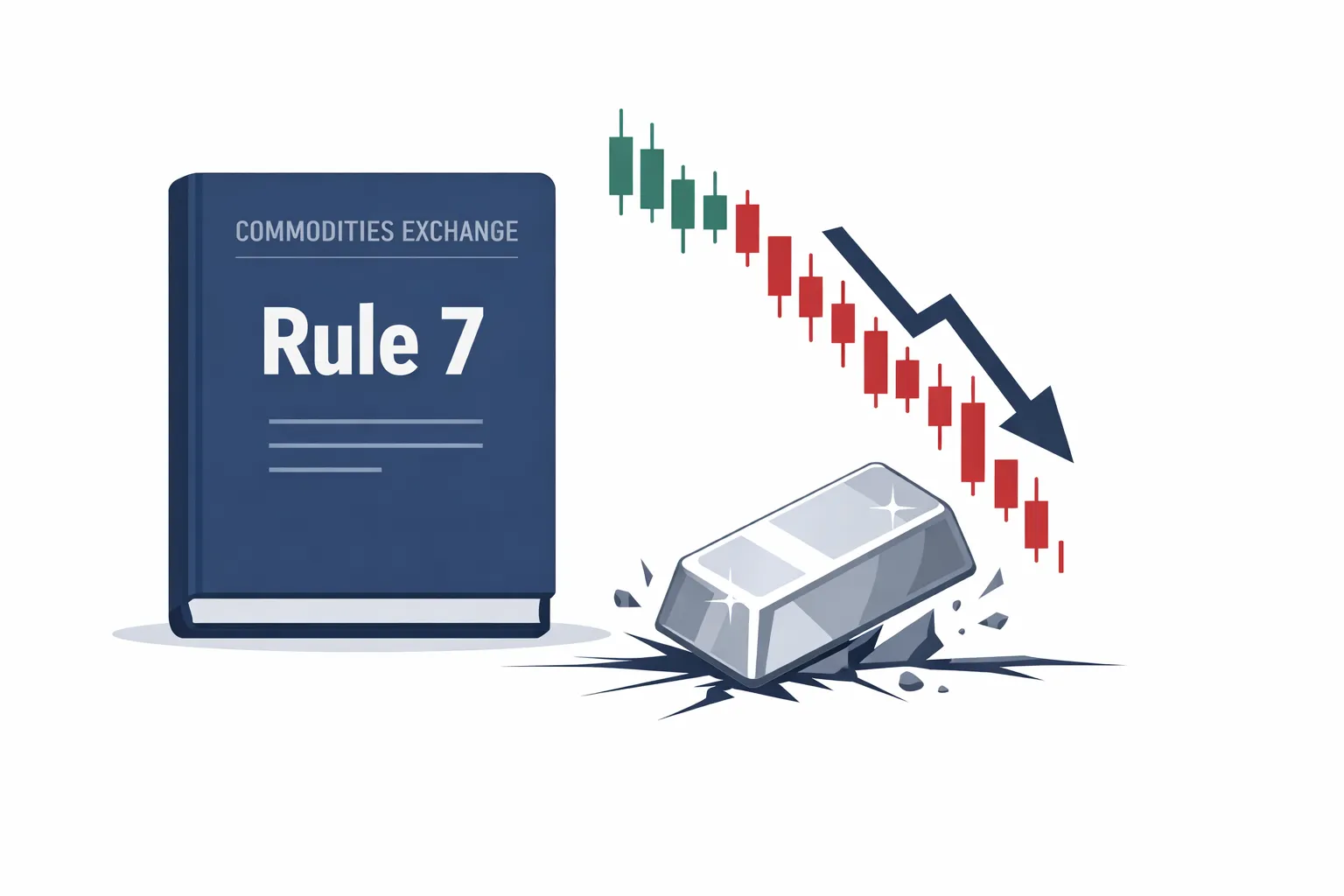
Silver Rule 7: The Simple Definition
Silver Rule 7 was a COMEX emergency rule (introduced January 7, 1980) designed to stop extreme speculation and concentration in the silver futures market.
In plain English, it aimed to:
-
Reduce leverage
-
Limit oversized positions
-
Force risk to come down fast
-
Protect the exchange and brokers from a default cascade
It became famous because it helped set up the chain reaction that ended with Silver Thursday (March 27, 1980).
Why Did COMEX Create Silver Rule 7?
The problem: leverage + concentration
In late 1979 and early 1980, silver prices surged at a pace that looked less like “normal investing” and more like a squeeze driven by a small number of huge buyers.
A large part of the story revolves around the Hunt brothers accumulating:
-
Physical silver, and
-
A massive share of silver futures contracts (paper silver)
That concentration mattered because futures are highly leveraged – meaning you can control a lot of silver with relatively little cash. When prices move against you, the exchange demands more money immediately (a margin call).
“Between January 1, 1979, and January 18, 1980, silver prices skyrocketed from $6.08 to $49.45 per ounce.” – Source
That kind of move pressures:
-
jewelers and manufacturers (real demand users),
-
brokers (who guarantee clients’ trades), and
-
the exchange clearing system itself.
What Did Silver Rule 7 Actually Do?
Silver Rule 7 wasn’t just one tiny tweak – it was part of a tightening cycle that changed the rules of risk-taking in real time.
Key mechanisms (what changed on the ground)
|
What COMEX targeted |
What it meant in practice |
Why it hurt big speculators |
|---|---|---|
|
Higher margin requirements |
Traders had to post more cash per contract |
Leverage became expensive overnight |
|
Position pressure/limits |
Oversized positions were constrained and forced down |
Big holders couldn’t keep “rolling” huge bets easily |
|
Reduced ability to add new risk |
Rules shifted toward limiting fresh buying |
Less buying power = price support vanishes |
This is the nightmare scenario for any leveraged trader: you need more cash at the same time your asset is falling.
To track volatility and understand how precious-metal prices can move fast, keep an eye on a reliable gold price chart alongside silver – gold and silver often react together during panic events.
The “Liquidation-Only” Effect (Why Prices Collapsed So Fast)
One of the most brutal market mechanics during this period was “liquidation-only” trading (widely discussed as part of the broader tightening measures around Silver Rule 7).
Liquidation-only means:
-
You can sell to close positions,
-
but you can’t buy to open/increase positions.
That creates a one-way door:
-
sellers increase,
-
buyers disappear,
-
price drops accelerate,
-
margin calls multiply.
This is how rule changes can turn a correction into a crash.

How Silver Rule 7 Led to Silver Thursday (Quick Timeline)
Here’s the clean timeline most articles fail to explain clearly – rules and margin mechanics came first, the crash came after.
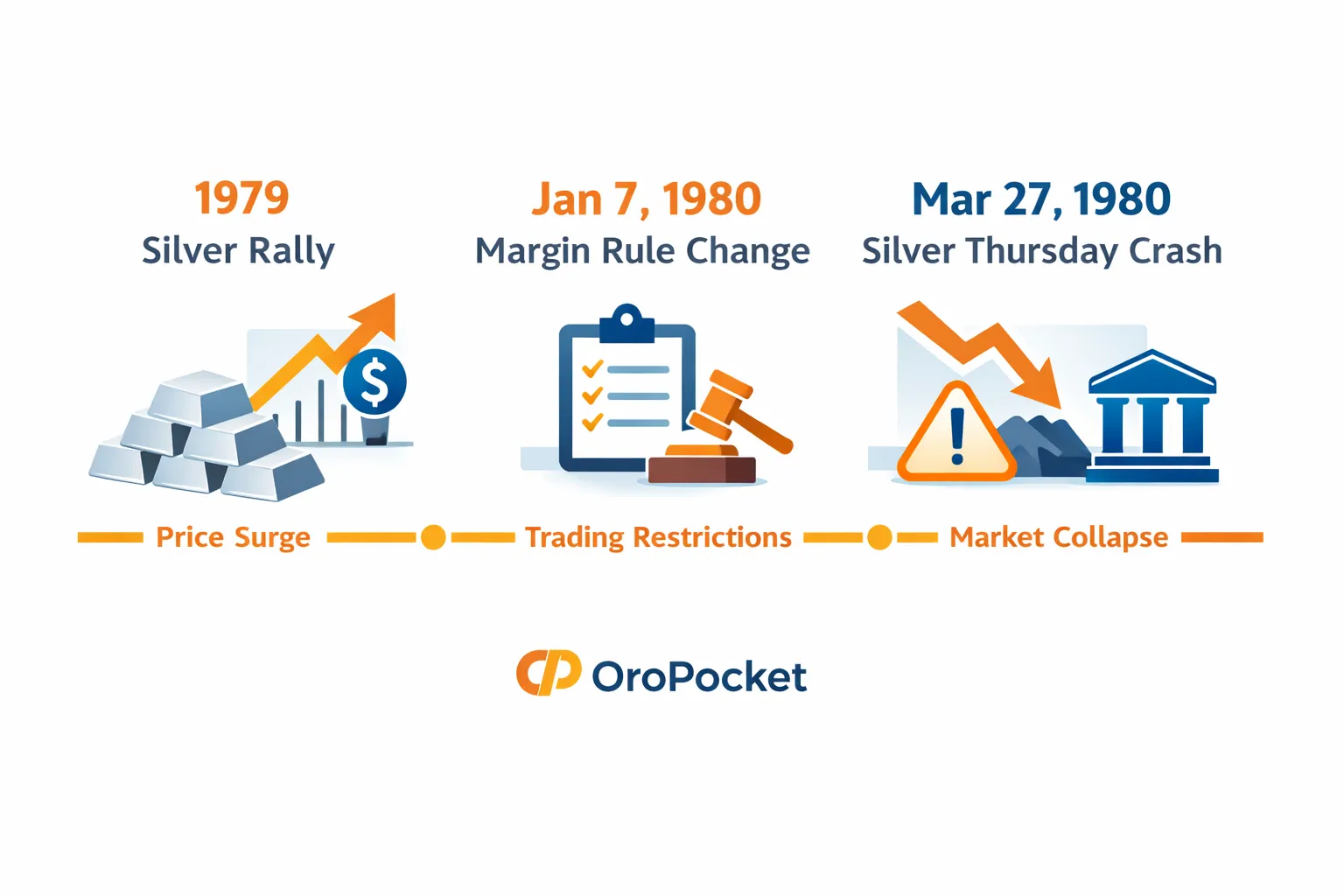
1979–Jan 1980: The melt-up
-
Prices rocket upward
-
Leverage grows
-
Concentration risk increases
Jan 7, 1980: COMEX introduces Silver Rule 7
-
Margin rules tighten
-
Buying power shrinks
-
Forced deleveraging begins
March 27, 1980: Silver Thursday
-
The Hunts reportedly miss a massive margin call
-
Panic spreads across markets
-
Silver drops sharply in days
“On March 27, 1980 – ‘Silver Thursday’ – the Hunts failed to meet a $100 million margin call, and silver plunged.” – Source
The Big Lesson for Investors in India: Don’t Confuse “Silver Investing” With “Leveraged Silver Trading”
Most retail investors don’t lose money because silver is “bad.” They lose money because they unknowingly take on:
-
leverage risk,
-
liquidity risk, and
-
rule-change risk (especially in derivatives markets).
Physical/digital accumulation vs futures speculation
|
Approach |
What you’re really doing |
Main risk |
|---|---|---|
|
Buying silver (small amounts) over time |
Building long-term exposure |
Price volatility |
|
Futures/margin trading |
Borrowing to amplify exposure |
Margin calls + forced liquidation |
If your goal is wealth-building (not gambling), you want the first approach – steady accumulation, not leverage.
This is where modern investing rails matter: transparent pricing, low entry point, and simple buy/sell without margin.
You can also compare with gold’s long-run behavior using history of gold prices to understand how “store of value” assets behave across cycles.
How OroPocket Helps You Invest Smarter Than 1980-Style Speculation
Silver Thursday happened because:
-
leverage was high,
-
positions were massive, and
-
rules changed quickly.
OroPocket is built for the opposite behavior: small, consistent, habit-based investing – without trading complexity.
Why OroPocket fits modern Indian investors
-
₹1 entry point: Start now, not “someday.”
-
Instant UPI payments: Buy in under 30 seconds.
-
100% secure & compliant: RBI-compliant setup, insured vaulting, authorized bullion partners.
-
Gamified investing: streaks + rewards that turn discipline into a habit.
-
Free Bitcoin on every purchase: you don’t just stack metal – you also earn Satoshi cashback.
That’s the real upgrade: gold/silver stability + Bitcoin upside without needing to trade crypto directly.
To stay anchored to real market pricing before you buy, check the current gold price – it’s the simplest benchmark most Indian savers understand instantly.

Final Take: Silver Rule 7 Was a Wake-Up Call – Invest Like a Builder, Not a Speculator
Silver Rule 7 matters because it proved a permanent truth:
When an asset is driven by leverage and concentration, one rule change can flip the market.
So if you’re investing in silver (or gold) today:
-
avoid leverage traps,
-
build steadily,
-
and choose platforms designed for long-term wealth, not adrenaline.
Stop watching. Start growing.
Start with ₹1 on OroPocket, earn free Bitcoin cashback on every buy, and build a portfolio that’s designed to survive rule changes – not get destroyed by them.



Join the Conversation
Be the first to share your thoughts.