
Why are gold and silver crashing?

Why are gold and silver crashing? (And what smart Indian investors do next)
Gold and silver don’t “crash” for one single reason. They fall fast when macro forces (USD, interest rates, liquidity) and market structure (profit-booking, leverage, stop-loss triggers) collide – often in a thin-liquidity window.
If you’re an Indian retail investor watching MCX prices swing wildly and wondering whether this is the “end of gold,” this guide will give you a clean, practical answer – and a smarter way to build your allocation without panic.

What’s actually happening: the 60-second summary
When gold and silver sell off sharply, it’s usually a mix of:
-
A stronger US dollar → metals become costlier globally → demand cools.
-
Higher bond yields / real yields → holding non-yielding gold feels less attractive.
-
“Higher for longer” Fed expectations → fewer/late rate cuts = pressure on metals.
-
Profit booking + leverage unwinds → silver drops harder because it’s more leveraged and more volatile.
-
Liquidity squeeze (“sell what you can”) → even safe havens get sold temporarily.
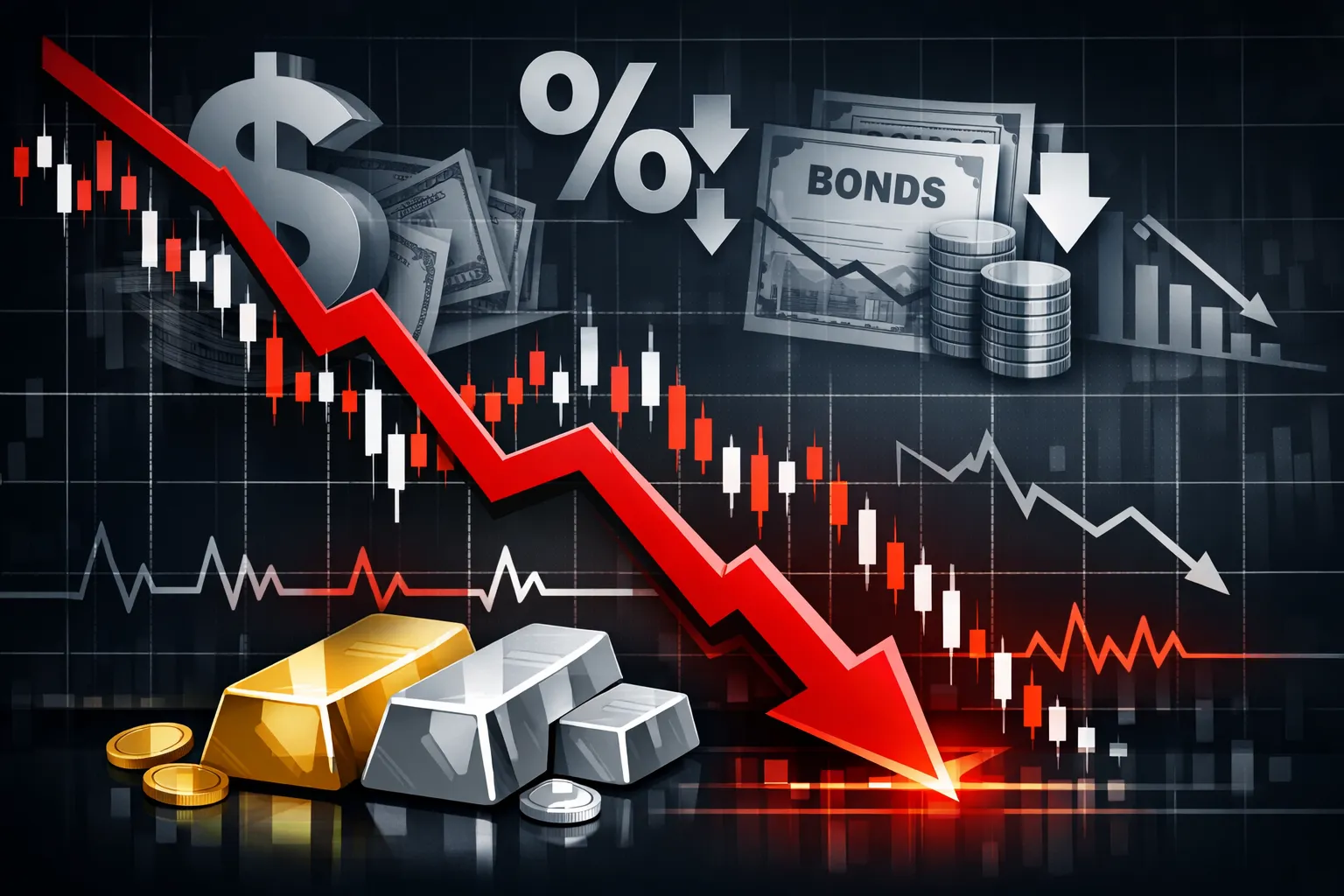
The 5 biggest reasons gold & silver fall together (and fast)
1) The US dollar spikes (DXY up = metals down)
Gold and silver are priced in dollars. When the dollar strengthens, it often pushes bullion down in the short term because global buyers effectively pay more.
This is why you’ll often see “Dollar up 0.4%” and “Gold down 2%” in the same news cycle.
“Gold is priced in U.S. dollars globally, so a stronger dollar typically reduces demand and pressures prices downward.” – CBS News
2) Bond yields jump and real rates rise
Gold doesn’t pay interest. So when real yields rise, investors can get “safe” yield elsewhere (like Treasuries), and gold faces selling pressure.
3) Fed policy uncertainty: rate cuts get delayed
Markets move on expectations. When traders shift from “multiple cuts soon” to “maybe two cuts later,” gold and silver can correct aggressively – especially after a big rally.
4) Profit booking after a parabolic run
A lot of “crashes” are simply crowded trades unwinding. When prices run up too quickly, investors lock profits. If support levels break, selling accelerates.
5) Silver falls harder because it’s a double-risk asset
Silver behaves like:
-
a precious metal (safe haven), and
-
an industrial metal (sensitive to growth).
When markets fear slower growth and liquidity tightens, silver can drop much more than gold.
“But gold is a safe haven – why is it falling?”
Because safe haven doesn’t mean “never falls.”
In liquidity crunches, investors sell what they can to raise cash. Gold can dip even during risk-off periods – then stabilize later once forced selling ends.
This is exactly why disciplined investors don’t try to “guess the bottom.” They build position size systematically.
If you want a deeper understanding of what truly drives prices (beyond headlines), read our breakdown: what drives gold prices and how to invest smarter in 2026.
Is this the end of the bull run in gold and silver?
Not necessarily. A crash can be:
-
a trend reversal, or
-
a violent reset inside a longer uptrend.
What decides that? Usually these signals:
-
USD trend (is strength persistent?)
-
Real yields trend
-
Central bank buying / physical demand
-
Geopolitical risk staying elevated
-
Liquidity conditions (QT vs easing)
Retail takeaway: don’t make an “all-in / all-out” decision from one day’s candle.
What smart Indian investors do now (instead of panic-buying or panic-selling)
1) Switch from “timing” to “process”: invest in small chunks
If volatility is high, the best behavior is boring:
-
Buy in micro amounts
-
Add on dips
-
Rebalance
That’s how you remove stress from the decision.
2) Keep allocation rules (not emotions)
A simple framework:
|
Investor type |
Gold + Silver allocation (guide) |
Why |
|---|---|---|
|
First-time investor |
5–10% |
Stability + inflation hedge |
|
Moderate risk |
10–15% |
Portfolio ballast |
|
High risk (equities/crypto heavy) |
10–20% |
Diversification, drawdown control |
For a clearer approach to holding both metals together, use: investing in gold and silver together: allocation & rebalancing.
3) Prefer flexible instruments (especially during fast markets)
During sharp moves, physical buying is slow and spread-heavy. Digital formats allow faster execution and smaller ticket sizes.
The OroPocket way: stop watching. start growing.
When gold and silver crash, most people freeze because:
-
they think they need a “big” amount to buy,
-
they fear getting the timing wrong, or
-
they don’t want the hassle of storage and purity.
OroPocket is built to remove all three.

Why OroPocket works in volatile markets
-
Start from ₹1: you can average dips without fear.
-
Instant UPI payments: buy in under 30 seconds.
-
100% secure & compliant: insured vaulting + authorized bullion partners.
-
Gamified habit-building: streaks + spin-to-win makes consistency easy.
-
Free Bitcoin on every purchase: you earn Satoshi cashback while accumulating gold/silver – two assets in one habit.
-
Referral rewards: both friends earn 100 Satoshi + a free spin.
Want to compare formats before you choose? Use our guide: gold SIP vs gold ETF vs SGB: which is best for 2026.
Proof that gold still matters (even with crashes)
Gold can be volatile short-term, but it has still delivered strong long-term outcomes in many cycles.
“In India, from 2021 to 2026, gold achieved an absolute return of 183%.” – MyJar
(That’s exactly why serious investors treat crashes as events to manage, not reasons to quit.)
Final verdict
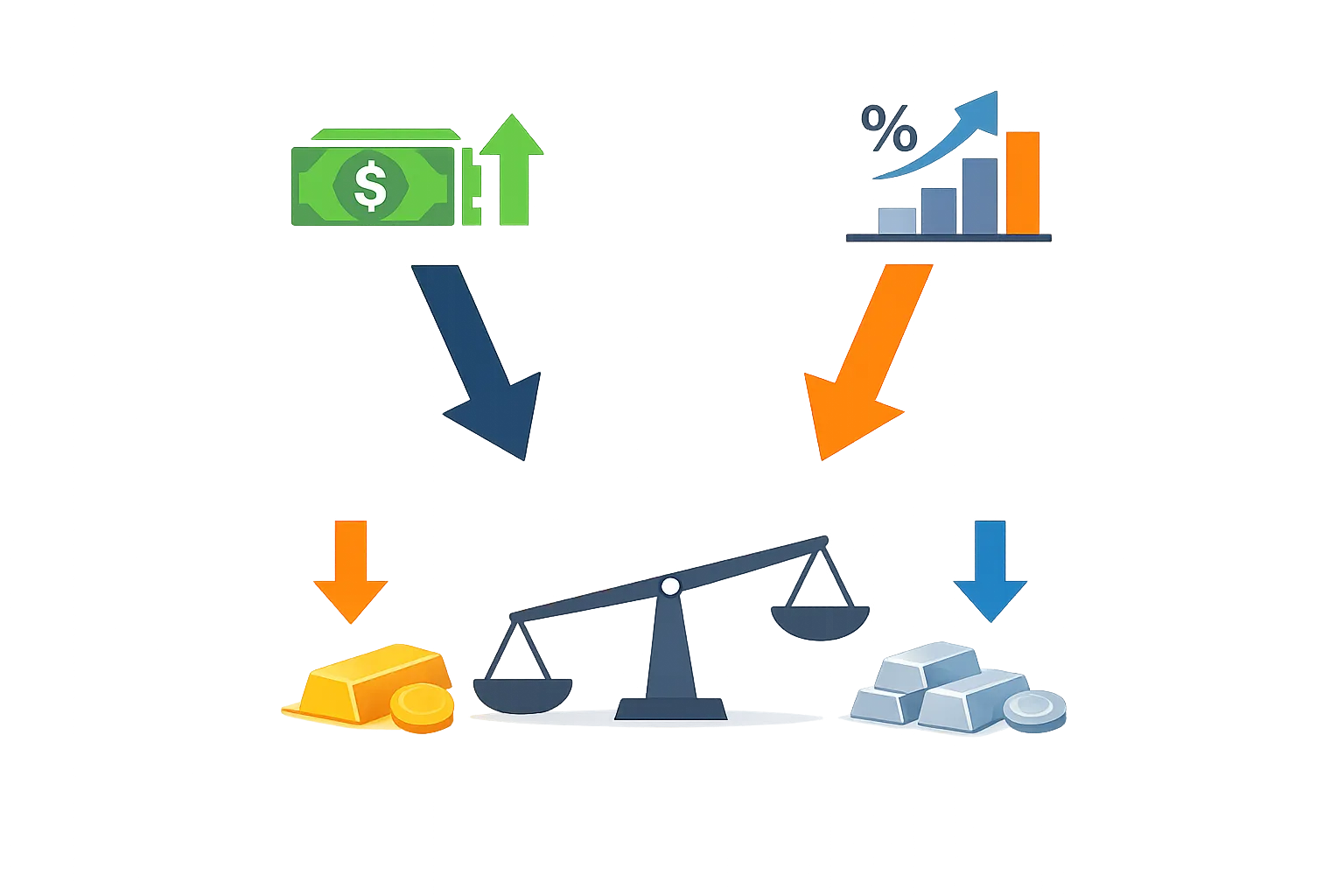
Gold and silver are crashing because the dollar is stronger, yields are higher, liquidity is tighter, and profit-booking/leveraged selling accelerates moves – especially in silver.
Your edge as a retail investor isn’t predicting the next tick.
Your edge is building the habit:
-
invest small,
-
invest often,
-
stay secure,
-
and get rewarded.
Stop watching. Start growing.
Start your gold or silver journey on OroPocket from ₹1 and collect free Bitcoin cashback on every buy.