
Why are gold and silver prices fluctuating so much?

Why Are Gold and Silver Prices Fluctuating So Much? (And Why It’s Not “Manipulation”)
If you’ve been tracking gold and silver lately, you’ve probably asked the same question every Indian investor is asking: “Why is the price moving so much even when the dollar is weak, or the news looks positive?”
Here’s the truth: gold and silver don’t move on one trigger. They react to a stack of global forces – interest rates, inflation expectations, bond yields, geopolitics, central bank buying, industrial demand (especially for silver), and even India-specific factors like the rupee and import costs.
This guide breaks it all down in simple language – so you can stop guessing and start investing with clarity.
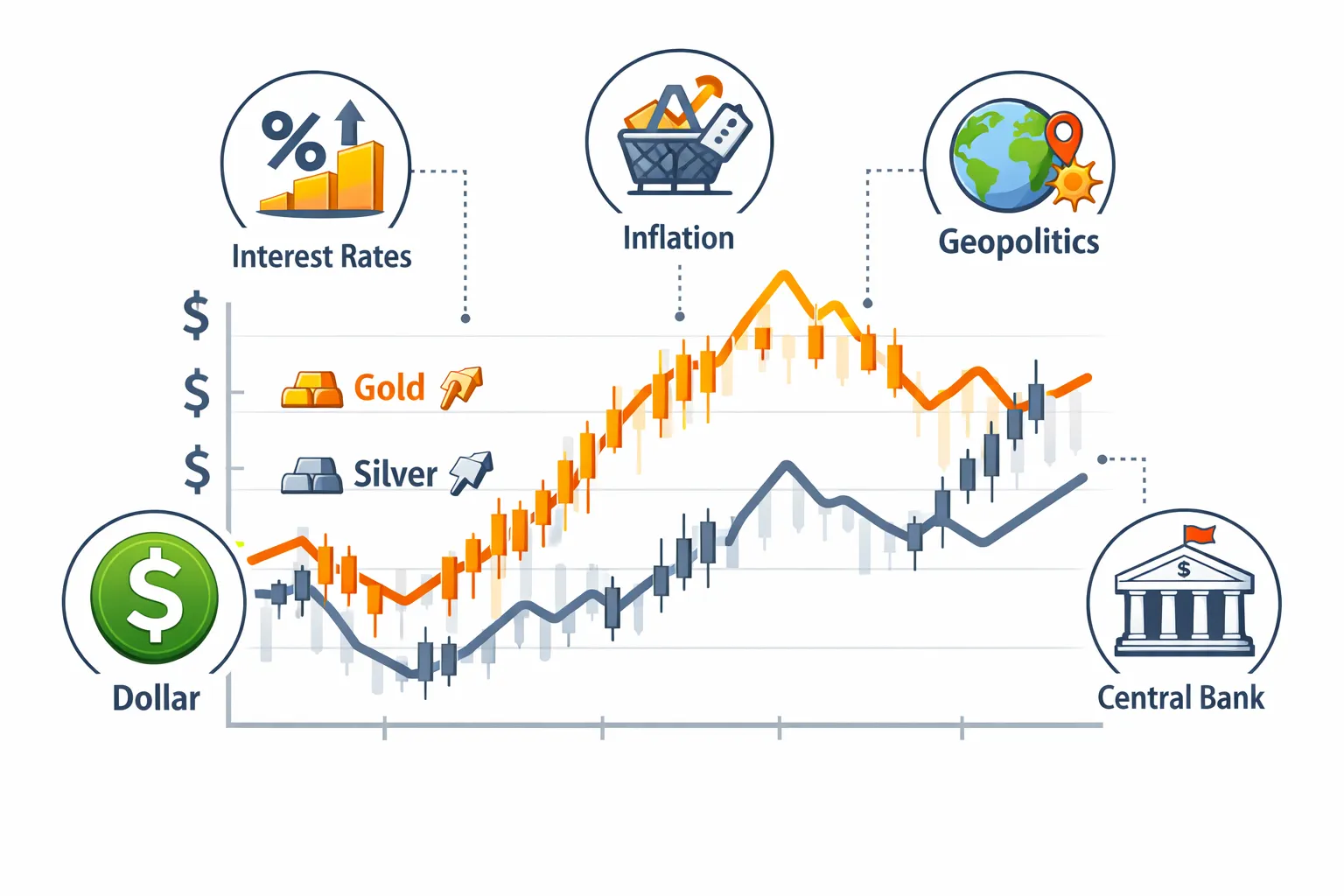
The Big Idea: Gold and Silver Are “Macro Mirrors”
Gold and silver don’t just reflect demand and supply. They reflect what the world believes about money.
When markets feel:
-
inflation is rising,
-
growth is slowing,
-
interest rates may fall,
-
war risk is rising,
-
currencies are weakening…
…bullion gets volatile because investors reposition fast.
If you want to track this intelligently day-to-day, start with live pricing and then map the reason behind the move. (More on that below.) You can also follow the live gold prices today to spot trend shifts early.
Why Gold Prices Fluctuate So Much (Even When “Nothing Changed”)
1) Interest Rates & Real Yields: The #1 Swing Factor
Gold doesn’t pay interest. So when interest rates (or real yields) rise, investors often prefer bonds and deposits. When yields fall, gold looks more attractive.
That’s why you’ll see gold drop on “strong jobs data” or “hot inflation prints” – because the market starts pricing higher-for-longer rates.
“Gold, a non-yielding asset, becomes more attractive when real interest rates are low or negative… rising real yields can suppress gold prices.” – Source
What to watch
-
US Fed signals (rate cuts vs rate holds)
-
US PCE/CPI inflation
-
US 10-year real yields (market expectation of future “money tightness”)
2) The Dollar Matters – But It’s Not the Boss
Yes, a weaker dollar often supports gold. But it can be overridden by:
-
rising yields,
-
profit-booking after a rally,
-
changing rate expectations.
So gold can fall even with a weak dollar if the market suddenly thinks: “Rates might stay higher.”
3) Central Bank Buying Creates Floors (and Surprise Rallies)
Central banks buy gold to diversify reserves and reduce reliance on any single currency. That steady institutional demand can support prices even during corrections.
Translation: Gold can be volatile short-term, but structurally supported long-term.
4) Position Unwinding: Why Sharp Drops Happen After Big Runs
Sometimes, gold falls simply because:
-
it rallied too fast,
-
leveraged traders take profit,
-
futures positions get cut.
This can look like “manipulation” from the outside, but it’s often just crowded trades unwinding.
Why Silver Is Even More Volatile Than Gold
Silver is not just a precious metal. It’s a precious metal + industrial metal.
That dual identity is why silver’s moves can be dramatic – up and down.
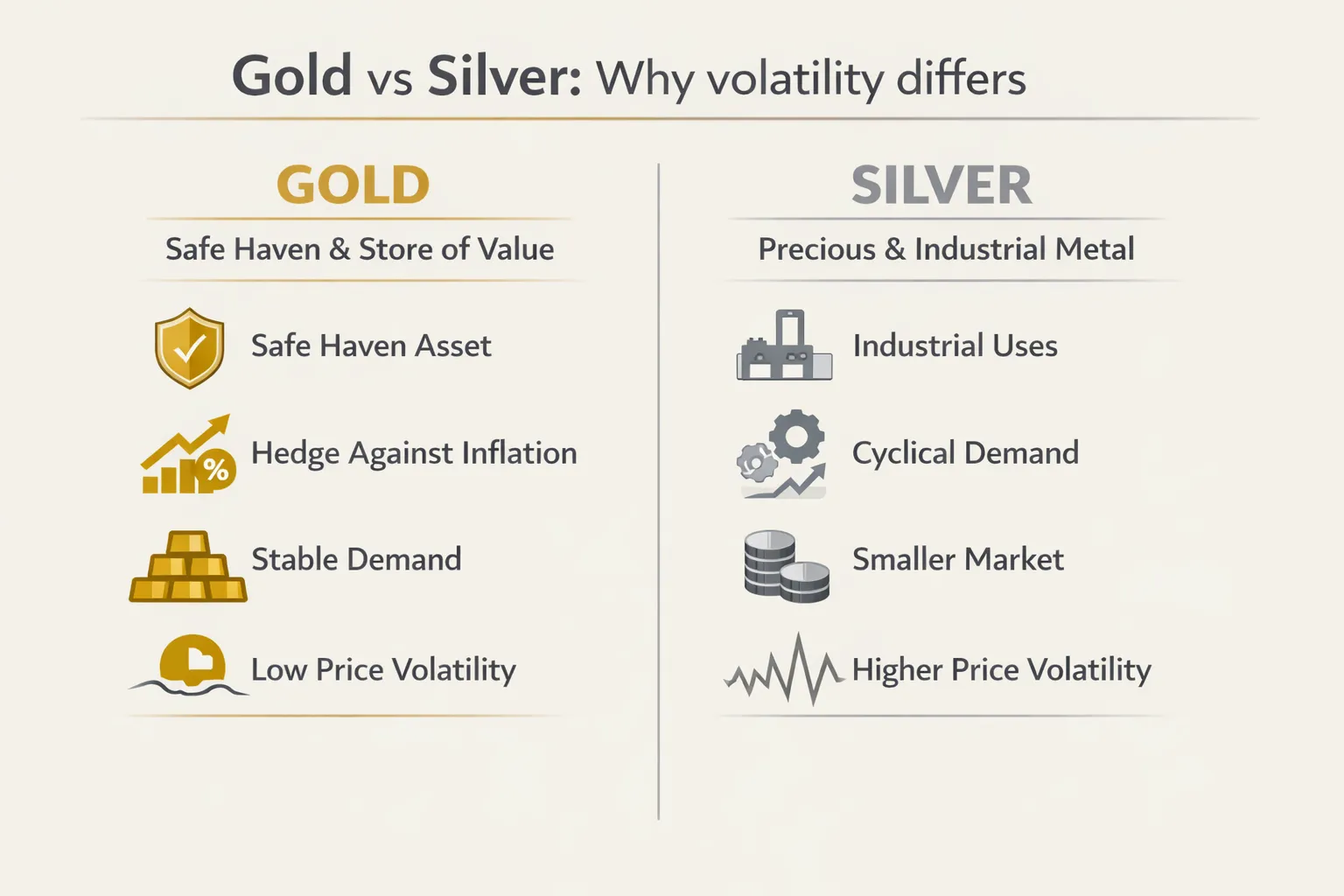
1) Industrial Demand Makes Silver “Economic Mood Sensitive”
Silver demand rises when manufacturing and tech demand rises – and falls when growth fears hit.
“Approximately 50-55% of silver’s annual demand comes from industrial applications…” – Source
That’s why silver can drop even when gold is steady: gold is fear-driven, silver is fear + growth-driven.
2) Smaller Market = Bigger Swings
Silver markets are less liquid than gold. A few large orders can move price more aggressively – especially during thin trading hours.
3) “Silver Price” Is Really Multiple Prices
When people search silver price, they might mean:
-
spot silver (global reference),
-
futures price,
-
local India rate,
-
digital silver price inside an app.
If you’re checking sell silver price vs buying price, also remember: spreads and taxes can differ by platform and product type.
“Is It Manipulation?” A Realistic Answer
Not completely. Price movement in gold and silver is usually explained by:
-
macro data + rate expectations,
-
bond yield moves,
-
geopolitical risk,
-
speculative positioning,
-
liquidity/holiday effects,
-
hedging flows.
Yes, short-term spikes can be exaggerated by leverage and algorithmic trading – but the bigger trend is driven by real economics and real demand.
A better question to ask is:
“Which driver changed today – rates, inflation expectations, risk, or industrial demand?”
Why Gold & Silver Prices in India Move Differently Than Global Prices
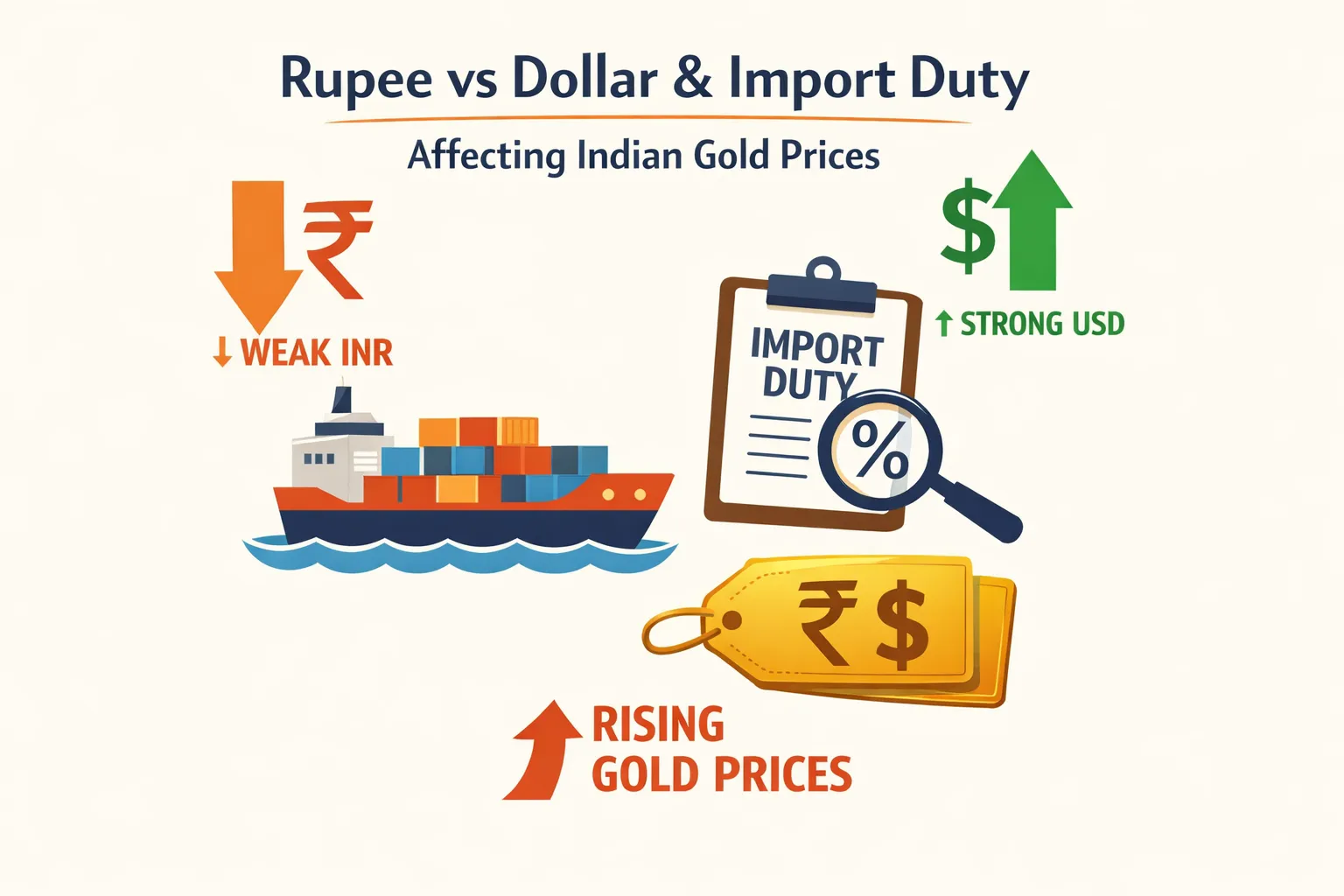
Indian prices track global cues, but they don’t copy-paste them.
Key India-specific drivers
|
Driver |
What it changes |
Why it creates volatility |
|---|---|---|
|
INR vs USD |
Import cost |
Rupee weakness can push gold up even if global price is flat |
|
Import duties & taxes |
Local landed price |
Policy shifts can cause sudden jumps |
|
Local demand cycles |
Premium/discount |
Weddings/festivals move demand fast |
|
Physical market premiums |
Retail rate |
Local tight supply can raise prices above global trend |
If you want a quick benchmark for everyday planning, track the gold rate today in India and compare it against global spot moves.
The “Most Useful” Way to Understand Daily Fluctuations (A Simple Checklist)
When you see a sudden move, run this 60-second checklist:
-
Did yields change? (Biggest driver)
-
Did the Fed signal something?
-
Any inflation data release today?
-
Any geopolitics escalation/de-escalation?
-
Is silver reacting to industrial risk-on/risk-off?
-
In India: did INR move sharply today?
-
Was there a big rally recently (profit-booking risk)?
This is how professionals read bullion – without the noise.
What Smart Investors Do When Prices Are Volatile
For long-term investors: build a habit, not a prediction
Trying to time tops and bottoms in bullion is exhausting. A better move: small, consistent accumulation – especially when volatility creates dips.
If you’re tracking gram of gold price daily but not buying because you’re waiting for “the perfect price,” you’re doing the hard part without the reward.
For short-term traders: respect volatility
Silver can move fast. If you’re trading, position sizing and risk management matter more than being right.
The OroPocket Way: Turn Volatility Into Progress (Not Stress)
Markets will swing. That’s normal. What’s not normal is missing out because investing feels “too big” or “too complicated.”
OroPocket is built for modern Indian investors who want simple, mobile-first wealth building:
-
₹1 entry point: start instantly, no minimum pressure
-
Instant UPI payments: buy in under 30 seconds
-
Gold + silver investing: diversify your hedge
-
Free Bitcoin on every purchase: earn Satoshi cashback while stacking gold/silver
-
Gamified investing: streaks, spin-to-win, tiered rewards that build consistency
-
Secure & compliant: RBI-compliant flows, insured vault storage, authorized bullion partners
-
Referral rewards: both sides earn 100 Satoshi + free spin

You don’t need to “choose” between safety and upside anymore.
With OroPocket, you get the stability of gold and the reward potential of Bitcoin – without having to trade crypto.
Final Verdict: Volatility Isn’t the Problem – Inaction Is
Gold and silver fluctuate because they respond instantly to money policy, inflation expectations, global risk, and (for silver) industrial demand. That doesn’t mean they’re broken. It means they’re alive.
If you want to beat inflation, build real assets, and feel daily progress – not anxiety – then stop watching. Start growing.
Start with ₹1 on OroPocket today:OroPocket App


Join the Conversation
Be the first to share your thoughts.